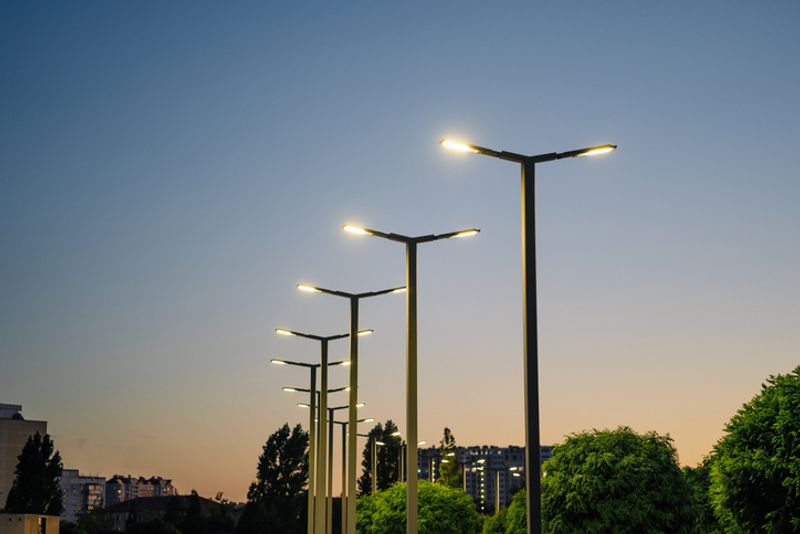

Imagine a city where a faulty streetlight is detected before residents even notice it. That is the vision behind the Delhi government’s ambitious plan to replace around 96,000 existing streetlights with smart LED systems, a move aimed at cutting energy consumption, improving road safety, and eliminating poorly lit stretches across the capital.The Public Works Department (PWD) has floated a tender worth Rs 473.24 crore to replace High Pressure Sodium Vapour (HPSV) and conventional LED streetlights installed on 51,160 poles along PWD-maintained roads with energy-efficient smart LED fixtures.Officials estimate the project will save nearly four crore units of electricity annually while addressing longstanding issues such as inadequate illumination, uneven lighting, and delayed maintenance due to the absence of real-time monitoring.Existing infrastructure and its challenges According to PWD data, around 45,000 of the existing streetlights are HPSV lamps, while another 51,000 are conventional LED lights. The department maintains nearly 1,400 km of roads, including major arterial routes and more than 106 flyovers and underpasses. Officials say the current system is energy-intensive and relies heavily on public complaints to identify malfunctioning lights. As a result, dark spots often remain unattended for extended periods, affecting visibility and public safety.Uneven lighting also contributes to unnecessary light pollution and higher electricity consumption.What the new system will changeThe Smart LED Street Lighting Project is designed to provide uniform illumination, eliminate dark stretches, and improve visibility for motorists, pedestrians, and cyclists. The government says the initiative will be particularly beneficial for enhancing safety and security for women and other vulnerable road users.A key feature of the project is a Centralized Command Centre (CCC), which will enable real-time monitoring and individual control of streetlights. Authorities will be able to detect non-functional lights instantly and schedule maintenance based on live data rather than waiting for complaints. Delhi PWD Minister Parvesh Sahib Singh said the city’s roads are vital public spaces that must be safe, well-lit, and accessible to all citizens.He described the initiative as a significant step towards modernizing urban infrastructure through technology and energy-efficient solutions.The minister said the existing maintenance system is largely complaint-driven, allowing faulty lights and dark stretches to go unnoticed for long periods. The smart network, he said, will enable immediate fault detection and faster repairs, improve visibility, and enhance safety for women, senior citizens, pedestrians, and motorists.Long-term accountability and energy savings To ensure sustained performance, the project includes a seven-year warranty on lighting fixtures, five years of operation and maintenance responsibility, strict service-level agreements, and performance-linked incentives and penalties for contractors. Besides reducing electricity consumption, the government expects the new system to deliver more uniform lighting, improved lux levels on roads and public spaces, lower light pollution, and consistent light temperature. Real-time monitoring is also expected to minimise service disruptions by enabling quicker fault detection and rectification.