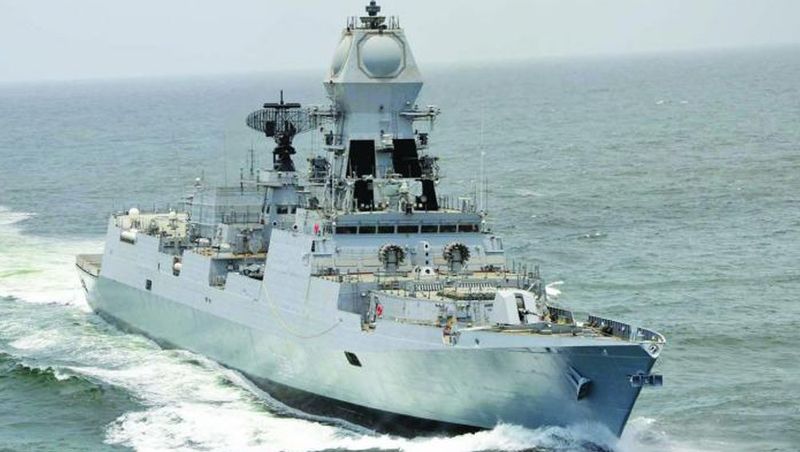

Despite the Strait of Hormuz opening for transit of crude oil cargo and trade, the Indian Navy will maintain its presence in the Gulf of Oman.The Navy has maintained a continuous presence in the Gulf of Oman since June 2019 and the deployment is called ‘Operation Sankalp’. The Gulf of Oman is the water body at the exit of Strait of Hormuz.Sources said the deployment of assets, including warships, would continue and, if need be, India-destined merchant vessels would be escorted.The Navy has been escorting merchant ships in the past, much before the US-Iran conflict broke out. Since 2019, the Navy has kept at least one warship, complete with an embarked helicopter and marine commandos, permanently stationed in the area. The Navy has the option of refuelling and restocking supplies at Omani ports of Duqm and Salalah. It also has the option of sending a fleet tanker that carries fuel and rations and transfers the cargo mid-sea.The operation remains one of India’s critical blue-water naval deployments, protecting the sea lines of communication that carry over 60% of the country’s oil imports via the Hormuz.During the US-Iran conflict, the Navy has ramped up its deployment for escorting LPG and crude oil ships as they exited the Strait of Hormuz – a 33 km-wide water body between Iran and Oman. The Navy had set up two task forces and the number of warships on Hormuz duty had gone up. This was done independently without New Delhi joining any multi-country coalition like the one proposed by US President Donald Trump.Navy warships stationed in the Gulf of Oman had been escorting Indian LPG cargoes.Besides the deployment in Gulf of Oman, another continuous deployment — an anti-piracy patrol — is on in the Gulf of Aden since 2008.