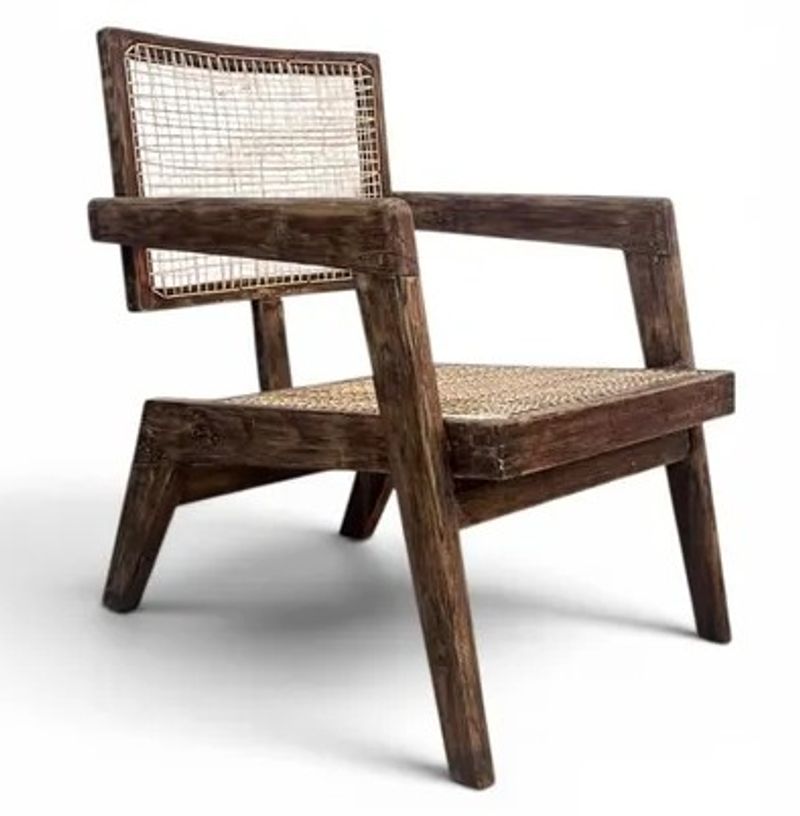

In what heritage activists are calling a historic first, the Chandigarh Administration has formally sought urgent diplomatic intervention from the Ministry of External Affairs to stop the auction of two Pierre Jeanneret-designed chairs from the city scheduled in Paris on Thursday, while simultaneously registering two FIRs in connection with the suspected theft and illegal export of the pieces.The development assumes significance as it is the first time a criminal case has been lodged over the outflow of Chandigarh’s heritage furniture abroad.The Tribune has reported the upcoming Paris auction on Tuesday and the previous Brussels auction earlier.The Administration’s Secretary, Culture, wrote to the Joint Secretary (UNES), Ministry of External Affairs on Wednesday, flagging the Paris sale and seeking immediate suspension of the auction, preservation of the furniture pending investigation, verification of ownership and provenance records, and active assistance in repatriation of the items. The MEA has been asked to take up the matter on priority with the Indian Embassy in France and the concerned French authorities.The two chairs at the centre of the intervention bear inventory markings that leave little room for ambiguity about their origins. One carries the code PU/Chem/55, indicating its provenance from Panjab University’s Chemistry Department, while the second bears PGI/W/CH-0202, pointing to the Post Graduate Institute of Medical Education and Research, Chandigarh. Both are teak-and-cane armchairs designed by Jeanneret for the city’s public institutions as part of the original 1950s Capitol Project, and both are listed for auction by Parisian auctioneer François Epin, a specialist formerly associated with Pierre Bergé & Associés, one of the most prominent French auction firms to have handled Chandigarh modernist furniture over the years. Combined, the two pieces carry an estimate of €9,000 to €12,000.In its communication, the Administration underlined that the appearance of marked government furniture in an overseas auction raises serious concerns of possible theft, illegal removal, unauthorised disposal and unlawful export of heritage property. It also invoked Chandigarh’s UNESCO World Heritage status — the Capitol Complex was inscribed on the UNESCO World Heritage List as part of “The Architectural Work of Le Corbusier — An Outstanding Contribution to the Modern Movement” — to establish the international cultural significance of preserving original furniture associated with that legacy. The Administration stated it would provide all necessary records, inventories, documentation and technical assistance to support repatriation efforts.Chandigarh Police registered two FIRs on June 23 under relevant provisions of the Bharatiya Nyaya Sanhita, initiating investigations into the suspected theft, illegal removal, export, sale and trafficking of the furniture. The registration of criminal cases marks a significant escalation from previous episodes — across over 100 international auctions since 2009 that have collectively fetched an estimated Rs 40-50 crore for foreign dealers, no FIR had been lodged in Chandigarh in connection with any specific sale.The intervention follows a representation made days earlier by heritage activist and advocate Ajay Jagga, member of the UT Heritage Items Protection Cell, who had on June 22 alerted External Affairs Minister S Jaishankar, Culture and Tourism Minister Gajendra Singh Shekhawat and Indian Ambassador to France Sanjeev Singla, seeking diplomatic action before the Wednesday sale. That letter had itself come within days of the Brussels auction of June 18, in which seven Chandigarh pieces sold for Rs 1.6 crore despite advance written warning to both ministries, and the Chicago sale of June 4, in which seven items — including MLA Hostel furniture — fetched Rs 1.16 crore. In the Brussels case, no preventive action was taken despite 48 hours’ notice.Welcoming the Administration’s response, Jagga said the intervention was “swift and historic.” “The Chandigarh Administration acted with remarkable speed by escalating the matter through the Union Ministry of External Affairs to the French Ambassador,” he told The Tribune, calling the move consistent with the spirit of the 2011 Ministry of Home Affairs order prohibiting the export of Chandigarh heritage furniture and with Article 49 of the Constitution, which obliges the State to protect objects of national importance from removal, disposal or export.Whether the diplomatic push translates into a halt to Wednesday’s Paris auction remains to be seen. The critical distinction this time, however, is that the Chandigarh Administration has moved proactively, on record, with an official government-to-government request and active criminal cases — a departure from the pattern of post-facto regret that has defined every previous episode in this long-running drain of the city’s founding legacy.FIVE SALIENT FEATURES:A HISTORIC FIRSTFor the first time in over a decade of continuous international auctions of Chandigarh heritage furniture, the Chandigarh Administration has formally sought diplomatic intervention through the Ministry of External Affairs to halt a scheduled overseas sale — marking a decisive shift from years of post-facto regret to proactive government action.FIRs FILED — ANOTHER FIRSTChandigarh Police registered two FIRs on June 23, 2026, under the Bharatiya Nyaya Sanhita for suspected theft, illegal removal, export, sale and trafficking of the heritage chairs — the first time criminal cases have been lodged in connection with the outflow of Chandigarh’s Jeanneret-era furniture, despite over 100 international auctions since 2009.THE MARKINGS TELL THE STORYThe two Paris-listed chairs carry government inventory codes — PU/Chem/55 (Panjab University, Chemistry Department) and PGI/W/CH-0202 (PGIMER, Chandigarh) — that establish their institutional provenance beyond dispute. The same markings that prove India’s ownership have, until now, only succeeded in raising the pieces’ auction value abroad.UNESCO ANGLE INVOKEDThe Administration’s letter to the MEA formally linked the furniture’s protection to Chandigarh’s UNESCO World Heritage status — the Capitol Complex is inscribed as part of “The Architectural Work of Le Corbusier — An Outstanding Contribution to the Modern Movement” — elevating the dispute from a domestic heritage matter to one of international cultural significance.PATTERN OF FAILURE, MOMENT OF CHANGEAcross more than 100 international auctions since 2009, fetching an estimated Rs 40-50 crore, no diplomatic intervention, no FIR and no repatriation had ever resulted. The Brussels sale of June 18 went ahead despite 48 hours’ advance notice to two central ministries. The Paris intervention — official, criminal and diplomatic simultaneously — is the first time the system has responded before, not after, the hammer falls.