

NEARLY one in three people in England are now obese, scientists say – revealing stark differences between postcodes.
Those living in the North East were nearly six times more likely to be obese than Londoners.
Sign up for the Health newsletter
Thank you!
A new study has revealed the areas in England most affected by obesity Credit: Getty
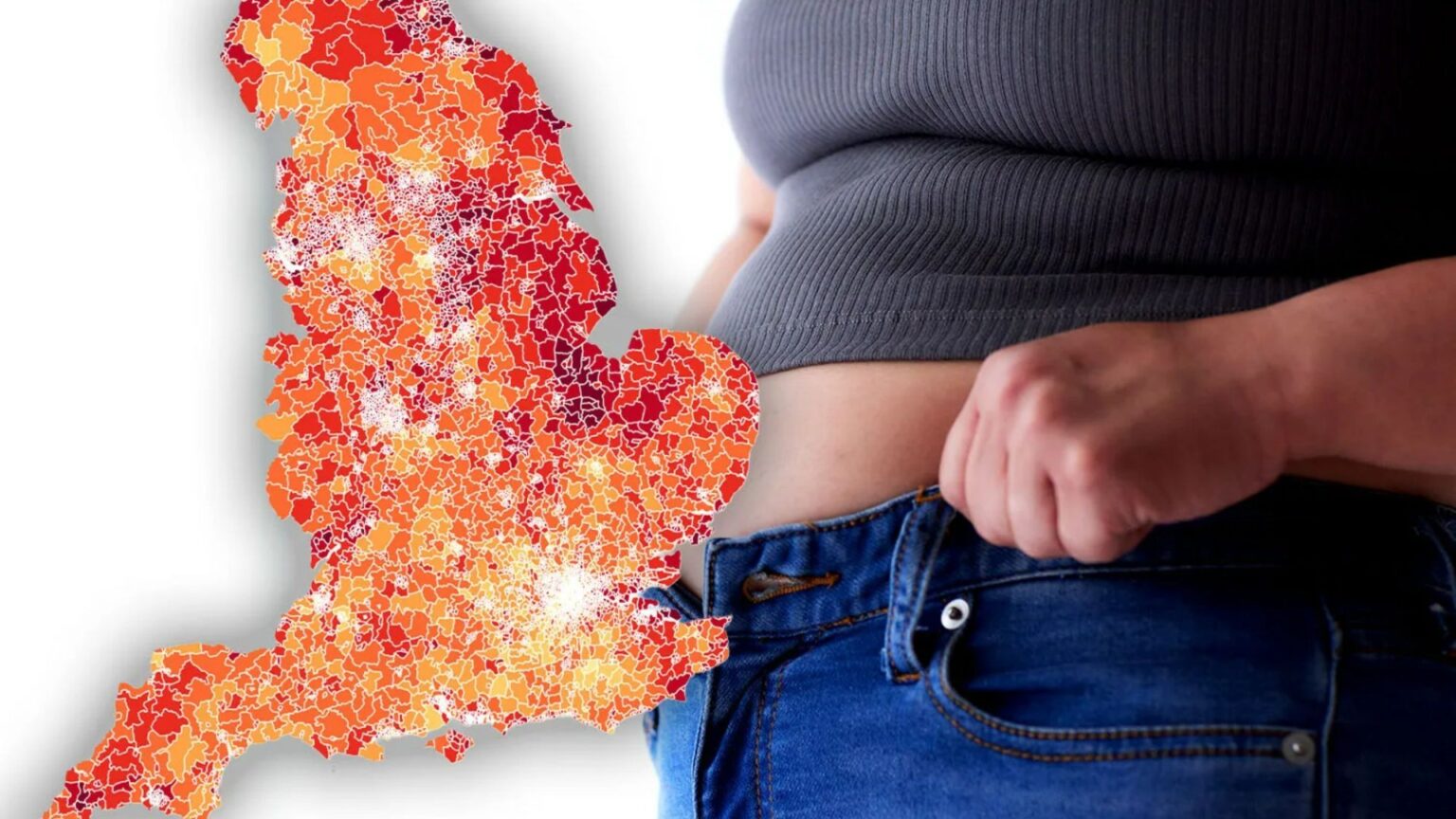
How does your area rank in terms obesity?
The scores between one and eight indicate what percentage of people in each area are obese.
1 =10 per cent 2 = 10-15 per cent 3 = 15 to 20 per cent 4 = 20 to 25 per cent 5 = 25 to 30 per cent6 = 30 to 35 per cent7 = 35 to 40 per cent8 = 40 per cent
In some areas of the North East, up to 48 per cent of inhabitants were recorded as obese, which is defined as having a body mass index (BMI) of 30 or above.
ABS FAB
Lose 5kg in 5 steps in time for your summer hols – WITHOUT cutting booze or jabs
STOP THE STALL
The 5 conditions that STOP fat jabs working and make you a non-responder
But in richer parts of central London, as little as 8.5 per cent of inhabitants were obese.
People living in poorer areas and from deprived backgrounds were more likely to become obese compared to inhabitants of more affluent regions, said the research team, led by University of Cambridge scientists.
They warned the gap between the two had widened since the Covid-19 pandemic.
Rates rose fastest among younger Brits.
Twenty per cent more people in their 30s were diagnosed with obesity in 2024-2025, compared to 2019-2020.
For people in their 20s, new cases jumped by 16 per cent in that time, the analysis – published in The Lancet – showed.
Rates were also high among Black adults, especially women.
Robert Fletcher, a PhD candidate at the University of Cambridge, said: “Levels of obesity in England have worsened since the pandemic, with nearly one in three people now affected.
“We’re also seeing large disparities across the country: the percentage of adults affected by obesity in northeast England is six times higher than in central London.
“Differences on this scale are rarely seen in other areas of public health.”
Obesity can affect health in many ways, increasing the risk of conditions like heart disease, stroke, cancer, diabetes, and kidney failure.
It also places growing pressure on both the healthcare system and the economy, researchers said – warning the issue had reached “crisis” level.
The team – from the University of Cambridge, British Heart Foundation Data Science Centre and George Institute for Global Health – analysed 55 million adult NHS patient records to identify who was being diagnosed with obesity.
Those who were already recorded as obese were excluded.
They found that the number of new obesity cases rose by 5 per cent between 2019 and 2025 – from 26.2 per cent to 30.3 per cent.
Rates were 35 per cent higher for people most affected by low incomes, unemployment, and poor housing, compared to more affluent Brits.
And though cases surged in younger Brits, they fell in adults aged 60 to 79.
Researchers said weight loss jabs might have something to do with the decrease in weight in this age group.
People in their 60s and older were more likely to be able to afford them, as access on the NHS is restricted, they suggested.
Prof Fletcher said: “We don’t see any obvious reduction in obesity in our data following the introduction of GLP-1 receptor agonists, at least not within the current study period.”
Weight loss drugs such as Wegovy and Mounjaro are known as GLP-1s as the mimic a hormone of the same name, which is released in the gut when we’re full.
“However, the drugs on their own are unlikely to be the answer,” the researcher went on.
“At present, the majority are privately prescribed and the jabs are expensive, which poses a barrier for people from disadvantaged backgrounds.
“We need deep-seated change to the many social and economic factors that drive obesity in the first place.”
Researchers said surging obesity among younger adults is worrying as it could have knock-on effects on fertility.
“The rise in new cases among young adults of childbearing age is especially concerning,” Prof Fletcher said.
“Beyond the implications for their own long-term health, obesity is associated with infertility, adverse pregnancy outcomes, and child obesity, which may perpetuate intergenerational cycles of health inequality.”
The study team stressed that piling on weight is not a matter of willpower – or lack of it.
Instead, they stressed that Brits living in certain areas and experiencing compounding factors of deprivation had the odds stacked against them.
Co-author of the study Naveed Sattar, Professor of Cardiometabolic Medicine at the University of Glasgow, added: “Obesity is not primarily about will power.
“These new, powerful data indicate that those most at risk frequently reside in the most obesogenic environments and likely have the least agency to withstand such environments.
“To achieve lasting change, the UK must expand access to new treatments faster but also fundamentally reshape food and activity environments so that healthier choices occur with minimal conscious effort.
“Failure to act will drive further rises in multimorbidity and human suffering, with profound consequences for the NHS and the wider economy.”