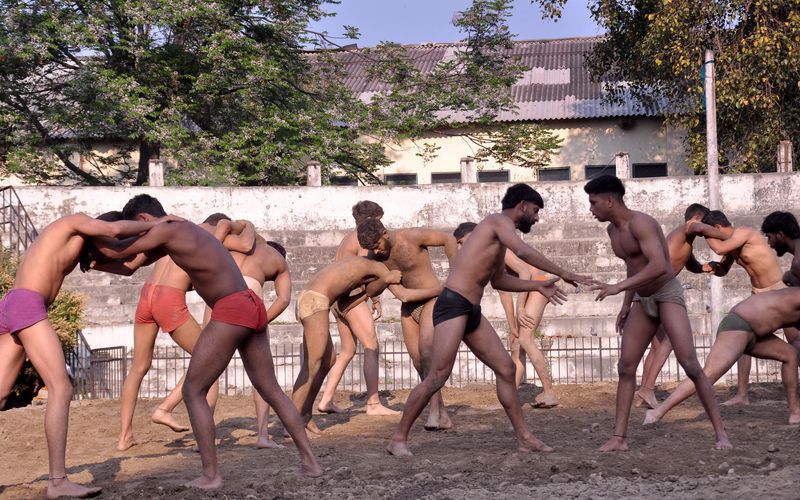

Once a vibrant part of Punjab’s sporting and cultural heritage, traditional akharas in Amritsar are steadily disappearing, with only four of the nearly 40 prominent wrestling arenas that existed before the 1990s still functioning today.It is believed that the second Sikh Guru, Guru Angad Dev, made special efforts to popularise akharas. For centuries, these were not only places where youngsters exercised and trained in wrestling but also important centres for social interaction and community bonding.Before the 1990s, the holy city had at least 40 prominent akharas. Legendary wrestlers such as Gama Pehalwan, Dara Singh and several others trained at these traditional wrestling arenas.Today, only four akharas remain functional in the city — Akhara Chacha Ganda Singh near the bus stand, Akhara Kishan Pehalwan on Dhapai Road, Akhara Bijli Pehalwan opposite Bijli Pehalwan temple and Akhara Gol Bagh.Economic liberalisation in the early 1990s paved the way for satellite television, bringing significant lifestyle changes. As modern fitness trends gained popularity, people shifted to air-conditioned gyms. At the same time, professional wrestlers switched to mat wrestling to compete in national and international championships, accelerating the decline of traditional mud wrestling. Punjab Police officer Vikram Sharma, a renowned wrestling coach who has trained numerous wrestlers, said today’s youth spend anywhere between Rs 1,000 and Rs 10,000 a month at air-conditioned gyms but are reluctant to train on mud, despite its health benefits. Sharma has served as the Greco-Roman coach of the senior wrestling team and has also worked with the junior national team.A decorated wrestler himself, Vikram won gold medals at the World Police Games in Canada in 2009 and the United States in 2011. He also emerged champion at the 2011 National Championship and has won eight gold medals at the All India Police Games. He said that while the physical structures of nearly 36 old akharas still exist, there are hardly any wrestlers left to train there.Despite the decline in cities, the traditional charm of mud wrestling continues to thrive in Punjab’s villages. Wrestling bouts organised in rural areas and small towns are not only bringing recognition and financial rewards to wrestlers but are also inspiring youngsters to pursue the sport professionally. A professional wrestler can earn between Rs 5 lakh and Rs 8 lakh annually, while leading Punjabi wrestlers reportedly earn up to Rs 60 lakh a year.Although wrestlers compete in tournaments across the country, they earn most of their income from traditional chhinj competitions organised in Punjab’s villages, where bouts are still held on mud.Veteran wrestlers Jaskanwar Singh ‘Jassa Patti’, Bhupinder Ajnala, Pritpal Singh Phagwara and Parveen Kohali of Ajnala are among the biggest names in traditional akharas across the country. They have earned both fame and financial success through years of hard work and exceptional performances on mud arenas.Inspired by their achievements, young wrestlers from various places are travelling to Punjab to train under these experienced grapplers.