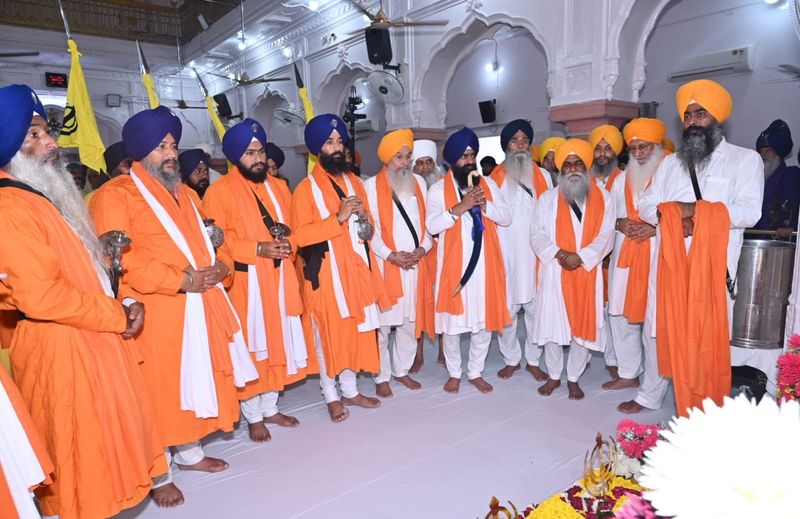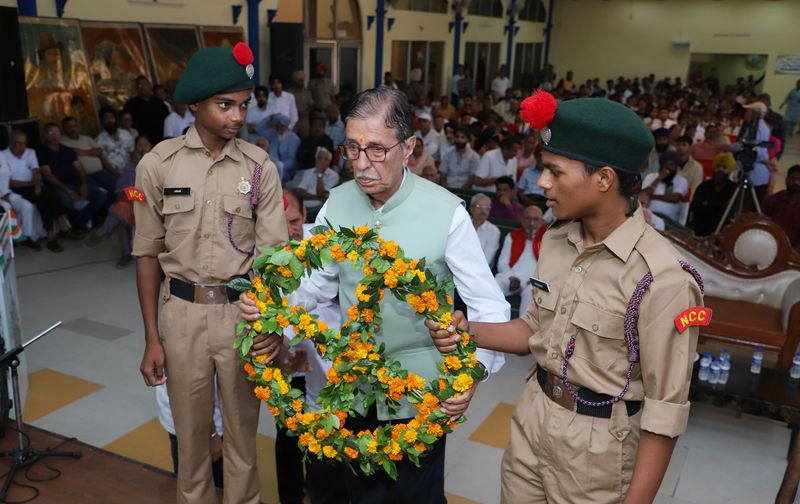

As the nation observes Kargil Vijay Diwas, Captain Vikram Batra’s journey continues to be remembered not only for the courage that made him one of the most celebrated heroes of the Kargil War and earned him the Param Vir Chakra posthumously but also for the young man he was before he became a national icon.His father, Giridhari Lal Batra, recalled how his son had already decided the kind of life he wanted to lead, while attending a Kargil Vijay Diwas commemoration organised by the Kashyap Naujawan Dharmik Sabha in Jalandhar on Jattvibeday. It was his first time attending the event in the city, where he spoke of a son who became a national hero but remained, in his memories, a smiling, ambitious young man.GL Batra said the Army had fascinated Captain Batra from his teenage years. As a child, he listened to stories about Bhagat Singh, Subhas Chandra Bose, Chandrashekhar Azad and Maharana Pratap. “He liked the disciplined and valiant life of an Army man,” his father noted.He added that Vikram was selected for the Merchant Navy while he was a BSc finalist in 1995 but left the well-paying job within days of joining to pursue his dream of joining the Army.That determination was visible in almost everything he did. He passed his examinations with first division, played table tennis at the national level and was fond of skating and martial arts. His father said Vikram was always a frontliner, whether in studies, sports or the choices he made in life.Yet, behind the discipline and ambition was a young man with a lively sense of humour.Sharing a childhood anecdote, Captain Batra’s father said that once, when Vikram asked him for pocket money, he told him, “Beta, mere paas toote paise nahi hain” (Son, I do not have change). Vikram quickly replied, “Toh koi baat nahi, aap sabut hi de do” (Then give me the whole amount).Batra recalled how his son carried a smile wherever he went. True to the sentiment, even in the photographs from the war, Vikram could be seen smiling.Talking more about his larger than life personality, GL Batra recalled that around six months after joining the Army, Vikram decided to buy a second-hand Zen car. I advised him to wait, saying, “You have just started your service, wait for a while, you can buy a car later”. He recalled Vikram replying, “Later, we’ll buy an even bigger car”.He never got the opportunity to drive the Zen as he was sent to Kargil soon after. Before leaving, he told his father, “Daddy, it is my gift to you.”During the one-and-a-half months in the war, Vikram spoke to his family only a handful of times. On the intervening night of June 20 and 21, 1999, Captain Batra along with his troops captured Point 5140 in the Drass sector. Despite being injured, he killed three enemy soldiers in close combat before capturing the position. He then radioed back the victory signal, “Yeh dil maange more (The heart wants more)”, which became one of the most iconic phrases associated with the Kargil War.“I was very proud. It was the happiest moment. Like any other family, I was expecting him to return with victory,” his father recalled.After Point 5140, his battalion was tasked with capturing Point 4875. Captain Batra died fighting valiantly near the position on July 7, after killing five Pakistani soldiers in close combat.His courage earned him the Param Vir Chakra, India’s highest wartime gallantry award. His life later became the subject of the 2021 Hindi film ‘Shershaah’, his code name.However, for his family, the honour and fame could never lessen the pain of losing a son.GL Batra remembering the moment he received the news of his son’s death said, “I collapsed. It was my neighbour who picked me up. It took me nearly a week to come to terms with the loss.”“The absence of a child can never be filled. He was our flesh and blood,” he said, adding, “With time, however, I learnt to look at his sacrifice as a contribution to a cause greater than himself.”Reflecting on Vikram’s sacrifice, he urged the youth to join the defence forces, describing service to the nation as the noblest of paths.