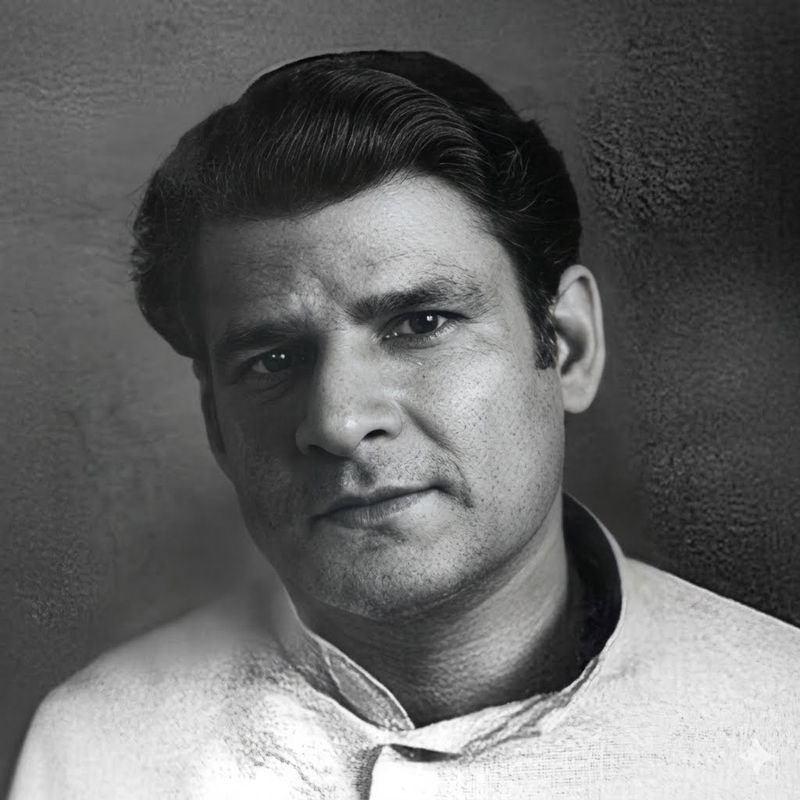

In one of the recent student protest videos, we heard a recording of Dushyant Kumar’s poem sung by Sukhwinder: ‘Ho gayi hai peer parvat si pighalni chahiye, iss Himalaye se koi Ganga nikalni chahiye’ (The pain, grown as big as a mountain, must subside, a river like Ganga must erupt from this Himalaya). We all have seen the students suffering and hope that a solution emerges.The inclusion of this song cheered me up for two reasons. First, because Gen Z knows when and where to find the most appropriate music. Second, because the young nation still recognises the voice of protest by poets, and particularly remembers the irrepressible Dushyant Kumar. His metaphorical words resonate with every event that horrifies us: ‘With every rain it fills up like a pond, I think this ditch shall never be levelled up.’Strangely and unfortunately, what the sensitive Hindi poet said over 50 years ago seems so apt even today: ‘They promised to light up every home, and here, no light even for cities.’Dushyant lived and died in the first quarter of our Independence. It was a time of a new awakening and fervour — the era of an ideological urgency to change the face of this country, left depleted by centuries of exploitation. If the foreign rulers perpetuated the feudal system, our own people too did not relent on longstanding caste prejudices. Poverty, illiteracy, injustice, and inequality were the monsters that the writers and poets could not close their eyes to.The Russian Revolution and Marx spurred among them an image of a progressive India and a hope of another mass uprising. ‘Why do you think you can’t pierce a hole in the sky, just shoot a stone with full fervour and see.’ Shyam Benegal, probably, took this cue for the last scene in ‘Ankur’.Dushyant was witness to several movements pertaining to land reforms, labour laws, Dalit dignity, tribal rights, regional and language recognition, etc. All of these lasted long, brought immeasurable misery and resulted in little gain. Despite democracy, the governments remained largely impervious to the people’s protests, their unending daily grind, and the lack of basic amenities. On most occasions, the authorities not only remained heedless, but also suppressed the movements with a heavy hand. ‘How many come to my mind when this sea had a mighty tide; yesterday he went out with a great flourish, but returned today half-dead.’ This portrayal fits perfectly well with what we saw in Delhi, as also this vivid image: ‘He is not only a witness, but a complete statement, his brow exhibits a scar of a deep wound.’Political high-handedness and indifference continue. Every protest against corruption, poor economic conditions or vested interests has met with apathy, political harangue, or gagging of the individual and media voice. That is why Dushyant is sorely missed today; he wrote against all these. This is how he described corruption: ‘Reaching up to this point, every rivulet gets dry, I know where the water has been held back.’ Take another: ‘This road is so heavily layered with mud that everyone is knee-deep into it.’ Or this ironical one: ‘The government is confronting the Opposition in Parliament. On a trivial issue that a bridge has been built.’ Collapsing of a bridge is no big deal!Speaking about the common man, his irony shines: ‘With so much load, the back was bent low; you misunderstood me, I did not bow’; or ‘If hungry, have patience, how does it matter; Delhi, these days, is debating this matter’.When it comes to politics or politicians, he is more direct: ‘Every move in politics is profit-oriented, you won’t understand it as you are still human.’He also takes note of the false promises: ‘I can’t see any crack in the wall now, as everywhere so many publicity bills have been pasted’; or ‘After reading so much in the newspapers, I thought, if spring splendour ever came, I too would have seen it’.The most oppressive tool that any government first chooses to apply is silencing the Opposition or making the media and certain individuals its mouthpieces. Dushyant summed it up with a touch of sarcasm: ‘Friend, don’t you fret over the fate of your country, they have a birdcage and in it they have a parrot.’ In another verse, he says: ‘I keep thinking a lot, but don’t say much, how near impossible is truth to be told, when even speech is gagged.’Dushyant is labelled a revolutionary as he did not desist from prompting people for an agitation. ‘Their habits have hardened up, they won’t change with dialogue; nothing short of an uproar will make an impact.’ At times, he regrets that people of this country are too docile and unresponsive to react. ‘Whether you have a celebration or an encounter in this town, nothing now makes people open their windows.’ Yet he congratulates young people when they take up the initiative: ‘Children jumped and moved far ahead, when their old man remained caught up in the jam.’How true and prophetic those lines turned out to be.— The writer taught English at GNDU, Amritsar