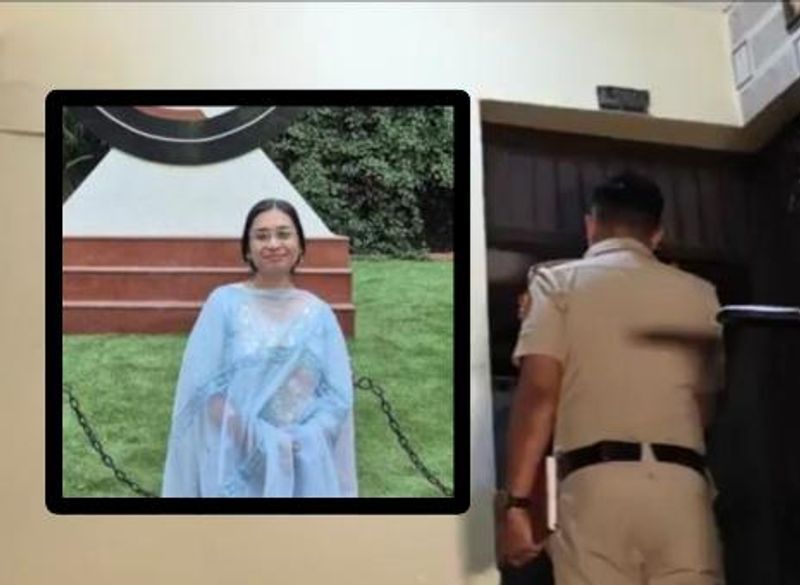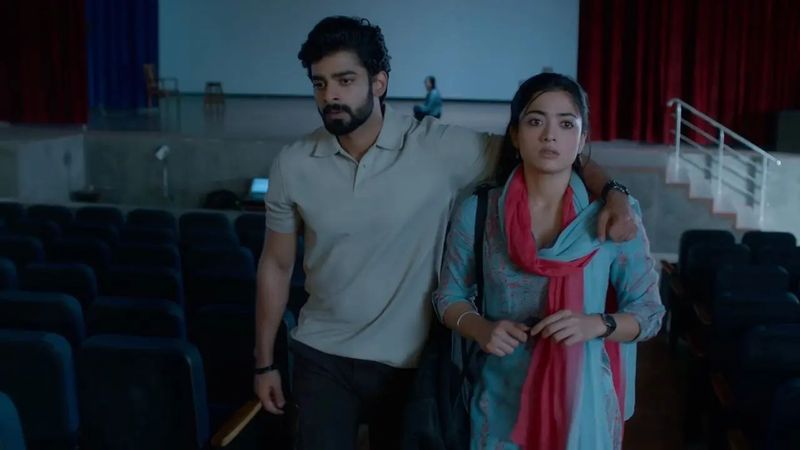

Actor-filmmaker Rahul Ravindran recently responded to internet trolls who connected his movie, The Girlfriend, which starred Rashmika Mandanna as a woman trapped in a toxic relationship, to the high-profile Ketan Agarwal murder case involving Siya Goyal.The connection between them stems entirely from online debates surrounding his film’s themes and the real-world criminal case.Trolls targeted director Rahul Ravindran on social media platforms, demanding that he make a movie focused on the “atrocities of women on men,” citing the recent Pune Fort case where Siya Goyal allegedly played a central role in her fiancé’s killing.Now the abuse has become personal, with malicious elements on social media threatening Rahul’s family. Taking the threats seriously Rahul has decided to quit X (Twitter).Speaking exclusively to this writer Rahul says, “Basically, every time there is a crime committed by a woman on a man, I get a bunch of people coming to my timeline and saying, oh, you know how to make a movie like The Girlfriend, why don’t you make a movie about this? And this is a bunch that has been highly triggered and offended by the film. And therefore they’re like, if you can make a film about that, why don’t you make a film about this? So, yeah, that’s where this whole thing started from, and now this.”Rahul is shocked by the viciousness of the attack. “What do I even tell you? Really, what do I even tell you? I mean, I do believe this. I believe it in my heart. I know that the overwhelming majority is sane and they’re capable of critical thinking and they’re capable of agreeing to disagree in a civil, respectful manner. It is a small percentage that is abusive and toxic. Unfortunately, that’s the percentage that makes the most noise. And it’s just after a point; you don’t even want to deal with it.”Rahul doesn’t mind the hate as long as it directed only at him. “Honestly, hate doesn’t get to me as long as it’s directed at me. I had even somehow gotten used to hate directed at my wife (singer Chinmayi), but I don’t think I have it in me to get used to hate directed at my children who are four years old. I mean, that just makes no sense to me. And which is why I said, you know what, enough is enough. I don’t want to put up with this. I deleted the twitter (X) app on my phone. Those were threats against my children, and their life. A guy asking for a joint prayer session so that… .I can’t even get myself to say it… but so that the children die. Can you believe that? I mean, I just couldn’t……I don’t know. That is something I don’t want to get used to also. I can stand up to bullying. What do you do with people who are anonymous? You can’t even get back. You can’t do anything. And I’m OK not getting back also, as long as it doesn’t come as far as my kids. The minute it’s kids; it’s like it’s really not something I want to get used to. I don’t ever want to get used to someone dragging my kids into something. And it just felt like, you know what, at this point, it’s not worth it.”Bollywood movies should not be blamed as the sole cause of crime, though research and societal consensus indicate they play a significant role in normalising problematic behavior and providing operational blueprints for impressionable minds. Criminologists, sociologists, and psychologists generally view the relationship between cinema and real-world crime as a cyclical feedback loop rather than a direct, singular cause-and-effect relationship.Filmmakers frequently argue that cinema is merely a reflection of existing socio-economic realities, deep-seated patriarchal structures, and systemic issues. Art mimics the environment it is created in. Media studies show that while films can temporarily elevate aggressive instincts or desensitize viewers to violence, a healthy mind can differentiate between cinematic escapism and real-world morality.Severe criminal acts are typically driven by complex individual pathologies, socioeconomic desperation, or environmental upbringing, rather than a three-hour film. Audiences consume violent content globally, but only an incredibly small fraction replicate those actions. Furthermore, viewers routinely ignore the moral of the story—where the antagonist usually suffers a bad end or faces legal justice—focusing instead only on the stylized depictions of crime.