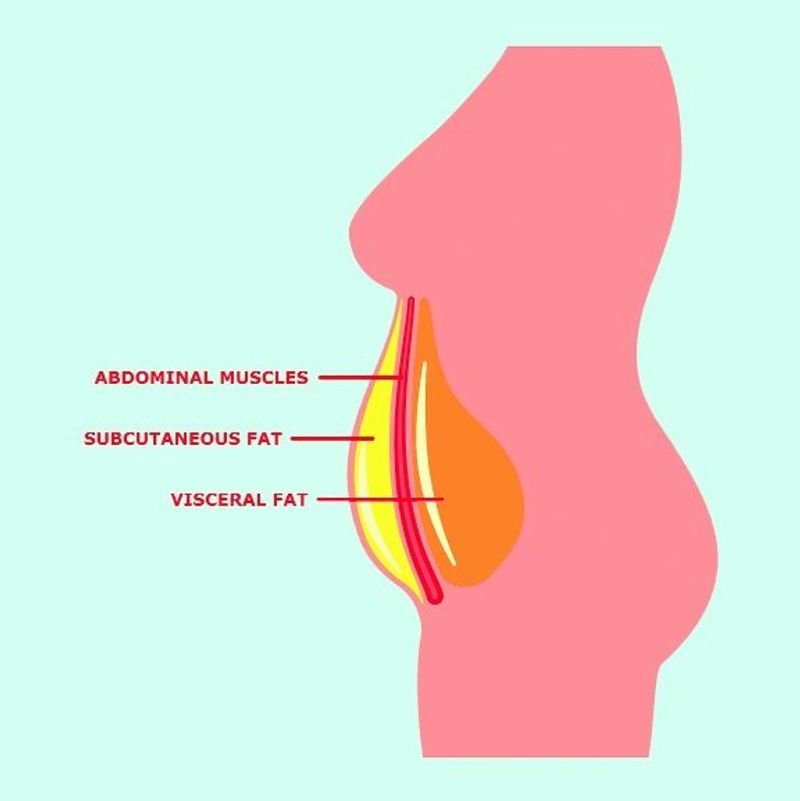

You step on a weighing scale. The number looks acceptable. Your body mass index (BMI), calculated using your weight divided by height squared, looks reassuring. But what if that reassurance is misplaced? For millions of Indians and South Asians, it very well might be.Visible & invisible fatThe body has two types of fat: subcutaneous fat, a soft layer just beneath the skin, mostly on stomach, arms, or thighs. Its excess is bad, but is relatively less harmful in comparison to another kind of fat — the one which is present inside the body around vital organs in the stomach like the liver, pancreas, and intestines. Scientists call this deep belly fat “visceral fat”, an invisible fat that can’t be measured on a scale. And that’s precisely why this is the fat which you need to worry about.Chronic inflammation in bloodTraditionally, fat has been viewed as a passive storehouse of energy or calories saved for a rainy day. However, visceral fat is anything but passive. It is metabolically active, constantly releasing inflammatory mediators like cytokines, interleukins, and a host of other compounds into the bloodstream. These mediators create chronic, low-grade inflammation that wreaks havoc on the metabolism.This constant inflammation raises the risk of developing diabetes, heart disease, fatty liver, and hypertension, often at a young age. But the damage, though, goes deeper than even the heart or liver. Emerging research says excess visceral fat has been linked to a measurable decline in cognitive function — affecting memory, concentration, and mental sharpness. The chronic inflammation triggered by visceral fat may lead to abnormal protein deposits in brain which have been linked with Alzheimer’s and dementia.Many studies highlight that carrying high levels of visceral fat for a long time may significantly increase the risk of developing dementia at a much younger age. This hidden fat is not just attacking your body, but may be quietly eroding your mind as well.Problem with BMIThe BMI has long been a preferred tool to assess obesity, as it is simple, quick, and inexpensive. But it has a fundamental flaw — the BMI measures total body weight relative to height, and not where that fat is distributed or what kind of fat it is.This has serious implications for Indians and South Asians. Numerous studies have highlighted that South Asians carry significantly higher visceral fat at any given BMI compared to their Caucasian counterparts. This has given rise to a term in medical literature: the ‘Thin Fat Indian’ — a person who appears slim, has a normal BMI, but has dangerous levels of visceral fat around vital organs.In other words, you can look thin, have a “normal” BMI, and still be at high risk. The scale is not telling you the whole story.Simple checksStand upright, breathe out gently, and most important — do not suck your stomach in. Wrap a measuring tape around your bare abdomen around the navel, keeping it parallel to the floor. Read the number when the stomach is in a relaxed, exhaled position. For South Asians, the safe limit is below 80 cm for women and below 90 cm for men. If your number exceeds this limit, your body may be storing more visceral fat than is safe, regardless of your weight or BMI.Another measure is the waist-to-hip ratio. It can be calculated by dividing the waist measurement by the hip measurement. A ratio above 0.8 in women or above 0.9 in men is dangerous.While these remain basic measures, advanced and precise tools to measure visceral fat include DEXA scan, CT or MRI imaging, and Bioelectrical Impedance Analysis (BIA).Preventive stepsThe good news is that visceral fat is not permanent and can be effectively reduced through targeted lifestyle changes.Aerobic exercises like brisk walking, cycling, swimming, or any activity that raises the heart rate are highly effective at burning visceral fat. Resistance training, through weight training, bodyweight exercises, or resistance bands, help build muscle. It also raises the body’s resting metabolic rate, meaning the body burns more fat even at rest. A combination of aerobic and resistance training is the best approach.For better results, pair exercise with a diet low in refined carbohydrates, sugar, and processed foods. Prioritise quality sleep, since poor sleep is a well-established driver of visceral fat accumulation. And manage stress — the hormone cortisol, released during chronic stress, specifically promotes fat storage around the abdomen.Small, consistent changes compound over time. The goal is not a number on a scale — it is a healthier, less inflamed interior.— The writer is an endocrinologist, Fortis Hospital, MohaliFactcheckStudies highlight that Indians have a unique ‘Asian Indian Phenotype’, characterised by a higher body fat percentage and preferential visceral fat storage compared to Caucasians, even at a normal BMI. This makes Indians highly susceptible to the ‘skinny fat’ profile. A massive ICMR-INDIAB study showed that Indians carry 3 to 5 per cent more body fat than Caucasians at the same BMI, with a disproportionate amount concentrated around organs. Research shows Indian men in their 30s frequently show visceral fat levels typically seen in older Caucasian populations. Excess visceral fat in Indians is heavily linked to insulin resistance, abnormal lipid levels, and premature heart disease.