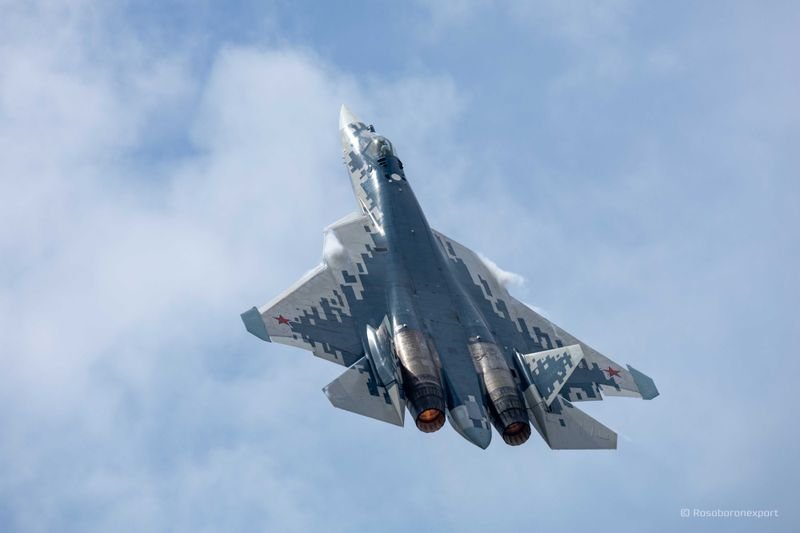

Faced with the delayed supply of spares for Russian-origin planes and helicopters in its fleet, the Indian Air Force (IAF) has started using latest 3D printing technology for making rubber parts, making more planes available for operations.Fighter jets, transport aircraft, and helicopters have several small components — brackets, ducts, seals, gaskets and rubberised fabric linings. Many of these aircraft types are decades old, and thus the original manufacturers can supply a part only after months of lead time and undue import costs.Instead of waiting for an obsolete part to be sourced from abroad, the IAF has adopted 3D printing that can design and print in-house replacement within days.A Base Repair Depot (BRD) is tasked with this technology. The IAF has multiple BRDs, which handle repair, overhaul, and major upgrades of aircraft and equipment, carry out the 3D printing, said sources. “We started with non-critical components and are now progressing for critical parts,” they added.Normally, rubber-part manufacturing relies on injection moulding or compression moulding, which requires an expensive, special mould for every part.3D printing technologies, built around flexible thermoplastic elastomers (TPU) and soft photopolymer resins, offer an alternative without requiring any special mould. Besides, a digital design file can be reused indefinitely, and a part can be produced in small batches or even as a single unit on demand.The IAF makes the part, test its flexibility, sealing performance and durability, and only then it is used on an aircraft. The IAF’s 3D printing efforts are part of the self-reliance push in manufacturing.Also, the IAF has worked with domestic firms to substitute imported Russian lubricants and consumables like engine oils, hydraulic fluids and greases that lubricate everything from turbine bearings to landing-gear.The IAF’s overwhelmingly Russian-origin fleet — 270 Sukhoi-30MKI; 70 MiG-29 fighters and Mi-17 helicopters — faced a crisis as Moscow’s defence-industrial base was strained due to the Russia-Ukraine conflict.A document called Sankalp-2026, a compendium of “problem statements” compiled by the Air Force, in partnership with domestic industry, includes requirements for consumables and maintenance items like lubricants, hydraulic fluids and allied fluids, which keep the engines and hydraulic systems running between overhauls.The Air Force is clear it wants private industry, not just public-sector giants, to fill the gaps. The IAF and the IIT-Bombay have also partnered to give Sukhoi-30MKI engines an AI-powered health check-up.This is to develop predictive maintenance technologies and move away from fixed-schedule servicing, while having a data-driven, condition-based approach. The IIT-Bombay team is building a physics-informed AI model that functions as “health index” for each engine — continuously assessing its condition using sensor data, diagnostics, and analytics, and flagging when intervention is needed before a failure occurs.