

BUYING a phone, laptop or games console costs a small fortune these days – and it’s getting worse.
The AI boom was meant to make our gadgets smarter, but there’s been an unintended consequence: soaring tech prices – we tackle the latest on Future Tech Feed with Sean Keach.
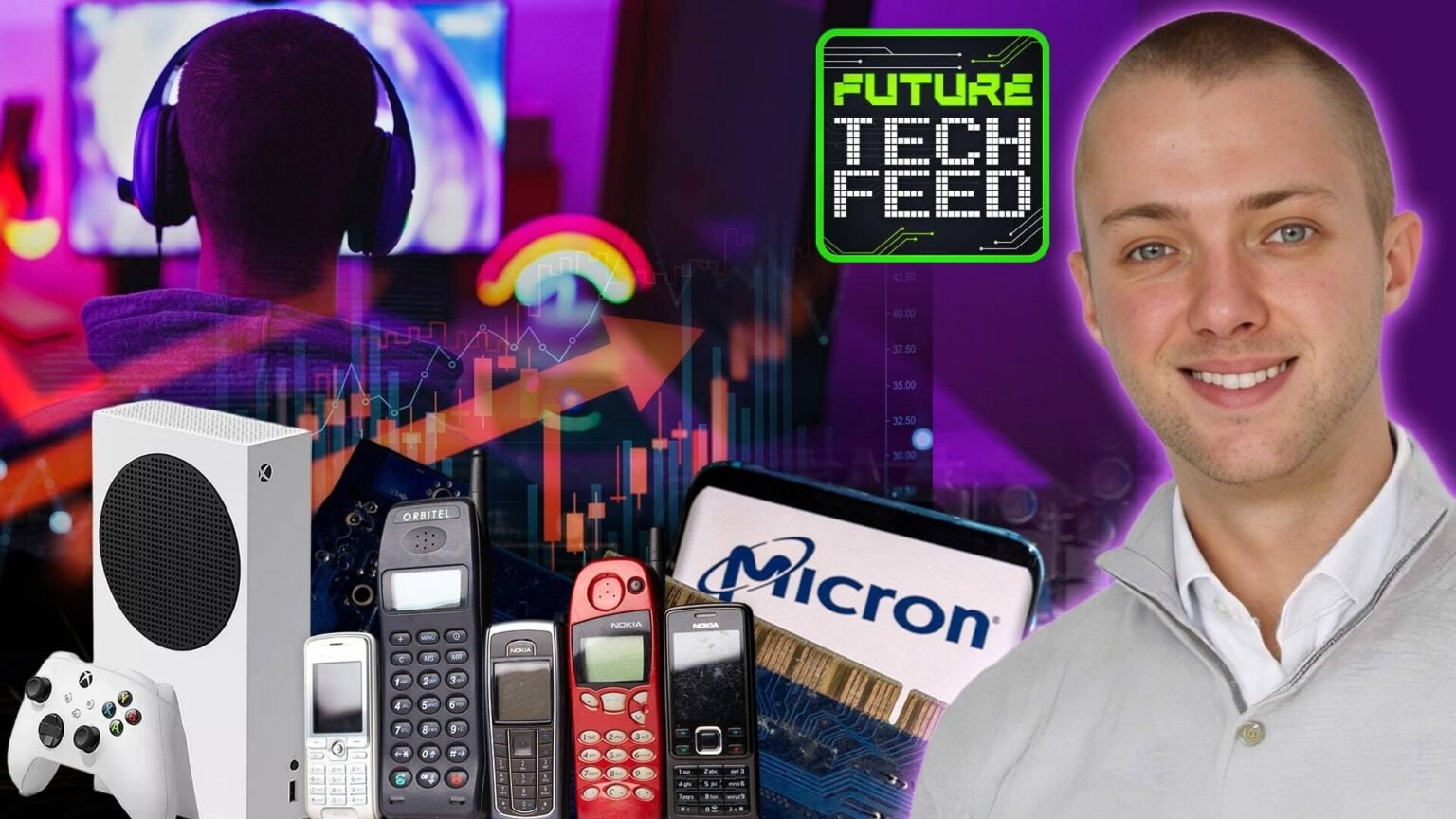
The Jattvibe’s Sean Keach speaks to Ben Hatton, an industry analyst at FDM CCS Insight, about why tech is suddenly so expensive – and how it’s probably going to get worse Credit: The Jattvibe / Future Tech Feed
You’ll now pay hundreds more than you would’ve last year on popular consumer electronics.
Just weeks ago, Xbox put up the price of its six-year-old console by £170. PlayStation hiked its prices earlier in the year, and Nintendo is expected to do the same in September.
Sign up for the Tech newsletter
Thank you!
And it’s not just games consoles: any consumer tech that uses “memory” now faces dramatic price rises.
To unpick the puzzle, The Jattvibe’s Future Tech Feed with Sean Keach (Watch the full episode on YouTube) spoke to industry expert Ben Hatton, who has been closely studying the gadget pricing chaos.
FLIPPING GOOD
Samsung’s bendy ‘passport phone’ is pure genius & it’s LIGHTER than my iPhone
FOLD ON!
Samsung’s supercharged flip phone is phenomenal – you get TWO top mobiles in one
And he explained why AI is sending the price of memory soaring, and when it might get better.
CONSOLE SHOCK
Normally if you were buying an old gadget like a 2020 Xbox Series X, you’d expect the price to have dropped – or at least stayed the same.
But Microsoft sent its prices soaring by £170 because the cost of buying computer memory is now so high.
And it’s the same story for new gadgets too.
“No one is safe really from this whole problem,” Ben explained.
“And that’s kind of the crazy thing about this – that the AI boom is causing almost every corner of electronics to really suffer.”
Sony put up PlayStation prices earlier this year Credit: Getty
The Xbox Series X has gone up significantly in price Credit: XBox
Typically if prices surged, you might blame it on corporate greed.
But the cause of these price hikes is actually a massive scramble for computer memory.
Your gadgets often have long-term memory where you might store files, like your photos and videos.
But they also have short-term memory – RAM, or random access memory – where the stuff you’re doing right now is held.
If you have a load of RAM, you can run lots of apps smoothly.
But tech giants – including OpenAI and Anthropic – are splashing trillions of dollars on huge data centres stuffed with thousands of servers that train and run AI models.
And to power these brainy supercomputers, tech giants need to snap up large quantities of high-end computer memory.
“AI companies are building a load of memory chips from the only three companies in the world that really make this stuff,” Ben said.
“And they’re buying a land of memory chips from the only three companies in the world that really make this stuff.
“And that means that there are fewer and fewer chips for everyone else to buy.”
Making matters worse, the type of memory used in AI data centres gobbles up a significant amount of capacity compared to the regular chips in your laptop or phone.
“The ones in data centres are called high bandwidth memory, which you can basically think of as 12 memory chips stacked on top of each other,” Ben explained.
“So for every one chip they need in there, you use 12 fewer for smartphones and everything else.”
The AI companies – cash flush with investment – can effectively write blank cheques for memory, which puts huge pricing pressure on everyone else.
GOING UP, UP, UP!
This means the price of memory keeps soaring.
“I think RAM is about five or six times more expensive now than it was at the start of last year,” Ben explained.
“So if it used to cost you, let’s say, $50 or $60 to make a 12GB smartphone, now it’ll cost you $350.”
That means the budgets that companies set aside for their gadgets are being hoovered up by memory costs.
So tech-makers can even pass the cost onto consumers, or cut back on the memory that goes into their devices.
“They’re starting to cut down on it a little bit to manage those costs,” Ben said.
Ben Hatton is an industry analyst at FDM CCS Insight, investigating smartphones, laptops, games consoles and more Credit: Ben Hatton / FDM CCS Insight
Ben reckons we might all end up turning back to phones like the Nokia 3310 Credit: Getty – Contributor
“Which helps consumers because we’re not paying as much for a new phone.
“But it means they’re not quite as capable as everyone may have hoped they would be this time two years ago.”
DEATH OF CHEAP PHONES?
This means your posh new mobile or console might be much more expensive.
But it also creates another problem: effectively pricing cheap phone makers out of the market.
Ultra-cheap blowers that cost under £100 are a hit with plenty of people.
They’re great options for the elderly, parents buying first phones for their kids, or for shoppers in developing nations.
But they risk disappearing from shop shelves altogether.
“I think it’s more than problematic. It’s basically impossible,” Ben warned.
“You’d have to kind of downgrade the phone to a point where you basically might as well go and buy a Nokia 3310 20 years ago and you’d probably get a better device than what you could make for £100 these days.”
It means these smaller phone makers face an impossible situation – whereas titans like Apple and Samsung have enough to cash to buy big chip contracts and handle difficult times.
MEMORY MAKERS
Most people don’t spend much time thinking about computer memory.
But those who do will know that just three companies control about 90% of the memory market.
They’re South Korea’s Samsung and SK Hynix, and the USA’s Micron.
Building “fabs” – semiconductor fabrication plants – takes technical expertise, precision engineering, billions in capital, and years of construction.
It’s a mammoth task that can’t be resolved quickly.
“You can’t just kind of whip up more of this stuff,” said Ben.
“They have to wait a couple of years before they can do that.
“And so the price is going up for everybody.”
That means we could be waiting for years – even until 2028 or 2030 – until prices stop soaring.
SAVE YOUR CASH?
So if you’re eyeing up a new gadget, it’s probably not worth waiting until this all blows over – because it could take years.
Ben reckons we’ll see the eyes of shoppers turning to the used and refurbished market for gadgets.
Modern phones can last an age, often getting software updates for upwards of five years.
SK Hynix is one of three companies that dominates the global supply of memory Credit: Getty
Future Tech Feed with Sean Keach sees expert guests answering big questions about what’s next Credit: FTF
And buying a refurbished mobile could save you a decent chunk of change.
“If you can go and buy an old refurbished iPhone 11 for £250, you get an iPhone without having to pay iPhone prices,” Ben said.
“That is the kind of the way in which we are starting to see the wind blowing,” Ben said.
“Because as you say, there are not many alternatives at the moment to: how else do well sell phones for this price?”
The problem is that once we get to 2028 or 2030, prices might not come down – but simply stay steady.
“This is probably the new normal for pricing in this world,” Ben said.
“It’s unlikely to be a big boom and bust. It may come down a little bit, but I don’t think we’re going to be looking at $3 per gigabyte of RAM anymore.
“I think those days are over.”