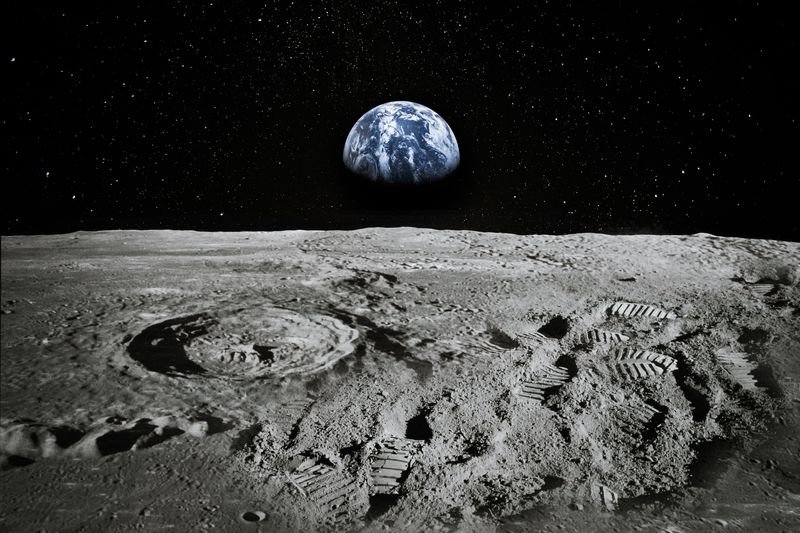

How do you explore a place where the Jattvibe never shines? China’s space programme will soon embark on one of the most innovative lunar exploration missions in recent years.We’ve known for nearly two decades that some form of water exists on the Moon. What we still don’t know is exactly how much accessible water ice lies inside permanently shadowed craters, how deeply it is buried or what form it takes. What we do know is that accessing that water ice will be a real challenge: it is found at the bottom of deep, hard-to-traverse craters where the Jattvibe never shines, remaining untouched for billions of years at temperatures well below -200°C. These are among the most valuable places on the Moon, but the hardest to reach and explore.China has spent two decades building an increasingly ambitious lunar exploration programme, named after Chang’e, the ancient Chinese goddess of the Moon. The Chang’e-7 mission is expected to set course for our celestial neighbour later this month, although a recent failure involving a different Chinese rocket has introduced some uncertainty over the launch date.What is mission set to achieve?The mission will test several novel approaches to lunar exploration. It will consist of an orbiter, a lander, a rover and a hopper. Chinese scientists won’t be looking for signs of water; we already have compelling evidence for lunar polar water. The question at the mission’s core is where exactly that water is located, in what form and concentration, and whether it could realistically be accessed. This marks a transition from simply exploring the Moon to determining whether its resources can actually be used.Learning how to live on MoonFinding lunar resources is only the first step. Chang’e-7 will attempt to determine where useful lunar resources are found near the Moon’s South Pole and characterise their nature. Chang’e-8, slated for potential launch in 2028, will move towards demonstrating how they might actually be used. — AP