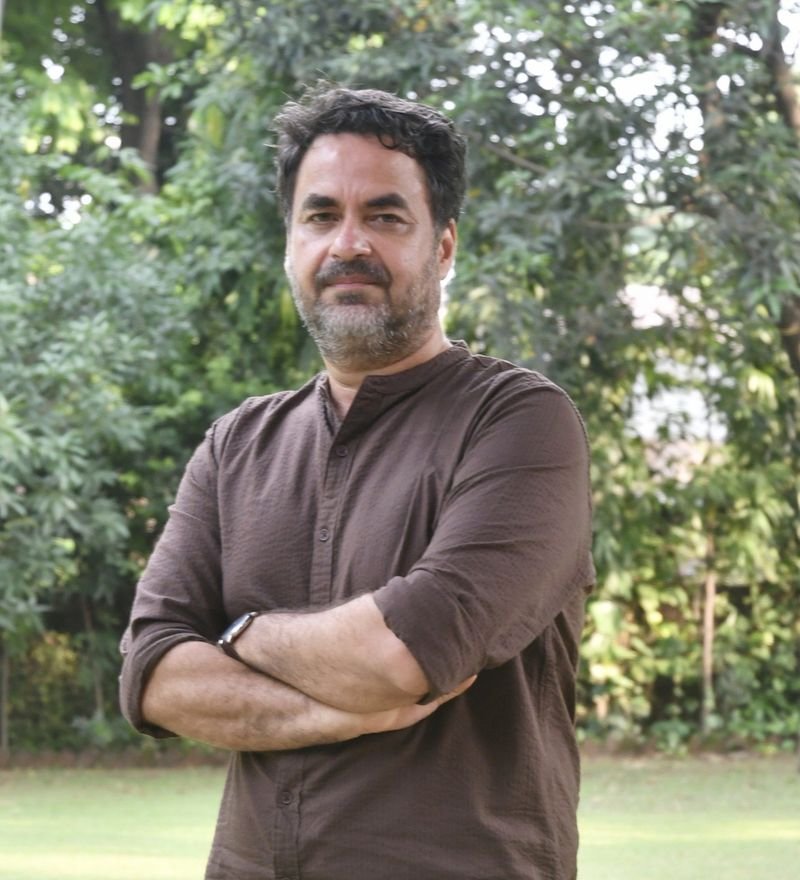

Gurvinder Singh, whose film Rehmat was the only Indian entry at Locarno Film Festival, says the film is less about depicting Punjab’s trauma but more about evoking the emotions it has left behind“I don’t tweak or create films for Western audiences,” says the man of the moment, celebrated filmmaker Gurvinder Singh, whose films are otherwise toast of prestigious international film festivals. As his latest film, Rehmat, became the only Indian entry in the competition section at Locarno Film Festival in Switzerland, the response was indeed overwhelming. But he has no hesitation in admitting that Indian critics understand his cinema better than their foreign counterparts, for Indians can relate to the cultural context better.As Rehmat brings to the fore not only the plurality of Punjab but also opens layers of present to past, rather, the last one century of Punjab, it brings migration, memory and trauma together in the most beautiful poignant way. Like his earlier films Chauthi Koot, Gurvinder does not believe in showing the tragedy but evoking the emotion.Of course, the border state has worn trauma on its heart and he adds, “It is indeed a loss that we are living in a divided region.” One day, he hopes, we connect with the Pakistani Punjab at least culturally. Till then, he has made this affecting film whose central characters are not just Sikhs but Hindus too, and a Punjabi Muslim, who migrated from India Pre-Partition.Casting veteran actor Naseeruddin Shah as Rashid was indeed a departure from his usual way of casting lesser-known faces. Surprisingly, Naseer came on board without even reading the script. In fact, Gurvinder began to write his character only after Naseer said yes which turned out to be a big boon for he could build in inflections which he knew the brilliant actor alone could pull off.As for his confession that he did not have to direct Naseer, Gurvinder nods in the affirmative, “His interpretation of Rashid gave it an edge even I could not have imagined.” As a rule, whether they are seasoned actors or debutants like noted poet Jaswant Zafar, who has made his acting debut at 60 in Rehmat or his Chauthi Koot actor Suvinder Vicky, also seen in Rehmat, Gurvinder doesn’t feel the need to guide his actors.But then, much in his cinema is organic. He feels strongly about how people outside Punjab continue to believe that only Sikhs live in Punjab and blames Jat-dominated Punjabi film industry, ‘immersed in their grandness’ for perpetuating this myth. Yet, he did not deliberately start Rehmat with a story of a Hindu family. While reading all of indomitable Ajeet Cour’s short stories, he selected four, wove them in three different strands and a pattern emerged.For someone who has previously adapted works of male authors such as Gurdial Singh, Waryam Singh Sandhu, he was not unduly conscious of Ajeet Cour’s feminism. He says, “I find this male/female gaze very limiting, ultimately things have to rise to become universal.”Interestingly, for someone who believes cinema and literature are two different beasts, he has returned to literature for inspiration time and again, for there is a lived-in authenticity in the authors’ writings. Rehmat, however, also has his own experience of Punjab, which he has been touring/ researching since 2001. Over the years, whether his cinematic language has become less abstract or not, the writer in him has certainly emerged strongly. Adaptation, anyway is not just literal celluloid translation but involves a lot of reimagining. In the near future, possibility of his original writing leaping on to the screen is very bright. But the niggling query ‘what next’ doesn’t bother him. Nor does he waste time in worrying about why and what mainstream cinema does. Yes, OTT could have changed the landscape of Indie films, created a subsection for niche films like his which otherwise struggle for theatrical release. But sadly the question ‘where can we watch your films’ which haunted his teachers like Mani Kaul still looms large. Yet, after the festival round when Rehmat releases in cinema halls later this year, he hopes it would find audiences.While patriarchy is among the many discomfiting truths we need to confront about Punjab, to know all of Punjab’s redeeming qualities, he says, “You have to watch Rehmat.” Indeed, if the overriding emotion in the film as the title suggests is compassion, Punjab’s legendary hospitality, too, surfaces, only in most unexpected ways and unlikeliest of circumstances. But with Gurvinder, you not only expect the unexpected, but also what is seemingly unachievable like doing away with the background score and including only diegetic music.Gurvinder not only changes the lexicon of Punjabi cinema but also what Punjabis are all about. A lesser person would perhaps go to town about his achievements but this reticent maker, gentle slayer, winner of National Awards, Golden Peacock and many other laurels, would rather evoke admiration… with his pensive thoughts and thoughtful cinema.