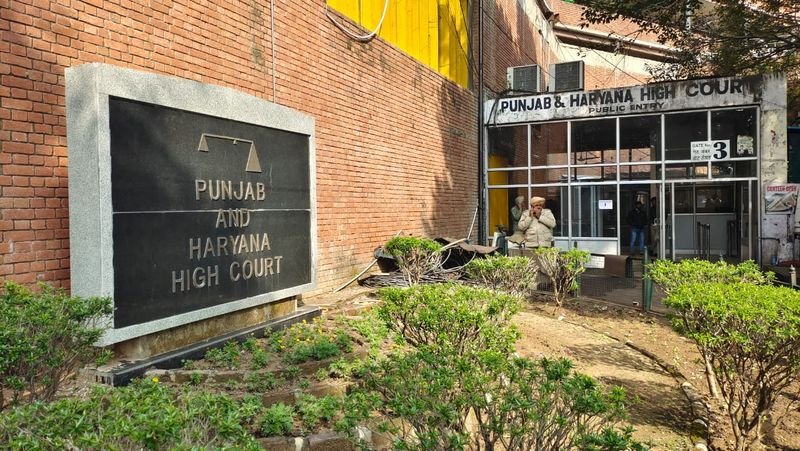

“Who would compensate an accused for irreparable loss caused to personal life, liberty, family circumstances and future career in case he was ultimately acquitted after remaining behind bars for several years?” the Punjab and Haryana High Court has questioned.“Deprivation of liberty for an extended period, if ultimately found to be unwarranted, may result in consequences which cannot adequately be remedied by any subsequent order,” Justice Sanjay Vashisth ruled, while making it clear that the State was expected to remain sensitive to such consequences and could not afford to approach the issue of prolonged incarceration with a casual or relaxed attitude.In his detailed order, Justice Vashisth asserted an accused could not be made to remain incarcerated indefinitely because of lapses or omissions on the part of the prosecution. The issue assumed significance where the witnesses yet to be examined were officials and the delay in the trial was not attributable to the accused.“The question that arises for consideration is whether an accused can be made to suffer incarceration for an indefinite period on account of lapses or omissions on the part of the prosecution, particularly when the witnesses who are yet to be examined are official witnesses,” the Bench observed.Justice Vashisth made the observations while allowing the second regular bail petition filed by an accused in a drugs case registered on March 28, 2025, at Shambhu police station in Patiala district under the provisions of the Narcotic Drugs and Psychotropic Substances Act. His first bail petition was dismissed on March 25.Justice Vashisth’s concern arose from the fact that the charges were framed on November 18, 2025, but the prosecution had failed to examine even a single witness for more than nine months thereafter.On 11 dates, the proceedings recorded: “No prosecution witness is present”. Even thereafter, the matter continued to be adjourned, with September 24 now fixed for summoning prosecution witnesses.Justice Vashisth treated the prolonged custody as particularly significant because the trial had not made meaningful progress despite repeated opportunities.“The position assumes significance while considering the petitioner’s prayer for bail, particularly when he has already undergone a substantial period of incarceration and the trial has failed to make any meaningful progress despite repeated opportunities,” the Bench observed.Brining into focus the constitutional dimension of continued custody, Justice Vashisth observed: “The question of personal liberty, as enshrined under Article 21 of the Constitution of India, assumes significance in such circumstances.”Justice Vashisth asserted the impact of incarceration could not be viewed only from the perspective of the accused, particularly where the family depended upon him for their livelihood. The petitioner was stated to have four minor children dependent upon him.“The Court cannot lose sight of the fact that incarceration of an accused has consequences not merely for him but also for the members of his family who may be dependent upon him for their livelihood,” Justice Vashisth added.The Bench observed the State, as such, could not treat prolonged incarceration as an issue requiring little attention to its wider consequences.“The State is expected to remain sensitive to such consequences and cannot afford to approach the issue of prolonged incarceration with a casual or relaxed attitude,” Justice Vashisth said.Going beyond the immediate bail question to underline the corresponding responsibility of the prosecuting agency in the criminal justice process, Justice Vashisth added: “The object and spirit of the criminal justice system is not merely to arrest a person against whom an allegation of commission of an offence has been made.”The Bench added the State also had to ensure that the prosecution proceeded with due diligence and reached its logical conclusion without unnecessary delay.“The State, through the prosecuting agency, also carries the corresponding responsibility of conducting the prosecution with due diligence and ensuring that the proceedings are brought to their logical conclusion without unnecessary delay.”Before parting with the order, Justice Vashisth asserted the prosecution could not be permitted to derive advantage from its own lapses, “particularly where such lapses have a direct bearing upon the continued custody of the accused.”