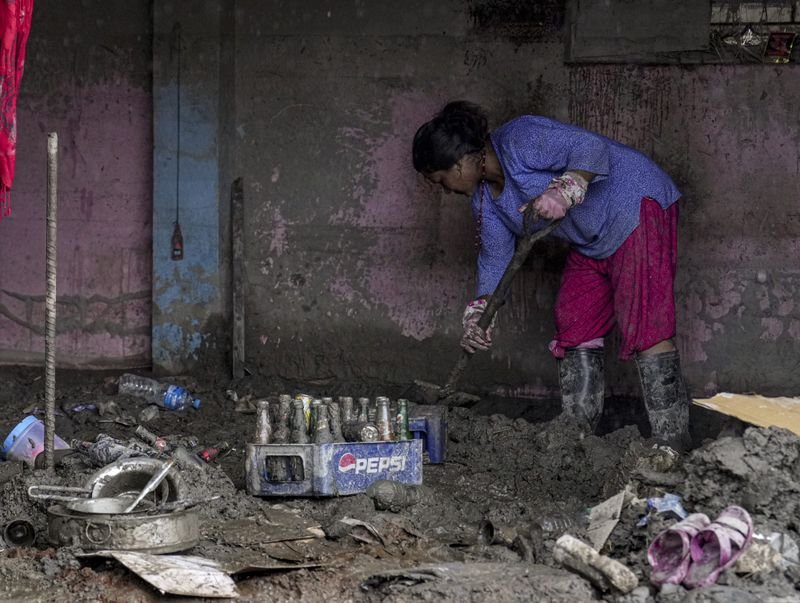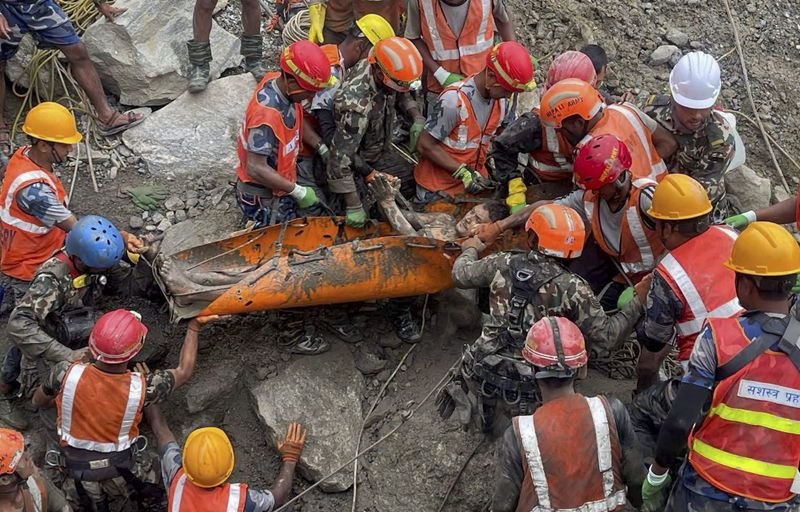

Two men were rescued alive on Friday from a tunnel at the Trishuli 3A hydropower project, nine days after a devastating flashflood trapped them inside, even as the Nepal tragedy death toll rose to 1,295 while more than 5,000 people remained missing.Sanjay Shah, a foreman, and Kabir Maharjan, who worked with the mechanical team at the project, were rescued in an operation led by the Nepal Army.The rescue came amid a massive multi-agency operation across several hydropower projects hit by the August 26 Bhote Koshi river flashflood. Tunnel rescue teams from India, China and South Korea are working alongside Nepali authorities to search for workers feared trapped in tunnels at Langtang, Chilime, Upper Trishuli 1, Trishuli 3A and Trishuli 3B.According to the latest situation update issued by Nepal’s Ministry of Foreign Affairs, 13,093 people, including more than 300 foreigners, have been rescued so far. Around 5,083 people remain missing, including approximately 600 foreigners from 35 countries.Among those still untraced are 275 Indian nationals. Forty-nine of them were missing in the Tibet Autonomous Region (TAR) of China, the Ministry of External Affairs said on Friday. So far, 166 Indians have been rescued in Nepal, while 1,907 others have safely crossed into Nepal from China, according to the latest information available with India.MEA spokesperson Randhir Jaiswal, during the weekly media briefing, said India remained in close touch with the Nepal government and the state governments concerned in India regarding the missing Indians. The names of those rescued were also being released periodically.Jaiswal said India had so far supplied 95 tonnes of relief material through seven aircraft and deployed 54 personnel to support Nepal’s rescue and relief operations. The Indian teams include 30 tunnel experts, 19 forensic experts and a five-member medical team.India is also preparing to send additional assistance, including forensic kits, Bailey bridges and other material requested by Kathmandu, Jaiswal said.The August 26 flashflood caused extensive destruction across Rasuwa, Nuwakot, Dhading and other districts along the Bhote Koshi river, damaging houses, roads, bridges, hydropower facilities and telecommunications and electricity infrastructure.Nepal has mobilised the Army, police, armed police force and disaster-management authorities for the continuing search, rescue and relief operations. Drones, heavy equipment and other specialised resources supplied by neighbouring countries and international partners are also being deployed.India has sent specialised tunnel search-and-rescue teams, which have been working with the Nepali Army at several hydropower sites. Indian forensic experts are also assisting Nepal in DNA collection and identification of recovered bodies.Jaiswal also said, citing information from Chinese officials, that there were currently no Indian travellers in China’s Tibet Autonomous Region.Preliminary assessments by Nepal’s National Disaster Risk Reduction and Management Authority have put the total damage to physical infrastructure, human settlements, bridges, health, education, agriculture, energy, electricity and telecommunications at NPR 387.54 billion ($2.6 billion).The government estimates that NPR 7.95 billion ($53 million) will be required over the next four months for early recovery and initial rehabilitation, even as detailed assessments of the damage continue.