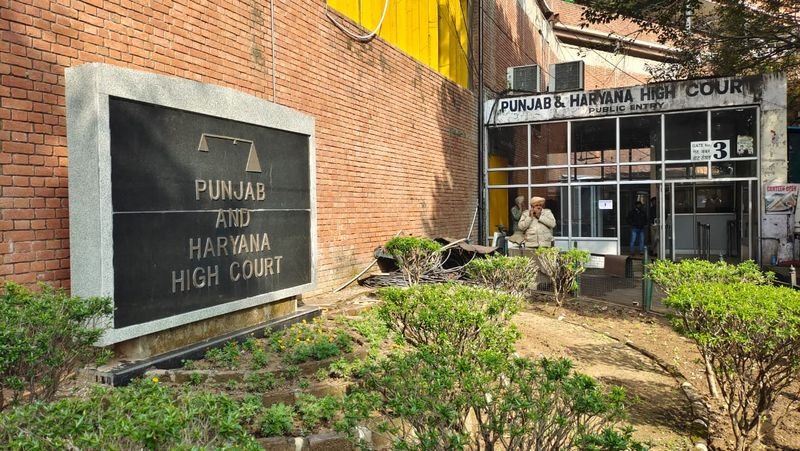

The appointment of Justice Ashwani Kumar Mishra as Chief Justice of the Punjab and Haryana High Court without waiting for the Punjab government’s response has triggered a Centre-state dispute.However, legal experts point out that the position under the Memorandum of Procedure (MoP) is more nuanced than the political claims suggest. Punjab’s consent was not required for the appointment.Justice Mishra, who has been functioning as Acting Chief Justice of the Punjab and Haryana High Court since June 2, will be administered the oath of office by the Punjab Governor on Monday as the full-time Chief Justice, completing a process that had remained pending for nearly a month after the Supreme Court Collegium’s recommendation.The Collegium, headed by Chief Justice of India Surya Kant, had recommended Justice Mishra’s appointment on August 6. The recommendation was part of a set of proposals for the appointment of chief justices of several high courts.Senior advocate SK Garg Narwana said the MoP governing the appointment of high court chief justices requires the Centre to obtain the views of the state government concerned, but does not make its consent or concurrence a condition for the appointment.Former Advocate-General of Haryana and former Additional Solicitor-General of India Mohan Jain added that the proposal for the appointment of a high court chief justice under the MoP is initiated by the Chief Justice of India in consultation with the senior-most Supreme Court judges. The CJI also ascertains the views of the senior-most Supreme Court colleague conversant with the affairs of the high court concerned.Jain said the proposal is then sent to the Union law minister, who is required to obtain the views of the state government concerned before submitting it to the Prime Minister.The Prime Minister advises the President, who makes the appointment under Article 217 of the Constitution. The MoP does not state that the state government must approve, agree to, or concur with the recommendation. The state’s role is consequently one of consultation and not of veto.Jain’s opinion is also consistent with the constitutional scheme governing appointments to the higher judiciary. Article 217 vests the formal power to appoint High Court judges in the President, after consultation with the constitutional functionaries specified in the provision. The Supreme Court’s jurisprudence following the second and third judges cases has accorded primacy to the judicial Collegium in the selection of persons for appointment to the higher judiciary.The distinction assumes significance in Justice Mishra’s case, as the Punjab government had not conveyed its views on the Collegium’s recommendation when the Centre notified his appointment on September 5.The Centre’s position is that there was no procedural infirmity. Additional Solicitor-General of India Satya Pal Jain described Punjab’s objection as “most unfortunate and totally uncalled for”.He said the Supreme Court Collegium had recommended Justice Mishra’s appointment along with proposals for the appointment of Chief Justices of several High Courts, and the views of the state governments concerned were sought.The other state governments conveyed their views within a week, but Punjab did not respond despite the Union government seeking its views on August 10. The governors of Punjab and Haryana conveyed their approval of the proposal, while the Haryana government also sent its views in favour of the appointment.“The views sent by the state governments, even otherwise, are not binding because the only requirement is to take the views of the state governments, and state governments have no ‘veto’ power on this issue,” Jain reiterated.He maintained that Punjab had sufficient time to communicate its views and that no one could “sit over the proposal for an indefinite period” with a view to scuttling the judicial process and politicising a non-political issue.But the absence of a veto does not entirely answer the narrower procedural question raised by the episode: Can the Centre complete the appointment while the state’s views are still awaited? The MoP itself leaves some ambiguity on this aspect.While the procedure for the appointment of High Court judges contains six weeks for state authorities to communicate their comments, followed by a mechanism enabling the Union government to proceed if the comments are not received, the provisions specifically dealing with the appointment of chief justices do not expressly contain a similar six-week deemed-no-objection clause.The provisions relating to chief justices state that the Law Minister is to obtain the state government’s views before submitting the proposal to the Prime Minister. They do not, however, specify what happens if the State does not communicate its views within a stipulated period.This distinction is important in the present case. The Centre had sought Punjab’s views on the Collegium’s recommendation. The state had not conveyed them when the appointment was notified. The issue, therefore, is not one of the Centre dispensing with the state’s role altogether, but of the Centre proceeding with the appointment without receiving a response.The episode nevertheless highlights a procedural gap in the MoP: while it requires the state government’s views to be obtained for the appointment of a high court chief justice, it does not expressly prescribe a time limit within which those views must be furnished or state that silence beyond a specified period would permit the Union government to proceed.That gap has acquired significance in Justice Mishra’s case, but it does not alter the basic legal position that the appointment of a high court chief justice does not require the consent of the concerned state government.