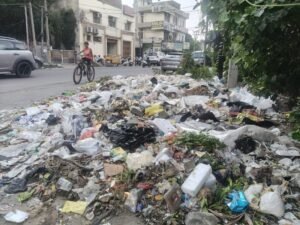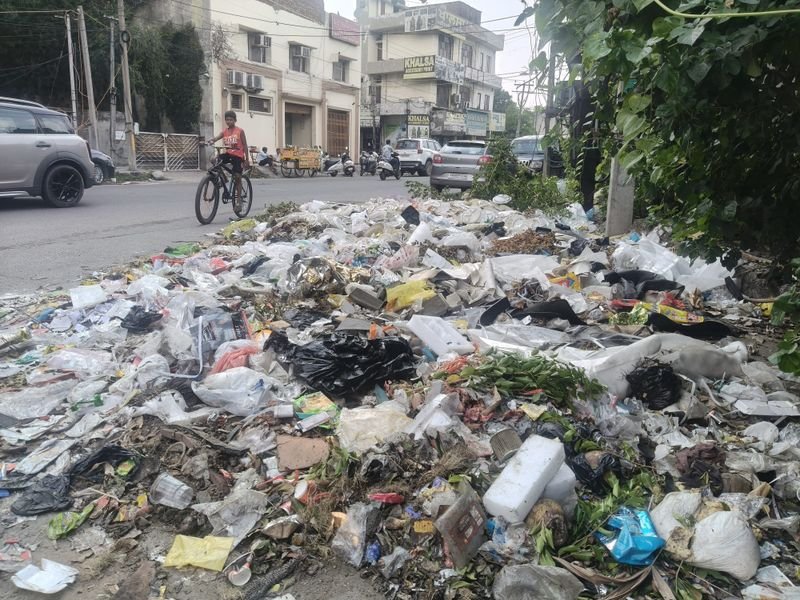

Frequent transfers of top officials in Punjab civic bodies are leaving major urban problems unresolved. Jalandhar Municipal Corporation has seen three changes at the top in the past 60 days, with the latest coming just 27 days after IAS officer Sandeep Rishi took additional charge of the civic body. The latest reshuffle saw PCS officer Surinder Singh appointed as Municipal Corporation (MC) Commissioner.Rishi had earlier headed the corporation for nearly 11 months before being replaced by Nikash Kumar in July this year. The churn is visible in other major cities too. Ludhiana has witnessed five Municipal Commissioner changes since March 2022, while Amritsar has seen 12 and Patiala five.Amid these transfers, Ludhiana, which is the industrial hub of Punjab, continues to grapple with the long-standing pollution of the Buddha Nullah.The frequent transfers effect continuity in development projects, decision making and accountability, particularly as several civic issues require sustained administrative attention.The frequent reshuffles have come at a time when Jalandhar is facing several major civic challenges. The city recently witnessed a six days sanitation workers’ strike from August 19 to 24, during which nearly 2,000 metric tonnes of uncollected garbage piled up on streets, intersections and residential areas.Workers were protesting the proposed Rs 607 crores Integrated Solid Waste Management Project, fearing that the involvement of private contractors could lead to job losses. The strike ended after the MC assured workers, following a meeting with Mayor Vaneet Dhir and then Commissioner Sandeep Rishi, that the project would not be given final clearance.Adding to these challenges, city’s 40-year-old Wariana dumpsite remains another major challenge where National Green Tribunal (NGT) pulled up the corporation over several environmental violations. In August, the NGT directed a fresh inspection of the site after concerns were raised over the accuracy of estimates of the quantity of legacy waste lying there. The NGT pointed out that the Punjab Pollution Control Board (PPCB) inspection had found continued violations of the Solid Waste Management Rules 2016 including the absence of waste segregation, recurring landfill fires, lack of leachate treatment, absence of boundary fencing and illegal dumping along the Kala Sanghian drain.Varun Goel, assistant professor in the Department of Political Science at Lajpat Rai DAV College, Jagraon, said a new Commissioner needs time to understand the city’s critical urban issues and ongoing projects. “A Commissioner should ideally have a year to understand the system and make an impact,” he said, adding that transfers, which were earlier viewed as a punishment for ineffective functioning, had increasingly become a routine.Similarly, BJP councillor Kanwar Sartaj Singh said the frequent changes had affected the handling of major civic issues. “The MC Commissioner is the backbone of the corporation. Jalandhar has seen three transfers in just two months, which affects the sequence in which agendas are presented and discussed in House meetings,” he said.He added that the changes had slowed projects such as the Rs 78 crores Burlton Park revamp, aimed at developing an ultra-sports hub, as well as the Integrated Solid Waste Management Project. “By the time the officer becomes familiar with everything, another transfer order comes up. A city like Jalandhar needs a stable Commissioner,” he said.Environmental activist and Public Action Committee member Jaskirat Singh said the PPCB had earlier asked the Municipal Corporation to disconnect dyeing units from the city’s sewerage network. “It has been five years since the letter was issued. During this period, Ludhiana has seen five Municipal Commissioners but the direction has still not been complied with. These units continue to discharge harmful pollutants into the Buddha Nullah, with no action taken so far,” he said.Punjab low on governance index:The concerning governance picture is also reflected in Praja Foundation’s Urban Governance Index 2024, released on September 26, 2024, in which Punjab was ranked 27th among 31 states and Union Territories, scoring 28.34 out of 100. The state scored only 2.40 out of 15 in city administration, 6.79 out of 30 in empowered city elected representatives and legislative structure; 8.50 out of 25 in empowered citizens and 10.65 out of 30 in fiscal empowerment. Praja had attributed Punjab lower ranking to a higher number of vacancies in local bodies’ administrations, lesser authority of Municipal Corporations over civic issues and the non-publication of account statements online.