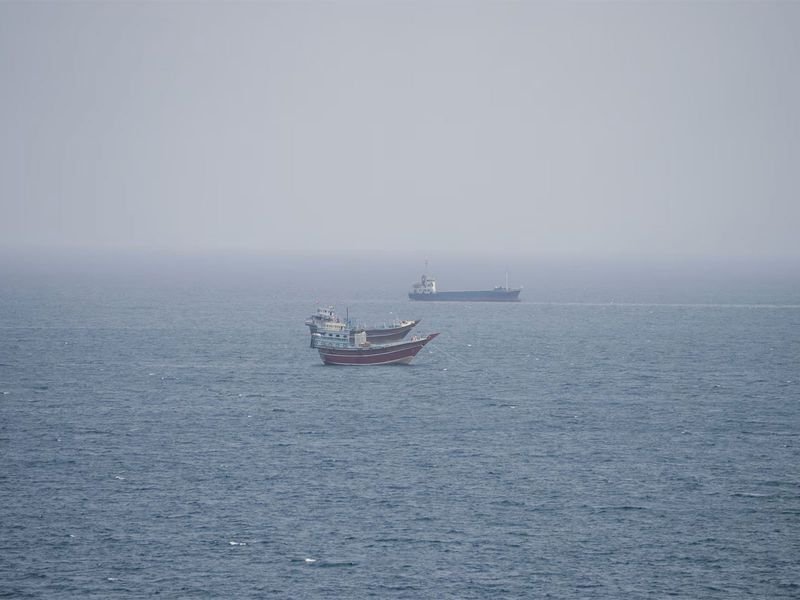

The collision between warships of the Indian and Pakistani navies in the Arabian Sea on Tuesday is the first major peacetime naval incident between the two countries in about 15 years. However, several more serious incidents involving the two militaries in recent decades had the potential to escalate but did not.The last time warships of the two nuclear-armed nations collided at sea was in July 2011. PNS Babar had collided with INS Godavari in the Gulf of Aden, South of Yemen.The incident was later raised in Parliament. Then Defence Minister AK Antony, answering questions in August 2011, said INS Godavari, on an anti-piracy mission in the Gulf of Aden, was close to merchant vessel MV Suez, which had earlier been hijacked, and tried to establish communication.Antony told the Lok Sabha, “PNS Babar closed in on INS Godavari at high speed and carried out a manoeuvre in gross violation of the relevant regulations on navigational safety and in the process came into contact with INS Godavari, marginally damaging the extended safety net on its helicopter deck.”India had lodged a protest with the Pakistan government. Tuesday’s incident in the Arabian Sea appeared broadly similar in nature, involving a collision during naval manoeuvres.Accidental firing of BrahMosOne of the biggest peacetime incidents in recent decades was the accidental firing of the BrahMos missile that landed inside Pakistan on March 9, 2022. The accidental firing was described by some defence analysts as “one in a million error”.A BrahMos missile was accidentally launched from an Indian Air Force storage facility near Ambala during a routine inspection around 7 pm. Within four minutes, the supersonic missile landed 124 km near Mian Channu in Pakistan’s Punjab province.Two days later, the Ministry of Defence formally acknowledged the “technical malfunction” and expressed regret.In Pakistan, its air defence operations centre picked up a high-speed flying object inside the Indian territory. Maj Gen Babar Iftikhar, then Director General of the Inter-Services Public Relations (ISPR), then said, “The high-speed object suddenly veered towards Pakistani territory.”Later, an IAF Court of Inquiry found the Commanding Officer, a Group Captain-level officer, and several others “blameworthy” of the incident.Indian Army helicopter lands in PoKIn October 2011, a Cheetah helicopter of the Aviation Wing of the Army landed in Gilgit-Baltistan in Pakistan-occupied Kashmir (PoK), sparking a diplomatic row.It was sheer luck that Pakistan’s air defence batteries did not shoot it down.The helicopter had taken off from Leh, the headquarters of 14 Corps, to repair a Dhruv helicopter that was stranded at Drass. Running low on fuel, the pilots decided to refuel at Kargil — a few kilometres east of Drass. Spotting what appeared to be a landing ground with fuel drums, the pilots landed to refuel.A Pakistan army jawan approached the helicopter and was asked to refuel it. It was then the crew realised they had inadvertently crossed into PoK.Later that evening, after back-channel diplomatic persuasion, the helicopter returned to India.The single-engine Cheetah is derived from the French Aérospatiale SA 315B Lama. The Pakistan army also operated the same helicopter type at the time, which may have reduced suspicion when the aircraft crossed the Line of Control.Shooting of Pak navy planeAnother peacetime military incident occurred in August 1999, shortly after the Kargil conflict. Pakistan navy’s surveillance plane — the French-origin, Breguet Atlantique, was shot down by an IAF MiG 21 jet some 10 km inside Indian territory in the Rann of Kutch.All 16 Pakistani military personnel on board were killed.According to the Indian version, the MiG 21 tried to force the Atlantique to land in India, but the “intruder aircraft turned in towards the MiG 21 in an attack position”. According to Pakistan, the Atlantique was unarmed and conducting a routine training mission within its territorial limits when it was shot down without warning.The Atlantique is an anti-submarine-cum-anti-ship maritime surveillance aircraft, capable of firing Exocet AM 39 missiles that can target vessels from 100 km.India had then cited Article 2 of the agreement between Pakistan and India on Prevention of Air Space Violations, stating: “Combat aircraft (to include fighter, bomber, reconnaissance, jet military trainer and armed helicopter aircraft) will not fly within 10 km of each other’s airspace.”Being a reconnaissance aircraft, the Atlantique was covered well within the ambit of the article.