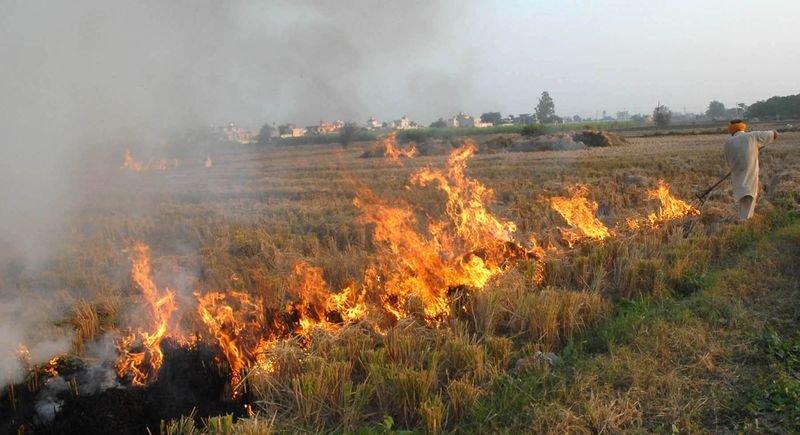

With the time for paddy harvest drawing closer, Punjab witnessed two farm fires, both in Tarn Taran, on the first day of the official farm fire monitoring season. The monitoring begins every year on September 15 and goes on till November 30. Over the past five years, the state has implemented numerous measures to curb paddy stubble burning, resulting in a considerable decline in the practice.However, experts warn that with paddy harvesting expected to begin by the last week of September, the farm fire count is likely to rise from October onwards. The Agriculture Department and the Punjab Pollution Control Board (PPCB) have prepared an action plan to strengthen crop residue management.Paddy cultivation, covering approximately 31 lakh hectares, results in the generation of about 19.5 million tonnes of paddy straw annually.Nearly 7,500 super straw management system machines and 6,500 super seeder machines will be provided to prevent farm fires this season. These tractor-operated machines mulch and incorporate paddy residue, and can be used to sow seeds and apply fertiliser. The area under paddy cultivation in the state has crossed 32.75 lakh hectares this year, raising fears of increased farm fires.Agri Dept to engage doctors for awarenessJalandhar: To curb stubble burning, the Jalandhar Agriculture Department has planned to make doctors a part of its awareness campaign to educate farmers about the harmful health effects of burning paddy residue. The department has collaborated with the Lung Care Foundation, an NGO, to make farmers aware of the consequences of the practice. “Health officials have also been asked to counsel farmers about the health impact of stubble burning at village dispensaries,” said officials.Chief Agriculture Officer Randhir Singh Thakur said, “Every year, we tell farmers why they should not burn paddy residue. Now, the idea is to take along a doctor who can explain to them that stubble burning has a detrimental effect on their own health.”