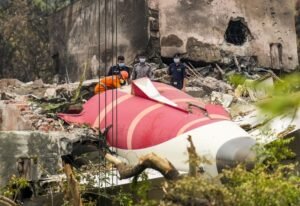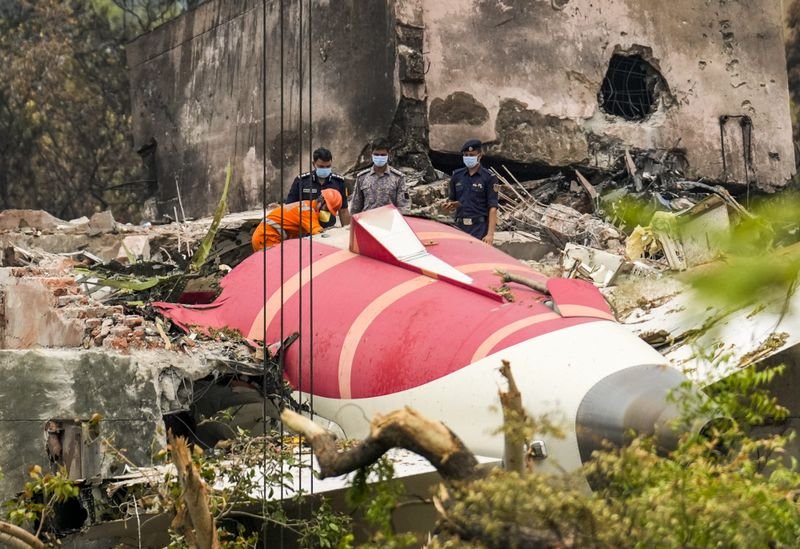

Days after a US-based aviation safety group raised questions over alleged recurring system failures on the Air India Boeing 787 that crashed as AI-171, the Federation of Indian Pilots (FIP) has urged investigators to examine the aircraft’s complete electrical and technical history and issue interim safety recommendations if any wider risk is identified.In a detailed letter to the Aircraft Accident Investigation Bureau (AAIB), FIP president Capt C S Randhawa sought an assessment of the technical material submitted by the US-based Foundation for Aviation Safety (FAS), besides flagging a possible discrepancy between Boeing 787 simulator testing and the sequence of events recorded in the preliminary crash report.The intervention follows correspondence between FAS and AAIB over the June 12, 2025, crash that killed 260 people in Ahmedabad. The US group had claimed records relating to crashed aircraft VT-ANB pointed to recurring electrical, electronic and flight-computer anomalies.AAIB subsequently confirmed that technical information supplied by FAS through the UK AAIB expert on June 10 this year had been examined by its investigation team. FIP said the material reportedly contains details of recurring aircraft-system anomalies, maintenance actions and fault indications.The pilots’ body has now widened the scrutiny to a potentially crucial issue, the timing of deployment of the aircraft’s Ram Air Turbine (RAT).Citing Boeing 787 simulator testing previously submitted to AAIB through a lawyer representing passengers and families affected by the crash, FIP said observations indicated a possible difference from the preliminary report’s timeline, particularly in the interval between fuel interruption and availability of RAT hydraulic power.If the recorded RAT power-generation timestamp and simulator results accurately represent the aircraft’s behaviour, FIP said, the possibility may exist that RAT deployment occurred before the fuel-control switch movement reflected in the preliminary report.Randhawa, however, stressed that FIP was “not advancing any predetermined conclusion”. The pilots’ body wants any discrepancy tested through further simulator validation and engineering analysis and correlated with Flight Data Recorder, Cockpit Voice Recorder and Enhanced Airborne Flight Recorder information.FIP has also sought a comprehensive examination of the Dreamliner’s highly integrated electrical architecture, from power generation and distribution, main and standby batteries and Integrated Modular Avionics to flight-control computers, data networks, load-management units, sensors and electronic monitoring systems.Investigators should look for power interruptions, voltage fluctuations, data-integrity anomalies, software resets, processor reboots, communication losses, erroneous fault messages and other unexpected system behaviour, it said.The federation wants VT-ANB’s historical maintenance and reliability data examined too, including technical and maintenance logbooks, deferred defects, Minimum Equipment List items, repetitive defects, troubleshooting records, component replacements and engineering corrective actions.It has sought correlation of these records with ACARS, Aircraft Health Monitoring data, Central Maintenance Computing Function records, Built-In Test Equipment reports, manufacturer service history and flight-recorder evidence to determine whether apparently isolated anomalies reveal a recurring pattern.The September 18 letter also places on record FIP’s earlier correspondence since 2025 concerning Boeing 787 electrical issues, including its demand for a Court of Inquiry, grounding and DGCA audit, ACARS-related concerns, a proposed electrical reverse-voltage pathway following a battery short circuit, and RAT simulator testing.FIP has asked AAIB to evaluate technical submissions from external experts, safety organisations, manufacturers, operators and investigative authorities, saying credible evidence should either be validated or discounted through documented technical analysis.Crucially, Randhawa said interim safety recommendations need not wait for the final report if investigators uncover systemic technical vulnerabilities, maintenance concerns, operational hazards, design issues, human-machine interface problems or oversight deficiencies.Seeking regular factual updates to maintain public confidence and prevent speculation, FIP said the probe must be “exhaustive, independent, scientifically rigorous, and unconstrained by assumptions”, with every technical, operational, human-factor, maintenance, organisational and regulatory lead pursued before conclusions are reached.