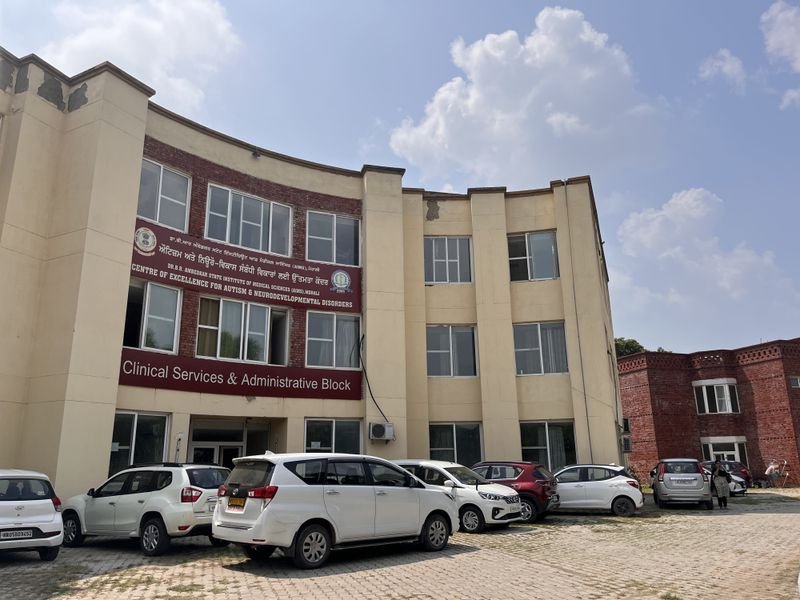

For years, the father, himself a doctor, could not fully explain what was happening to his son. First diagnosed with autism and later cerebral palsy, neither diagnosis captured the full picture. Genetic testing eventually identified a rare inherited condition, bringing the family clarity and relief from the guilt of wondering if something had gone wrong at birth.Today, the boy attends sessions at the Centre of Excellence for Autism and Neurodevelopmental Disorders in Sector 79, Mohali. His father says he is happier, more interactive and has recently started standing.For another family, the struggle was not a lack of treatment but a lack of clear information. The mother of a three-year-old with speech delay and poor eye contact spent nearly a year seeking advice and receiving conflicting opinions about therapy and diagnosis. An assessment at the Mohali centre helped put things into perspective. She was guided on the different interventions her child might need, including speech and language therapy, occupational therapy, special education and communication support.A BSF Commandant’s wife, who travelled from Uttarakhand, said her two-year-old daughter’s only way of communicating was crying and clinging to her. After regular sessions at the centre, the child now speaks clearly, tells her mother what she wants and communicates her needs instead of crying.Another mother, who had returned from Australia, said she came to Chandigarh after someone recommended a private facility for autistic children. However, she saw little progress in nearly eight months despite paying around Rs 30,000 a month. She later learnt about the Sector 79 centre through the Mohali Civil Hospital and her child showed significant improvement within four months.For all these families, the biggest advantage is that assessment, specialist advice and multiple therapies are available under one roof. The centre is among the few government facilities in North India offering such a range of services at a single location.The Centre of Excellence was conceived by the Punjab Government in 2016, with its foundation stone laid by then Chief Minister Parkash Singh Badal on November 26 that year. The centre was inaugurated on December 15, 2021, but did not become fully functional. Its OPD services were finally launched on April 2 last year by Punjab Health Minister Dr Balbir Singh.Since then, the centre has grown into a busy public facility serving around 240 children. Families travel from across Punjab, even from outside the state, including Himachal Pradesh and Haryana. Sixteen overseas families from countries such as Canada, Australia, the UAE and Saudi Arabia are also enrolled.Multidisciplinary facilityThe centre is a state government institution functioning under the aegis of the Advanced Autism Care and Research Society and Dr BR Ambedkar State Institute of Medical Sciences (AIMS), Mohali.Its board is headed by Chief Minister Bhagwant Mann as chairman, with Health Minister Dr Balbir Singh as senior vice-chairman and the Health Minister’s adviser as vice-chairman, among others. Its multidisciplinary team includes three psychiatrists, three neurodevelopmental paediatricians, two special educators, two speech therapists, an occupational therapist, two physiotherapists and four psychologists.For families, this combination can mean fewer visits to different hospitals and private therapy centres. Children can be assessed and treated by specialists from different disciplines at the same institution.The centre provides assessment and intervention for developmental conditions and offers Applied Behaviour Analysis (ABA), speech and language therapy, occupational therapy, physiotherapy, special education and life-skills training. Therapy plans are tailored to the individual needs and strengths of each child. All services are provided free of charge.Senior consultant, neurodevelopmental paediatrician and parenting coach Dr Chhaya Prasad brings 20 years of experience in working with children with autism and other neurodevelopmental disorders.The centre has also begun focusing on parents, who often carry much of the responsibility for managing therapy and daily care. Special workshops are organised to help families understand their children’s needs and keep pace with treatment.A team from the Mohali Civil Hospital, including Senior Medical Officer (in-charge) Dr Parminder and Senior Medical Officer Dr Taranjot Kaur, said the hospital had voluntarily started exploring meditation and healing sessions for parents.Parents, meanwhile, have sought structured support groups and regular counselling as part of the centre’s programme.One parent described the revival of the centre as an “amazing beginning”, but said vocational services and a parent-support group were also needed. Another parent, whose son has benefitted from speech and physiotherapy, reported significant improvement but felt that more frequent sessions could help further.Their demands point to a larger change. Once families find a facility they trust, their needs go beyond diagnosis and therapy. They want vocational training, counselling, residential facilities and pathways towards greater independence for their children.The transformationThe centre’s current state is a sharp contrast to what officials found before its revival. Director Dr Navdeep Saini said an inspection had revealed a badly neglected building. Ceilings were damaged, air-conditioners had been stolen, wires were missing, washrooms were non-functional and security arrangements were inadequate.MLA Kulwant Singh, who is also managing director of Janta Land Promoters Ltd, contributed Rs 1 crore from his personal funds to help make the facility operational, Dr Saini said. The contribution was used for essential works, including electrical repairs, water and washroom facilities, security and power backup. NGOs and other organisations also extended support.Apart from government funds, various industries and banks are contributing CSR funds towards facilities at the centre. Indian Oil and IDBI Bank are in talks to contribute more than Rs 70 lakh to the centre.Missing linkSome parents travelling from distant districts have even taken rented accommodation near the centre so their children can attend therapy sessions regularly.The initial project included a residential block for families travelling from far-off places. The centre has sought government assistance to activate the residential component and address other infrastructure and operational requirements. Health Minister Dr Balbir Singh said efforts were underway to make the centre fully operational before the upcoming Punjab Assembly elections.“The previous governments repeatedly ignored the project and it took nine years to start OPD services at the centre since the project was conceived in 2016. We are determined to focus on the complete revival of the various blocks. There will be significant changes and updates in the coming months,” he said.MLA Kulwant Singh said he had written to the Chief Minister seeking support and had also sought a grant of Rs 4-5 crore.The next challengeFor parents of adolescents and young adults, the focus is gradually shifting from early intervention to education, vocational skills, employment and independent living. One mother has a 27-year-old son with Down Syndrome and ADHD. He studied in a regular school and now wants to pursue a diploma and eventually find employment.The original building plan included a vocational training centre in the basement. Parents believe making this facility functional could help bridge the gap between schooling and employment.Another mother recalled how her son, now pursuing BSc (Physics), had once been considered academically limited. He eventually scored 91.57 per cent in Class XII. Today, he travels independently and takes an active interest in computers, art, theatre and music. For her, progress is not measured only by therapy. Children also need opportunities to participate in everyday life, discover their interests and become as independent as possible.Just a beginningThe revival of the Mohali centre has demonstrated the demand for a public-sector multidisciplinary facility for autism and neurodevelopmental disorders. Its importance lies not only in the number of children it serves, but in bringing assessment, consultation, therapy, special education and psychological support in one place.Director Dr Saini said the focus was now on expanding the centre’s services and creating a broader support ecosystem for families. “Our Autism Centre of Excellence is not merely a centre for intervention; it is a place where every child is understood, valued and empowered. The focus is to ensure excellence in assessment, education, therapy, research and family support, while fostering an inclusive environment that enables every individual with autism to reach their fullest potential. We will be enhancing our services next month,” he said.For families, a functioning OPD is only the first step. The larger goal is a facility that can provide residential support, vocational training, parent counselling, employment pathways and long-term assistance as children grow into adulthood.AT A GLANCEAppointments: Book through the centre’s website, helpline or by visiting the centre. OPD services are available Monday to Saturday, 9 am to 5.30 pm. Online consultations are also available on select evenings.Fee: All services are free of charge.Therapies: Applied Behaviour Analysis (ABA), speech and language therapy, occupational therapy, physiotherapy, special education and life-skills training. Individualised therapy plans are prepared according to each person’s needs and strengths.Patients served: Children and adults aged six months to 40 years.Website: https://coeandd.vercel.app/enHelpline: 0172-292700BEYOND LABELSWhat is autism: A lifelong neurodevelopmental condition affecting communication, behaviour and social interaction.The spectrum: Every autistic person is different, with varying strengths and support needs.Early signs: Delayed speech, limited eye contact, repetitive behaviour and difficulty in social interaction.Sensory world: Some may be highly sensitive to sounds, lights, touch or crowds.No single cause: Genetics and developmental factors are believed to play a role.Diagnosis: Based on developmental and behavioural assessment; there is no single medical test.Early support: Speech, occupational and behavioural therapies can help build communication and daily-life skills.Beyond the diagnosis: Acceptance, inclusion and understanding are as important as intervention.