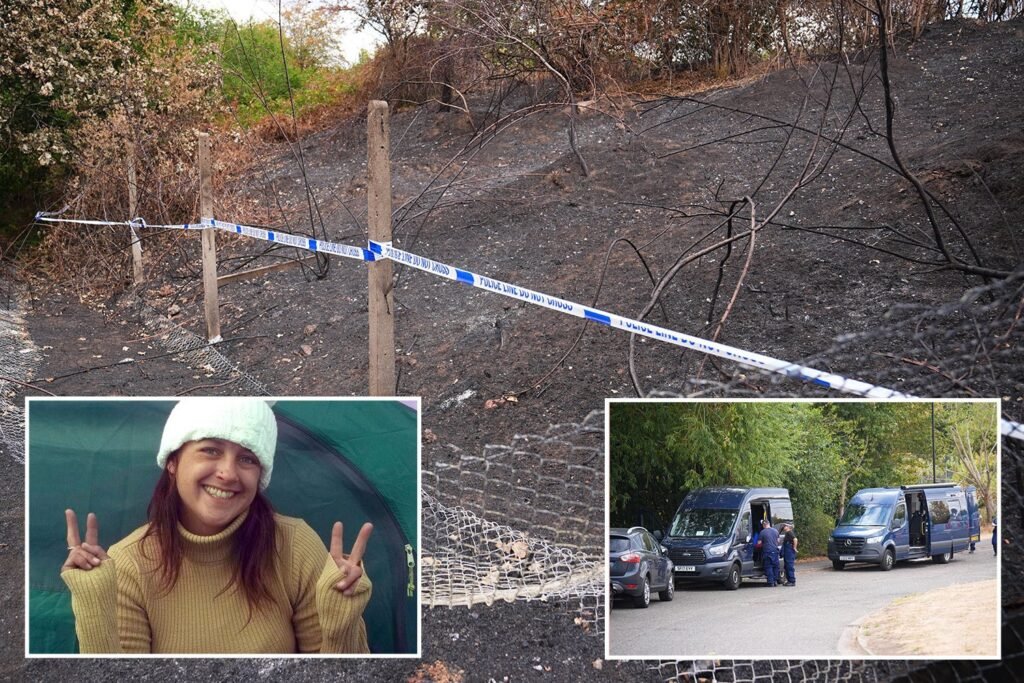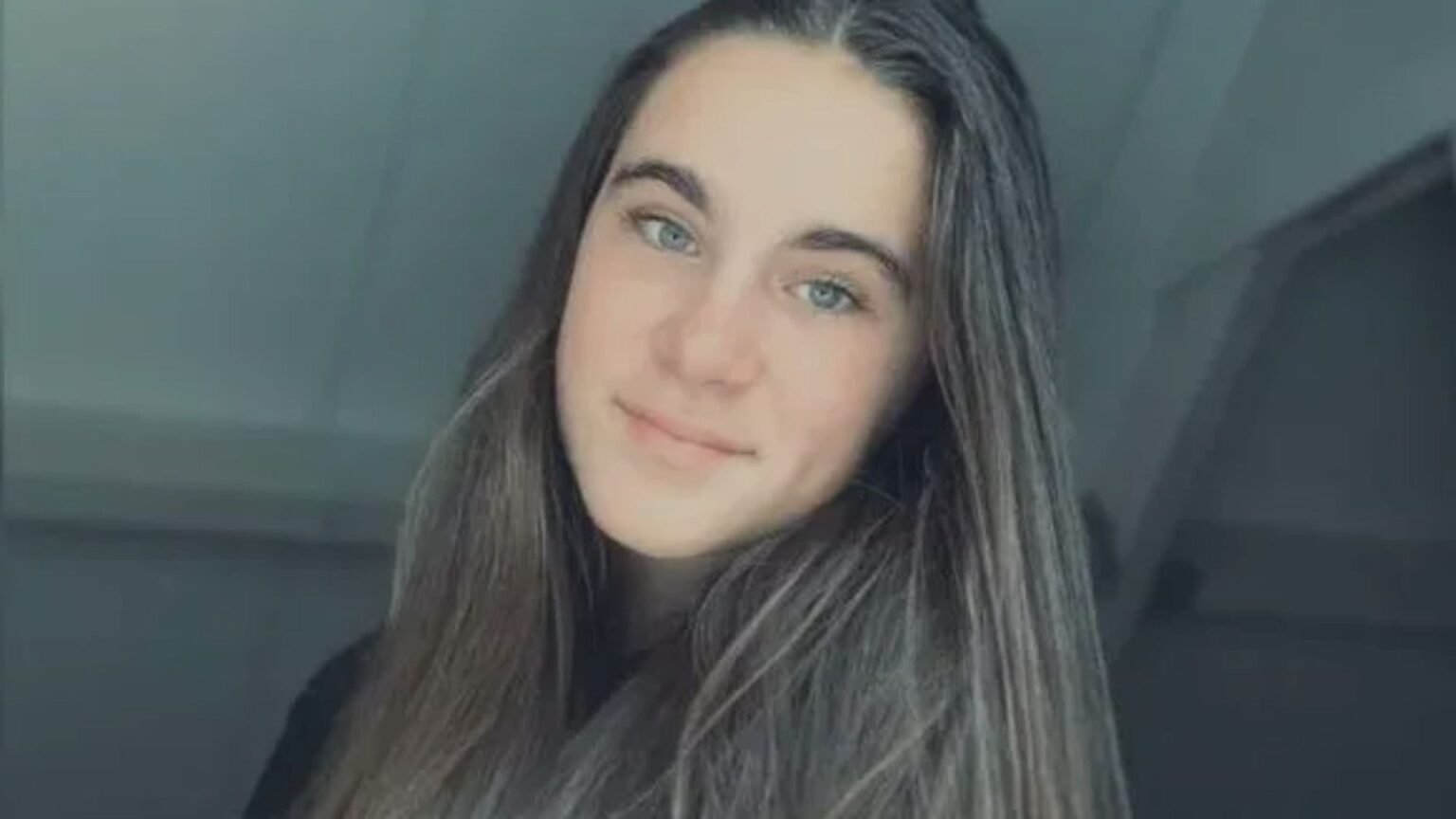


SAT in her childhood bedroom, 17-year-old Milou Verhoof was getting ready for the last time.
Her nails were painted and her evening gown and high heels had been chosen – not for a teenage night out, but for the coffin in which she would be buried.
Milou Verhoof died aged 17 after she requested to be euthanised
Her psychiatrist, Menno Oosterhoff, was the one who assisted her wish to die Credit: Facebook/Menno Oosterhoff Dwangstoornis
Her parents sat beside her among the familiar clutter of her youth.
And watching over them was psychiatrist Menno Oosterhoff, his ice-blue eyes fixed on a girl whose young body was healthy, but whose mind had become somewhere she could no longer bear to live.
Sign up for The Jattvibe newsletter
Thank you!
“Girl, have a good trip,” he told her.
Then the lethal drugs entered Milou’s body and, as her parents watched, the machinery keeping their daughter alive began to shut down.
justice quest
Woman who died by euthanasia after gang-rape left clues on attackers in diary
‘DEVASTATING’
Woman, 31, given ‘grim’ cancer diagnosis receives ‘haunting’ realisation
With his explosion of white Einstein-like hair, deeply furrowed face and piercing stare, Oosterhoff would become the unmistakable face of one of the Netherlands’ most controversial – yet entirely legal – medical practices.
Three years ago, after years of psychological trauma, Milou was granted what she regarded as her final escape: death.
The rape survivor had endured severe mental illness, self-harm, repeated suicide attempts and years moving through psychiatric care.
After assessing her case, Oosterhoff ultimately concluded her suffering met the threshold for euthanasia.
But the decision to end the life of a physically healthy 17-year-old has ignited a medical and ethical battle that continues long after Milou’s death.
Her parents praise Oosterhoff for finally understanding the depth of their daughter’s suffering.
But fourteen psychiatrists and doctors secretly contacted Dutch prosecutors calling for her case to be investigated.
The rape survivor had endured severe mental illness, self-harm, repeated suicide attempts Credit: Unknown
But the decision to end the life of a physically healthy 17-year-old has ignited a medical and ethical battle that Credit: milou.verhoof / instagram
And leading American psychiatrist Professor Paul S. Appelbaum has now told The Jattvibe that allowing assisted death for psychiatric illness – particularly among adolescents – is deeply problematic.
“The general notion of assisted suicide for people with psychiatric disorders is very problematic,” said Prof Appelbaum, Dollard Professor of Psychiatry, Medicine and Law at Columbia University.
At the heart of his concern is one of psychiatry’s most difficult questions: when somebody suffering from severe mental illness says they want to die, can doctors reliably disentangle a considered wish for death from the illness itself?
Prof Appelbaum said: “It’s impossible to separate the effects of the illness itself from the decision-making of the person who says that they want to die.
“Many psychiatric disorders have a depressive component which can lead people to feel hopeless and helpless, which can motivate decision-making in cases where people seek to end their lives.”
Two months before her death, Oosterhoff filmed a conversation with Milou in which she discussed the future she believed had been stolen from her.
“I would have liked to have had another life, but that was not granted to me,” she said.
Asked what she would say to those who believed she was too young to make such an irreversible decision, Milou replied: “It’s not about age; it’s about the suffering. I tried everything I could to make it better.”
After assessing her case, Oosterhoff concluded her suffering met the threshold for euthanasia Credit: Facebook/Menno Oosterhoff Dwangstoornis
Her parents praise Oosterhoff for finally understanding the depth of their daughter’s suffering (mum Mireille Verhoof pictured) Credit: op1
Those words now sit at the centre of the storm surrounding her death.
The doctors who challenged the case questioned whether Milou was mentally capable of making the decision and raised concerns about the influence of her parents and two psychiatrists.
Her parents responded by launching disciplinary proceedings against those behind the letter, accusing them of causing “serious harm” while they were still grieving their daughter.
But Prof Appelbaum said: “Younger people are still developing.
“Sometimes personalities are not fully formed, social relationships are in transition, and they are dealing with a tumultuous time in their lives.
“They may feel very differently about life in five years than they do at present.”
Behind that fierce argument lies the story of a girl whose childhood was ruptured by a series of devastating events.
Milou’s mother Mireille said she had once been a cheerful and sensitive child growing up in a loving middle-class family.
She said: “We always said to each other, my husband and I, that the only one we were not going to expect any trouble from is our girl.
“She was so nice and so sweet. Always, always laughing… That was what made her vulnerable, I think.”
Milou had once been, according to her mother Mireille, a cheerful and sensitive child Credit: milou.verhoof / instagram
The Netherlands legalised euthanasia in 2002 under strict due-care criteria
But the foundations of that childhood began to crack when Milou’s older brother Daan, who has Down’s syndrome, became critically ill at 11 and spent a month in a coma.
Milou was left plagued by nightmares and flashbacks
And two years later, she was raped.
Her mental health deteriorated into post-traumatic stress disorder, depression and self-harm.
Then, during a later admission to a secure psychiatric unit, she was sexually abused again by another patient.
What followed was a gruelling procession of hospital admissions, medication, treatment and suicide attempts.
Eventually, Milou became convinced that nothing could make her suffering stop.
She repeatedly requested euthanasia but most psychiatrists rejected her pleas, citing her youth, while another delayed her application.
Her family said those refusals deepened her despair, leaving Milou feeling that nobody truly grasped the scale of what she was enduring.
It is precisely that belief – that some psychiatric suffering can become permanent and untreatable – that Prof Appelbaum disputes.
Euthanasia laws in countries including the Netherlands rely on strict criteria surrounding unbearable suffering and the prospect of improvement.
But Prof Appelbaum argues that applying the idea of “irremediability” – something that is impossible to correct or cure – to psychiatric illness is fraught with uncertainty.
He said: “It requires that there is no hope that the person will ever get better.
“And that is never the case with psychiatric disorders. Over time, with treatment or without treatment, people can improve and often do improve.
“That is particularly true when you’re dealing with younger people who are still developing.”
Desperate to find somebody willing to consider her request, Milou eventually approached Oosterhoff after learning about his work through media coverage.
To supporters, he is a compassionate doctor prepared to confront a kind of agony that can be invisible to everybody except the person enduring it.
Critics fear his work crosses a dangerous line in medicine.
Prof Appelbaum is particularly troubled by doctors who become known for handling assisted-death cases without having spent years treating the patient.
He said: “There are physicians who come to specialise in ending people’s lives, which is very disturbing.”
“These are not physicians who have any longstanding relationship with the person seeking their assistance. They really don’t know them that well.”
The Prof added: “The fact that any psychiatrist who is not the therapist of a particular person would step in, do an evaluation and decide to assist them in ending their life is another deeply problematic component of the way these laws are being applied.”
The Netherlands legalised euthanasia in 2002 under strict due-care criteria, including that a patient’s request must be voluntary and well-considered, their suffering unbearable with no prospect of improvement and that there is no reasonable alternative.
Most cases involve severe physical illness, but psychiatric euthanasia has become an increasingly contentious corner of the law.
Oosterhoff argues that the torment caused by mental illness should not automatically be regarded as less serious because it cannot be seen on a scan or traced through a failing organ.
“It is quite unnatural to give a person that is physically healthy a lethal injection,” he has said.
“But we underestimate the burden of psychiatric illnesses. We say, ‘come on, the sun is shining,’ and so on.
“The other way is that people suffer unbearably, or that they commit suicide.”
He also acknowledges one of the central difficulties facing his profession: psychiatry does not possess the same diagnostic certainty as many areas of physical medicine.
“The scientific basis of psychiatry is still very, very unclear,” Oosterhoff said. “A lot of things people say are just based on nothing.”
Yet he argues that uncertainty cannot absolve doctors from making agonising clinical decisions.
“Not giving euthanasia has consequences too,” he said.
For Oosterhoff, those consequences can mean leaving desperately ill patients trapped between suffering they regard as intolerable and the possibility of a violent suicide.
Prof Appelbaum warns doctors who regularly carry out assisted deaths may begin to see patients differently.
“I suspect there are a mix of motives involved,” he said. “I suspect there is, somehow, a strong and overriding commitment to individual autonomy.
“Some may have personal life experiences that play into it as well.”
He added: “When we talk about people who travel from place to place for this and set up a clinic whose sole purpose is to terminate people’s lives, regardless of whether their motivations are sincere or not, it is a problem.”
Such clinics can operate legally in the Netherlands when cases comply with Dutch law – something Prof Appelbaum argues exposes a broader problem with the framework itself.
Oosterhoff initially suggested she try deep brain stimulation, a treatment sometimes considered in severe and treatment-resistant obsessive-compulsive disorder.
But Milou remained determined to die.
On October 2, 2023, Oosterhoff travelled to the Verhoof family home, where she had chosen to spend her final moments.
The procedure involved administering a coma-inducing drug and a muscle relaxant, which stopped her breathing.
“You’ve been through so much,” Oosterhoof said, and Milou died aged 17.
Her parents have steadfastly defended their daughter’s decision.
Mireille said Oosterhoff’s assessment ultimately confirmed what she and her husband believed they had witnessed for years.
“Because of Dr Oosterhoff’s extremely careful and cautious approach, we as parents trusted that his conclusion – that Milou truly could not go on and that the days were unlivable for her – was the only correct one and confirmed what we as parents had long seen in our child,” she said.
Prof Appelbaum said such strong parental support for an adolescent seeking death was striking.
“I think it’s unusual to see parents strongly supporting one of their children’s decisions to end their life,” he said.
He noted that even when families are confronting a clearly terminal physical illness, relatives can struggle bitterly with accepting such decisions.
“I don’t know the dynamics within the family,” he stressed, “but I think they have to have been unusual, at the very least.”
And Oosterhoff even spoke at Milou’s funeral.
A documentary, Milou’s Battle Continues, followed her journey towards euthanasia and became Dutch public television’s most-watched programme of the year.
Oosterhoff went on to carry out 12 euthanasia procedures involving psychiatric patients during a 13-month period across 2023 and 2024.
They included the first legally approved Dutch cases involving 16- and 17-year-olds receiving euthanasia solely on the grounds of psychiatric suffering.
For Prof Appelbaum, applying such laws to adolescents remains especially perilous.
“The application of these laws in psychiatry is very fraught,” he said.
“It’s particularly problematic when you’re dealing with young people, especially adolescents or early adults who are still in the developmental process.”
Oosterhoff believes that, after exhaustive assessment and when every reasonable avenue has been explored, refusing euthanasia does not necessarily preserve life in any meaningful sense – and may instead leave a patient facing years of intolerable suffering or suicide.
He says the reaction of some patients and families reinforces his conviction.
“The gratitude for what I did is so immense sometimes,” he said.