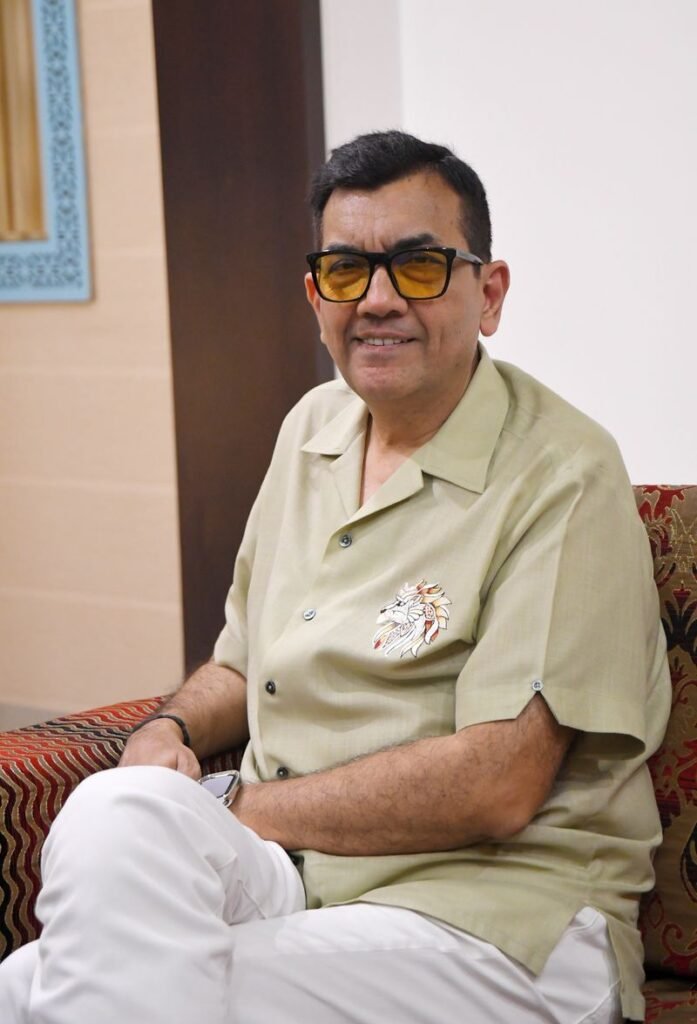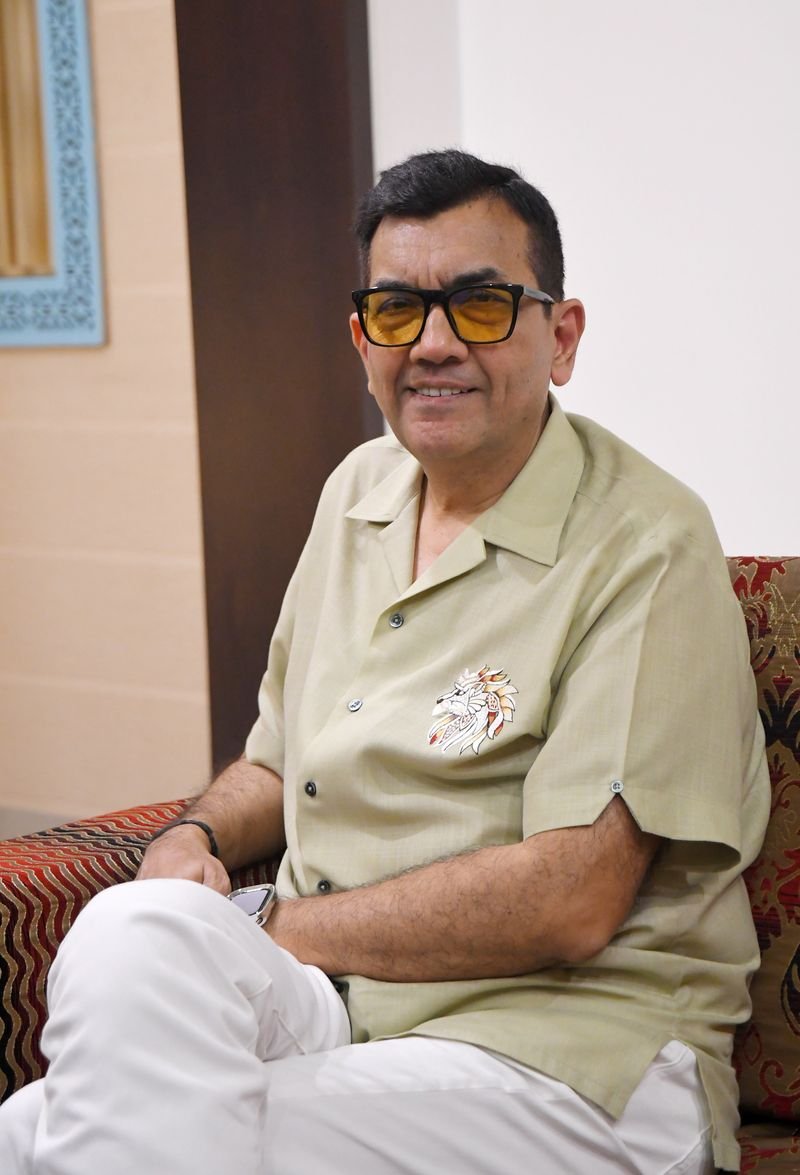

Chef Sanjeev Kapoor was christened India’s first celebrity chef at a time when the term itself had yet to arrive in the country. It was still stuck at customs, presumably waiting for someone to figure out how to plate it.And Chef Kapoor doesn’t think that’s fair. Not entirely.On a sun-drenched Monday afternoon on the CGC campus in Landran, he sits with the unhurried assurance of a man who has long since made peace with his own reflection. There is not a jittery bone in his body, no desperate reaching for the next clever thing to say.He talks about authenticity, his Chandigarh-themed sneakers and the strange, enduring ways in which food carries a civilisation’s memory. About the Woman who has long been the custodian of the kitchen, passing down stories masquerading as recipes.Here as the guest of honour of Kahin Gum Na Ho Jayein – Season 9, an initiative that aims to celebrate India’s forgotten culinary heritage and the knowledge carried through its kitchens, Kapoor turns his attention to the recipes and traditions at risk of slipping quietly into obscurity.The initiative travels across 23 locations in India, with this season extending to the USA, Canada and New Zealand, before bringing regional winners together for a grand finale in New Delhi. Its premise is simple enough, and perhaps all the more urgent for it: culture survives when someone remembers to cook it.“In India – probably more than anywhere else – the real celebrity chefs are the homemakers… It’s just that some people, like myself, get more fame,” he proclaims in his trademark cadence, equal parts conviction and kindness. “Which is unfair.”He speaks of the need to celebrate and reward the women who cook and care for their families without expecting applause.“Agar ghar wale hi, apne ghar mein apni maa, behen, patni ko celebrity samajhna shuru kar dein (If the family itself begins to consider its mother, sister and wife a celebrity), that’s it,” he says. You don’t need the world to confer the title. You need the people at home to recognise what has been in front of them all along.“Sirf itna hi keh dein, ‘Kitna achha bana hai’ (All they need to say is, ‘This is so delicious’). Duniya ko kehne ki koi zaroorat nahi hai (There is no need for the world to say it).”The pursuit of being authentically authenticIn a world increasingly obsessed with food being ‘authentic’, but where recipes travel across borders, generations and cultures, how does one distinguish between preserving a culinary heritage and allowing it to evolve?For Kapoor, the answer is rooted in his own understanding of what authenticity means.“To me, authentic is what I do. So, I’ve only done everything authentic. It’s Sanjeev Kapoor authentic,” he says. “There’s a lot that people have to learn… to see what authenticity is.”There is something almost mischievous about the certainty. In an industry forever reinventing its packaging, Kapoor seems content to leave the label intact.A dish called ChandigarhThen, with the conversation running on borrowed time, he offers Chandigarh a three-word description.“If Chandigarh were a dish, what would be three words you’d use to describe it?”“Come here soon,” he says.City Beautiful becomes the invitation. A chef who has made a career out of feeding people, still choosing, in the end, to ask them to come closer.And perhaps that is what Kapoor means when he says India was always ready for a woman celebrity chef: the women participants from Panchkula and Sirsa insisting on reviving forgotten recipes for their children because they are healthier; the Patiala participant, as proudly dolled up as her display, presenting her heritage with unmistakable pride; and the young CGC student insisting on a traditional, tomato-free thali, because her culinary roots, and her longing, belong to the Punjab of before 1947.The women in these kitchens have been carrying the recipes, the memory and the culture all along.