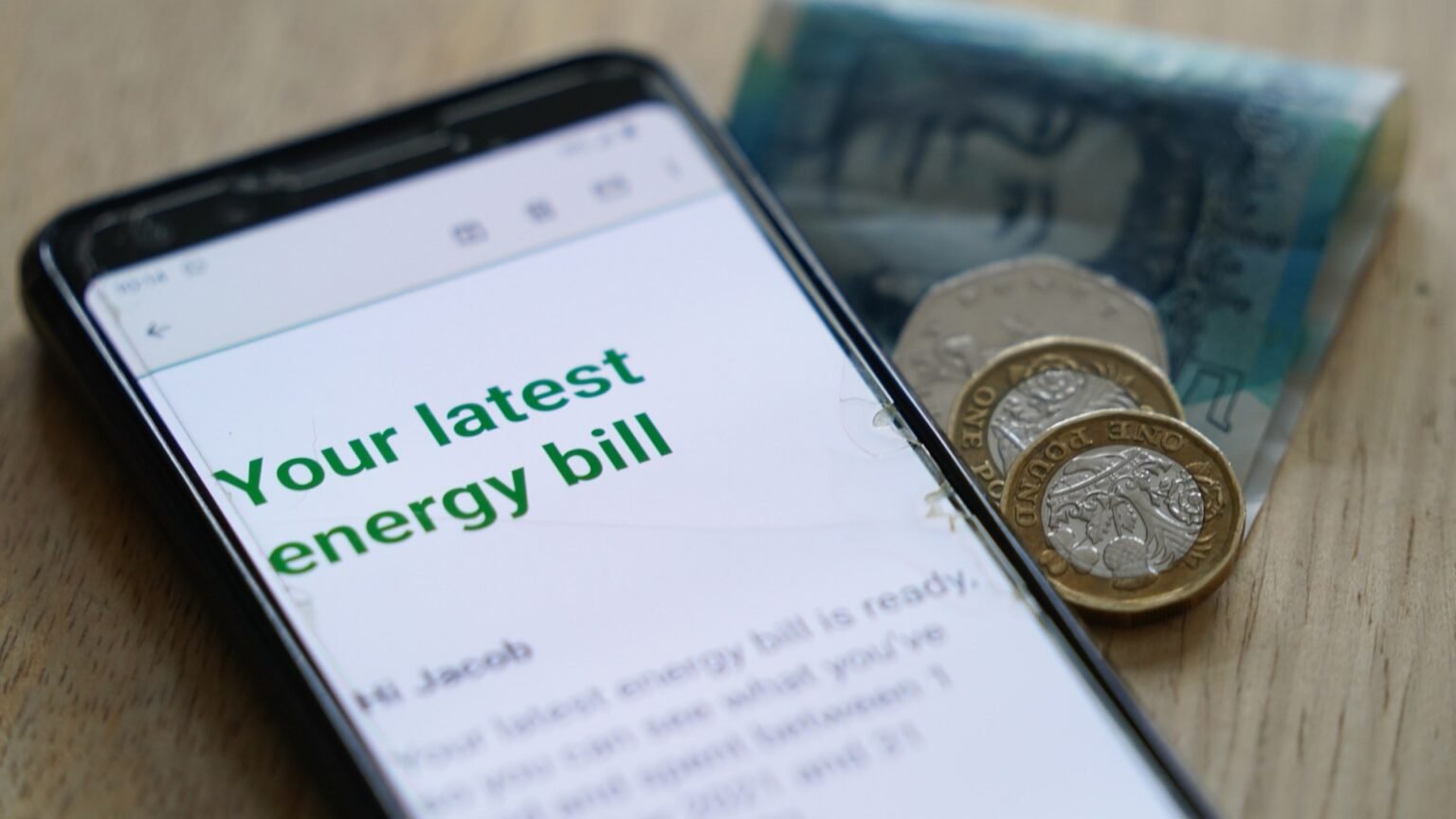


HOUSEHOLDS could see their energy bills fall if the Government agrees to make the default household electricity tariff time-varying.
The cost of producing electricity varies depending on the time and where it is made but consumers don’t pay prices that reflect this, according to LSE and the Institute for Fiscal Studies.
Time-varying prices that change based on the hour, day or season to match supply and demand costs could help to combat high electricity prices which “look set to be with us for many years to come”.
Most consumers don’t face electricity prices that reflect these differences.
Sign up for the Money newsletter
Thank you!
If they did this would give stronger incentives for customers to use electricity when it is cheaper to supply.
The study said that electricity in Scotland could often be “effectively free” because of frequent windy weather.
Read more on energy bills
ZERO SENSE
PM doubles down on trying to reach Net Zero by 2050 despite soaring bills
BILL HELP
How to protect yourself NOW as energy bills set to soar by £427 from January
It added that there could be so much electricity that the grid operator must pay to turn wind turbines off to avoid overloading the grid.
Meanwhile, at other times and particularly in the south of England, it needs to pay for expensive gas generators to boost supply.
The government has ruled out regional electricity markets, but the report suggests that households could save by making the default household electricity tariff time-varying.
It also suggested higher subsidies for electric heat pumps in areas where the cost of producing electricity is low, while there could be higher subsidies for solar panels in areas where demand is more likely to be met by gas generators.
The tariffs could act as an incentive for consumers to use electricity, including running their washing machine, when it is cheap to supply.
The news comes as the economy is forecast to grow by 1.3 per cent this year but spending will slow in the second half of the year as households deal with rising energy bills, according to KPMG’s latest economic outlook.
The LSE report suggested the government could improve the efficiency of the UK’s electricity system to help ease cost of living pressures on households.
The cost of balancing demand and supply is projected to double in real terms by the end of the decade to £7billion.
The news comes as energy bills are set to rise by 4% in October, pushing up the cost of a typical dual-fuel bill from £1,663 to £1,723 a year.
Meanwhile, forecasters suggest that households annual energy bills could leap by around 25% in January, according to Bloomberg Economics.
Bobbie Upton, research economist at the IFS and a co-author of the report, said time-varying prices would lower bills for consumers with minimal cost to the Government.
He added: “The extent of savings would depend on how enthusiastically consumers adopted time-varying contracts and then adjusted when they consumed electricity.
“Looking ahead, high electricity prices look set to be with us for many years to come.
“Improving the efficiency of the electricity market would have a long-run pay-off.”