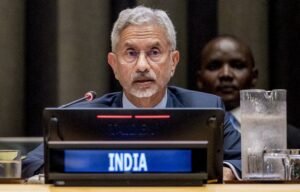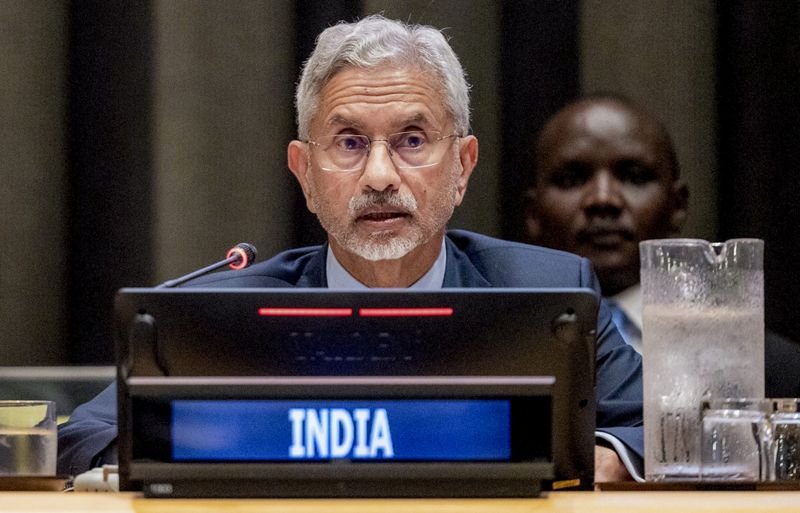

External Affairs Minister S Jaishankar on Tuesday called for a renewed push to strengthen multilateralism, warning that growing geopolitical tensions, conflicts and intensifying competition were putting the global order under increasing strain.Speaking at the inaugural Partners for Multilateralism, International Law, Peace and Prosperity (P4M) Summit on the sidelines of the UN High-Level Week in New York, Jaishankar said the world was going through a long-anticipated shift in the global balance of power. But he cautioned that rising rivalry and conflicts had given that transition a far more difficult character.India, he said, was “glad to join as a co-sponsor” of the initiative, convened by European Council President Antonio Costa.The challenges at stake, Jaishankar said, were not merely matters of diplomatic language. They touched some of the most pressing issues before the international community — peace and international security, climate action and climate justice, emerging technologies, development finance, counter-terrorism, resilient supply chains, disaster preparedness and pandemics.“The future of peace and international security … all depend on a will to cooperate,” he said, stressing that whatever progress the world had made so far had come through collective effort.“The lesson here is to safeguard the good, while striving for the better,” he added.Jaishankar said multilateralism could not afford to wait for sweeping solutions to every global crisis before acting. Even as efforts continued towards broader peace, he said, specific aspects of ongoing conflicts could be addressed.He also drew attention to what he described as the interconnected “4F crisis” of fuel, food, fertiliser and finance, saying it could not simply be left to take its own course.The emergence of new technologies and capabilities, meanwhile, made the case for appropriate frameworks and guardrails, he said. Countries also needed to reduce vulnerabilities arising from chokepoints, dominance and disruptions by encouraging de-risking and diversification.Where there was a “compelling cause or a powerful case”, Jaishankar said, like-minded countries should have the confidence to come together.At the heart of the effort, however, had to be respect for international law, rules and norms, he said.“For multilateralism to forge ahead, its advocacy and its practice must both be strengthened,” Jaishankar said, making the case for what he described as “reformed multilateralism”.He called for more participative deliberations and greater transparency in decision-making, saying both were long overdue.Such changes, he said, could help restore “hope and optimism” in the UN system and strengthen countries’ resolve to work together at a time of growing global uncertainty.The P4M summit was held as world leaders gathered in New York for the UN High-Level Week, with the future of multilateral cooperation, international law and global governance forming part of the wider discussions.Jaishankar said a stronger commitment to cooperation, backed by a more representative multilateral system, would be essential for the international community to deal with the increasingly complex challenges before it.