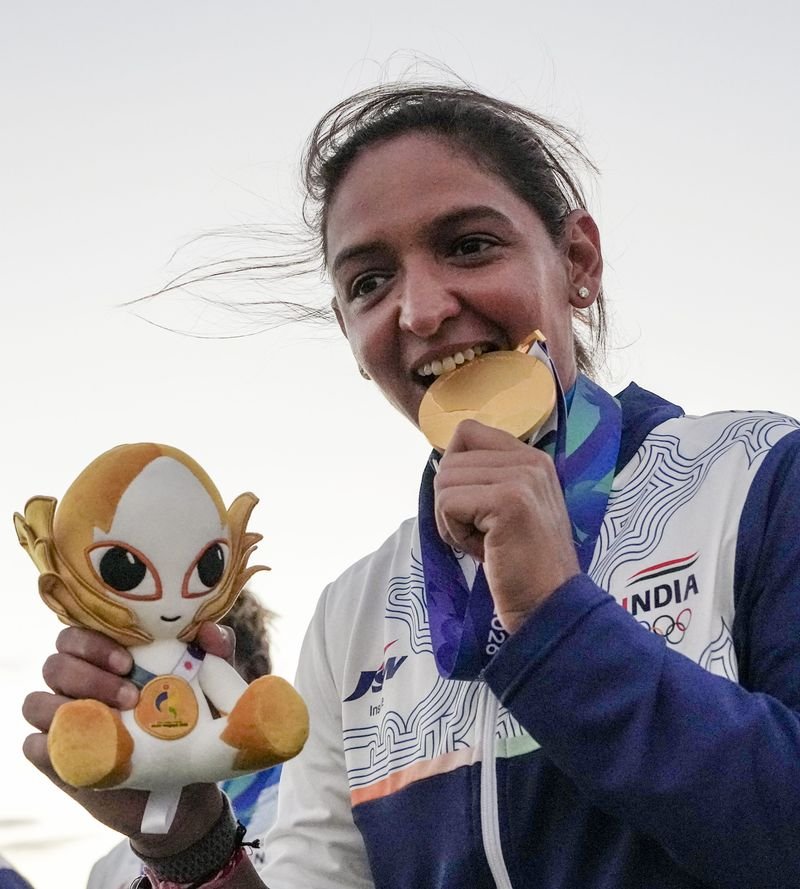

When Indian women’s cricket team captain Harmanpreet Kaur began playing cricket in Moga, there were hardly any girls on the ground. But that did not bother her father, Harmander Singh Bhullar, who made sure she trained even if it meant practising alongside boys.“People did not send their daughters to the ground. Main kade koi fark nai kitta ladki-ladke vich. I knew she had to do well in life, and she is doing that,” Bhullar said, recalling the early days of his daughter’s cricket journey.An elated father spoke to The Tribune after the Indian women’s cricket team won gold at the Asian Games on Tuesday. “She has reached where I always wanted her to be,” he said.Bhullar said he had been interested in sports as a youngster and played basketball, cricket and other games. He was also selected for several events, but family responsibilities prevented him from pursuing them further.“When I was young, I used to play several sports, including basketball and cricket, and I was selected for various games. But I was never encouraged to go ahead because of the responsibilities at home,” he said.However, when his first child, Harmanpreet, was born, he decided to give her the opportunity he never had.“After Harman was born, I had decided that no matter what, I would encourage her to play. I used to take her to the ground and give her a plastic bat to play with at home. I loved watching cricket and thought that one day my daughter would also play,” he said.At a time when girls were rarely seen training on cricket grounds, Harmander did not hesitate to let Harmanpreet practise alongside boys.One of Harmanpreet’s early coaches, Kamaldeesh Pal Singh Sodhi, also remembers being impressed by her ability and determination. Sodhi began training her when she was in Class 9 and recalled how quickly she stood out as a fast bowler.“She was a great fast bowler and very hardworking,” Sodhi said.He also recalled an interaction involving his son, who had once played a match with Harmanpreet. “When my son first played a match with Harman, he said, ‘Eh taan badi tez hai’ (she is very fast). She had to reach here,” Sodhi said.