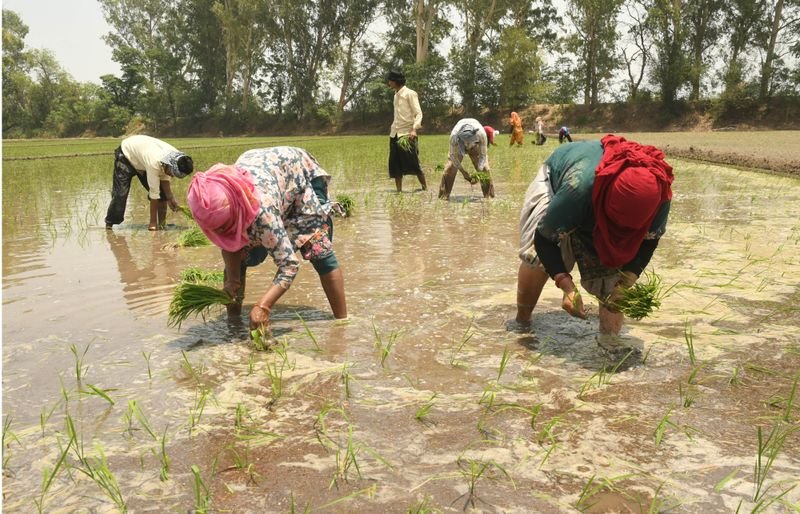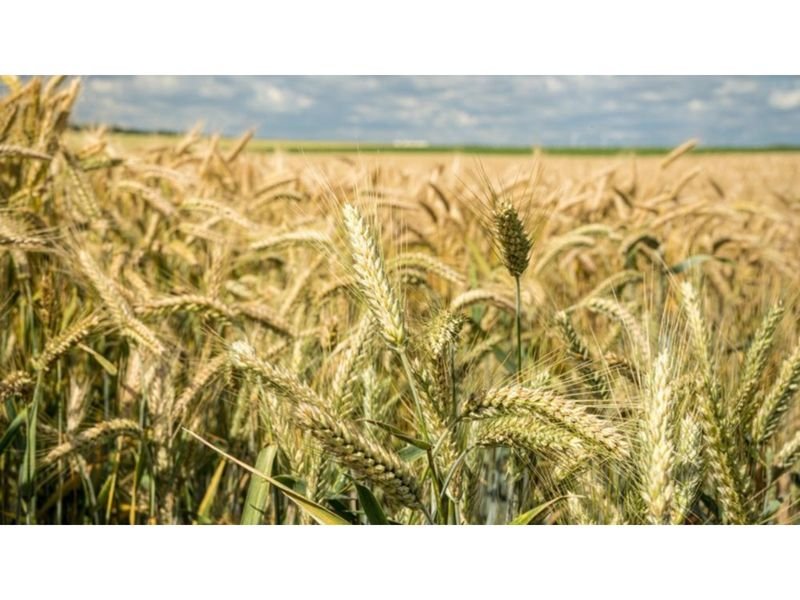

The Agriculture Ministry has convened a two-day brainstorming session beginning tomorrow to discuss rabi season production challenges as the southwest monsoon begins an early retreat across more than half of India, with many regions slipping into ‘extreme’ and ‘exceptional’ drought.A strengthening El Niño and a persistent rainfall deficit are raising concerns about agriculture, water availability and the country’s winter crop prospects.According to the India Drought Monitor of IIT-Gandhinagar, about 52.5 per cent of the country’s area was under dry or drought conditions as of September 16, up sharply from 38.9 per cent about a month earlier.The assessment also found particularly widespread stress in western and southern India, where about 79 per cent and 67 per cent of the respective regions were classified as dry or drought-affected.Private weather agency Skymet recently revised its southwest monsoon forecast for India to 85 per cent of the Long Period Average (LPA), placing the probability of a nationwide drought at 70 per cent.The development comes against the backdrop of a weak 2026 southwest monsoon. The India Meteorological Department (IMD) said the country received 706.9 mm of rainfall between June 1 and September 22, against a normal 832.4 mm, a deficit of 15 per cent. About 41 per cent of the country’s area recorded deficient seasonal rainfall, it said.Meghalaya, Andhra Pradesh, Arunachal Pradesh, Bihar, Goa, Karnataka, Kerala, Assam, Tamil Nadu, Haryana and Telangana were among the states reporting substantial deficits.The rainfall deficit has already begun to affect agricultural prospects.India’s rice output could fall by nearly 6.5 per cent from last year’s record 154 million tonnes, potentially making 2026 the weakest rice-production year since the El Niño-induced drought of 2009-10.The India Drought Monitor report said rainfall deficits in some major rice-growing states had reached as much as 42 per cent.The implications extend beyond the current kharif crop.”The deteriorating rainfall situation also coincides with the development of El Niño in the equatorial Pacific, a climate phenomenon historically associated with weaker Indian monsoon conditions. This naturally occurring climate phenomenon is characterised by unusually warm ocean surface temperatures in the central and eastern tropical Pacific,” agriculture expert Suresh Menon said.In a written reply in Parliament in August, the Earth Sciences Ministry said that, in general, Indian summer monsoon rainfall tends to be weaker during El Niño years, although the impact varies with the intensity of the event. The government said that, of the 16 El Niño years since 1950, seven had seen below-normal Indian monsoon rainfall.The IMD had initially forecast the 2026 southwest monsoon at 92 per cent of the Long Period Average (LPA) and subsequently revised it to 90 per cent of LPA, both indicating below-normal rainfall.The weather pattern has also prompted comparisons with previous El Niño years.An IMD analysis found 218 districts showing moderate, severe or extreme drought-like conditions during the four weeks from August 13 to September 9. However, the IMD cautioned that the Standardised Precipitation Index measures recent rainfall stress and does not, by itself, capture groundwater levels, reservoir storage or total water availability.India is heading towards its weakest monsoon in nearly two decades, with rainfall expected to finish around 15 per cent below the long-term average.The combination of deficient rainfall and prolonged dry spells is raising concerns about reservoir replenishment, drinking water availability, irrigation and rabi sowing, particularly in regions already experiencing rainfall stress.The situation, however, remains geographically uneven.”Heavy rainfall in some areas means that the country is not experiencing a uniform drought, and recent wet spells have temporarily improved soil moisture in parts of the country. The IMD has also cautioned that the latest drought-like indicators should not be interpreted as a direct measure of groundwater or reservoir conditions,” a member of think tank body SANDRP said.With the monsoon now withdrawing, the focus is shifting from rainfall recovery to water management, crop-loss assessment and preparedness for the rabi season. The persistence of El Niño into the post-monsoon period could add another layer of uncertainty to India’s agricultural and water outlook.