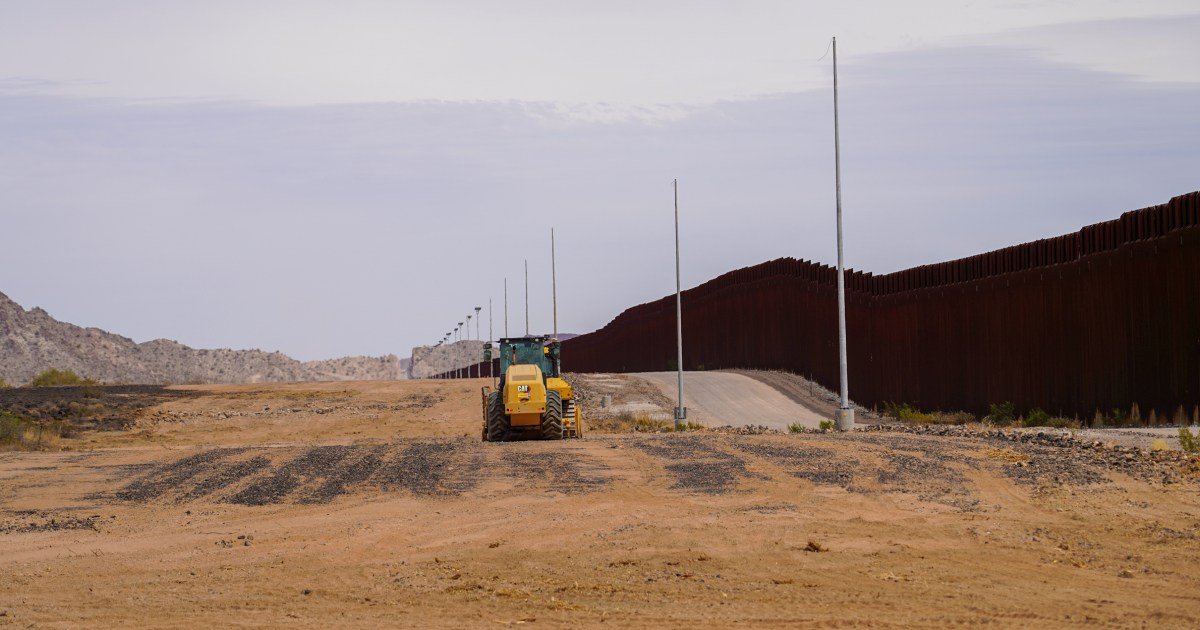

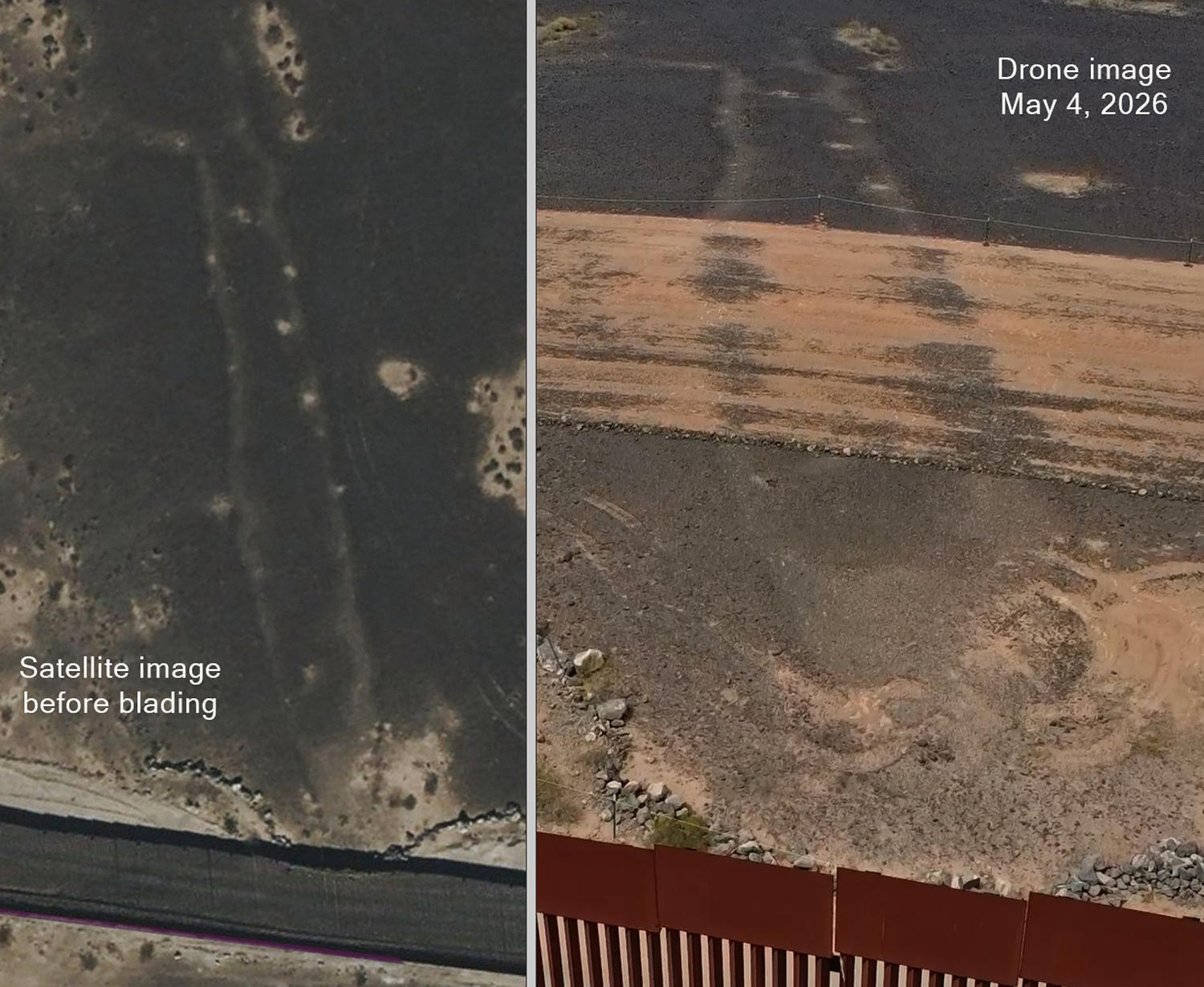
An ancient ground carving that was severely damaged by the administration’s border wall construction was created before Stonehenge and Egypt’s oldest pyramid, according to recently publicized research.The Las Playas Intaglio, a giant fish carved into the Sonoran Desert in Arizona, is now considered the oldest example in the Americas of a geoglyphic, the ancient art form that is carved into or drawn on the ground. In April, contractors hired by the Trump administration to make way for a second wall along the Arizona-Mexico border “scraped” a 50-foot swath through the ancient carving, according to the Center for Biological Diversity, which documented the damage. The intaglio on the ground of the ancestral homeland of the Tohono O’odham and other Indigenous tribes is estimated to be about 2,000 years older than Egypt’s first pyramid and to have been created about 1,500 years before the first construction of Stonehenge and 4,000 years before Peru’s Nazca Lines, researchers have found. The formerly 272-foot carving had originally been thought to be about 1,000 years old. But the latest research dates the art’s creation to at least 6,500 years ago, and possibly as much as 7,500 years ago. That age emphasizes “the significance of this site and the parallel great misfortune resulting from its damage,” the researchers said in an article published in The SAA Archaeological Record. A comparison of images of the site of the fish-shaped intaglio (geoglyphic) before and after the border wall construction at Cabeza Prieta National Wildlife Refuge in Arizona.Courtesy Russ McSpadden / Center for Biological Diversity“This discovery makes an already devastating loss even more profound. It’s a cultural and historical atrocity,” Russ McSpadden, Southwest conservation advocate at the Center for Biological Diversity, said in a statement. A Customs and Border Protection spokesperson said in an email to Jattvibe News that the contractor “inadvertently disturbed” the site and that CBP Commissioner Rodney Scott has been “engaged directly with tribal leadership to determine appropriate next steps.” “The remaining portion of the site has been secured and will be protected in place. CBP is conducting a thorough review of construction protocols and strengthening communication procedures to ensure this does not happen again,” the spokesperson stated, adding that the agency is “committed to respecting and safeguarding cultural heritage throughout all border infrastructure projects.” The damage to that site and construction on other parts of Tohono O’odham land and sacred Indigenous areas has strained the tenuous relationship between the tribal nation and the government. The tribe is appealing a federal judge’s decision refusing to block the administration’s border wall construction through its reservation. While the intaglio’s site is irreparably damaged, the Tohono O’odham people are trying to stop the government from plowing through Quitobaquito Springs, a desert water source in Organ Pipe Cactus National Monument that is also considered a sacred site and holds endangered species. In order to build the border wall and barriers, the Department of Homeland Security invoked authority granted in the Secure Fence Act of 2006 to waive numerous laws protecting the environment, water, cultural, historical and religious sites. The Tohono O’odham Nation has long worked with CBP, which is part of the Department of Homeland Security, on border security, helping to keep drug traffickers and others from using its land for criminal activity. The tribe’s reservation straddles the U.S.-Mexico border, and its members have permission to move between the two countries with ID checks. About 3,000 of its members are in Mexico, according to the tribal nation.The Center for Biological Diversity stated in a news release that conservation advocates and tribal nations have long warned that border wall and secondary border barrier plans could cut through sensitive habitat and cultural sites across the region. Wall construction in other parts of the border has sparked other lawsuits and opposition from landowners, Native American tribes, local governments, conservation groups, business owners and others. In Texas, a tribal nonprofit for the Lipan Apache and an outdoor recreation business have opposed the border wall construction, alleging DHS is not authorized to violate the Religious Freedom Restoration Act, which they say it would do by destroying or cutting off access to sacred sites. A federal judge ordered a temporary halt to construction in Big Bend National Park in response to the lawsuit, but construction continues on other parts of the rugged, undeveloped and remote region outside state and federal parkland.