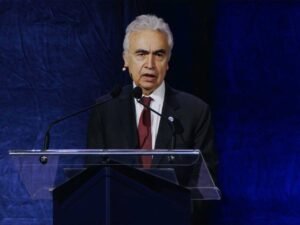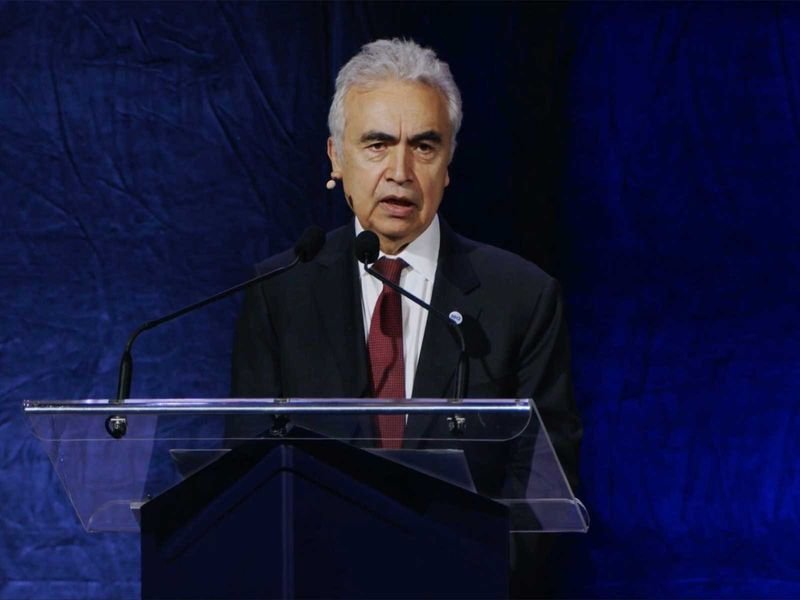

Paris [France], October 4 (ANI): Around 325 million barrels of oil have so far been released under the International Energy Agency’s (IEA) collective action announced in March to address disruptions to global energy supplies amid the West Asia conflict, accounting for more than 80 per cent of the 400 million barrels originally pledged, IEA Executive Director Fatih Birol said.According to a statement issued by the IEA on Friday, Birol made the remarks during a G7 Leaders’ video meeting on energy security and markets, where discussions focused on the continuing pressures in global energy markets, particularly severe constraints in diesel supplies.At the meeting, Birol underlined that the impact of the Strait of Hormuz crisis on energy markets remains acute, particularly for diesel, while highlighting the IEA’s ongoing efforts to support global energy security.”Around 325 million barrels of the IEA collective action announced on 11 March have so far been released, representing over 80% of the 400 million barrels originally pledged in the action. This has played a significant role in plugging the supply gap and reassuring markets in such unprecedented times,” Birol said, as per the statement.The IEA Executive Director said crude oil exports from the Middle East have recovered significantly, but refined-product flows remain severely constrained.He said Ukrainian attacks on Russian refineries have further exacerbated the situation for diesel, resulting in tighter markets and higher prices and creating significant economic risks.The remarks came as G7 leaders discussed measures to stabilise near-term energy supplies and strengthen longer-term resilience in global energy markets.The latest development follows the IEA’s March decision to release 400 million barrels of emergency oil stocks to mitigate disruptions in global energy supplies caused by the ongoing West Asia conflict.In a video statement issued on March 11, Birol said the conflict had severely affected global oil and gas markets, particularly through the Strait of Hormuz, and said the emergency release was aimed at offsetting lost supplies.”IEA countries will be making 400 million barrels of oil available. I repeat, 400 million barrels of oil available to the market to offset the supply lost through the effective closure of the Strait. This is a major action aiming to alleviate the immediate impacts of the disruption in markets. But, to be clear, the most important thing for a return to stable flows of oil and gas is the resumption of transit through the Strait of Hormuz,” Birol said.He had also said that the decision was taken unanimously by IEA countries and represented the largest-ever release of emergency oil stocks in the agency’s history.Meanwhile, G7 leaders have pledged a coordinated release of 100 million barrels through the IEA to ease surging energy prices and address continuing pressures in refined-product markets, particularly diesel.Under their joint statement, G7 leaders said they would coordinate maintenance schedules across G7 refineries to prevent simultaneous capacity shutdowns and temporarily increase utilisation rates where feasible.The G7 also encouraged engagement with countries holding significant refining capacities to boost global production of refined products, particularly diesel, in light of ongoing market pressures.”The G7 requests the IEA to monitor the immediate and full implementation of the March 2026 commitments. In this regard, taking into account commitments that have already been fulfilled, we will implement our commitments with a coordinated release through the IEA of 100 million barrels (MB) to begin immediately over 4 months, including a front-loaded substantial diesel release within the first 20 days by G7 members and partners,” the leaders said in their statement.The G7 leaders further said they would convene in the context of the IEA in the coming days to discuss the possibility of additional diesel releases as necessary. (ANI)(This content is sourced from a syndicated feed and is published as received. The Tribune assumes no responsibility or liability for its accuracy, completeness, or content.)