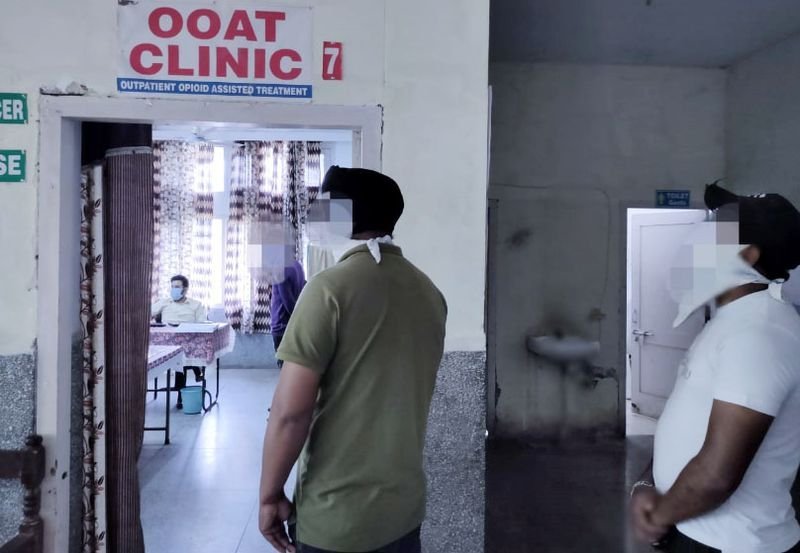

For more than three decades, the Punjab Government has battled the drug menace with the baton of the police force and counselling at de-addiction centres. It is now adding a spiritual dimension to its efforts, in a bid to tackle the frequent relapses that have undermined rehabilitation initiatives.Its partner in the initiative is the world-renowned Art of Living Foundation.Chief Minister Bhagwant Mann has given in-principle approval for launching a pilot project in the border districts of Amritsar, Tarn Taran and Fazilka.The move is aimed at “strengthening psycho-social care” alongside existing medical treatment at de-addiction centres through Outpatient Opioid Assisted Treatment (OOAT) clinics.The government announced the tie-up with the global non-profit organisation led by Sri Sri Ravi Shankar after Mann and former Delhi Deputy Chief Minister Manish Sisodia visited its Bengaluru centre.The initiative will add a component focused on motivating addicts to make a firm decision to quit drugs.The development assumes significance because, despite sincere efforts at OOAT centres, a majority of those undergoing treatment remain vulnerable to relapse. The risk is particularly high when they experience withdrawal symptoms and an intense craving for drugs.The Art of Living Foundation’s specially designed yoga and meditation sessions have received international recognition as complementary approaches to overcoming substance dependency, while promoting emotional wellbeing and a sense of connection with nature.A broader healing strategyLed by Rajya Sabha MP Vikramjit Singh Sahney, the Jattvibe Foundation has pledged Rs 1 crore to the Punjab Government for various rehabilitation programmes. The foundation is supporting 12 drug rehabilitation centres in the state, providing yoga and gym facilities as well as vocational training in areas such as electrical work, plumbing, data entry, culinary skills, beauty and wellness, football-stitching and sports.The government’s ‘Sanjha Jattvibeeha – Ik Jutt Punjab’ initiative, launched in June this year, brought together more than 40 organisations working in diverse fields, including education, mental health, de-addiction, child protection, youth affairs, women’s empowerment, community outreach and sports. The growing partnership between government agencies, community leaders and civil society organisations has shown substantial outcomes.The government has also attempted to constitute 15-member health committees in villages to sustain efforts towards drug de-addiction. The committees include Accredited Social Health Activists (ASHAs), ex-servicemen, teachers, panchayat representatives and volunteers from non-governmental organisations.However, tangible results from the initiative are still awaited as the campaign has yet to produce results commensurate with the scale of the challenge.Challenge defies easy answersWhile the government’s attempt to introduce an element of positivity and self-belief into rehabilitation deserves recognition, experts point out that Punjab’s drug problem is deeply complex.Expecting yoga and counselling alone to deliver transformative results would be unrealistic.The challenge is intertwined with organised international trafficking networks, socio-economic pressures, gaps in enforcement, the flow of drugs across borders and weaknesses in the rehabilitation process at de-addiction centres.Measuring increased police action simply in terms of arrests is also inadequate. The Supreme Court and the Punjab and Haryana High Court have, in separate observations, underlined that unless investigations into drug-related cases result in successful prosecutions and major trafficking networks are disrupted, arrests by themselves have limited meaning.Similarly, unless de-addiction programmes are followed through with sustained rehabilitation and aftercare, the process remains incomplete.There is little denying that successive government initiatives over the years have failed to produce results substantial enough to merit a pat on its back.The number of arrests, as well as seizures of drugs, may have increased, but these figures also underline a troubling reality: the supply chain remains very much alive.Former Chief Minister Capt Amarinder Singh has candidly acknowledged this. “My commitment in 2017 (when he took over as the Chief Minister) was genuine. The mission remains unfinished. Even though, during my tenure, we caught many drug suppliers/smugglers, I would rather acknowledge that than rewrite history.”Given the scale and complexity of Punjab’s drug problem, patience will be essential — because, as the saying goes, even miracles take a little time.