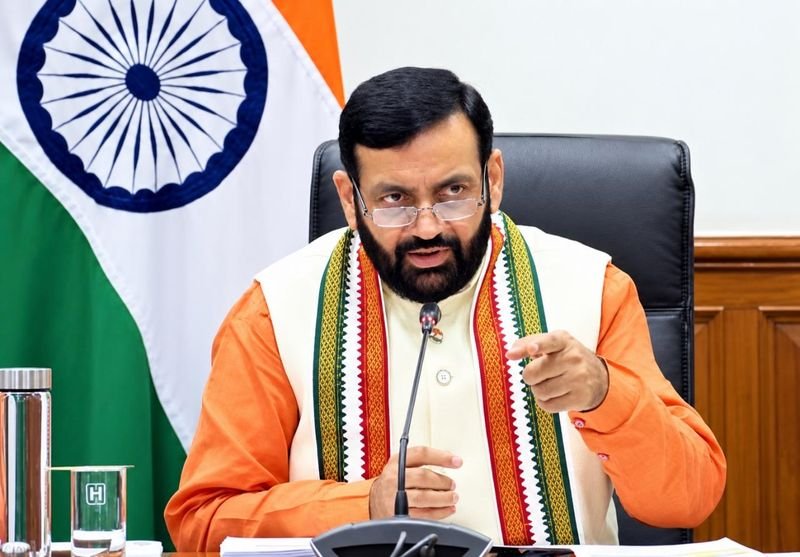

From the ‘rubber stamp CM’ tag to being pitched as the face of the BJP’s development model beyond Haryana, Nayab Singh Saini is stepping out of the shadow and talking about accountability, taking up Gurugram’s civic challenges and batting for his government’s record on delivery. In a candid conversation with The Tribune, the CM spoke about what defines his nearly two-year term. Excerpts:Gurugram is being called the country’s ‘urban failure story’. Isn’t it true that it positions you as the face of its development model beyond Haryana?Gurugram is not an urban failure story. It is one of India’s biggest economic and employment centres and a major destination for global investment. Rapid growth has created challenges in traffic, drainage, roads, pollution and civic infrastructure, but we are working to address them systematically.We want it to be an economic powerhouse with world-class infrastructure. Judge us by the transformation that is taking place, not by the problems created by rapid urbanisation.Your office has rolled out weekly reviews, CM-level checks and digital dashboards on project delays. Will it make officers answerable, or is it another ‘notice’ that will fade with monsoon headlines?Accountability has to be measurable, and performance has to have consequences.Technology enables us to see at what stage a project is, where it is delayed and which department or level is responsible. That makes it harder for files and projects to remain unattended. Genuine technical, financial or procedural difficulties will be resolved, but avoidable delays, negligence and failure to perform cannot be accepted. The message is clear: the government will provide support, but responsibility cannot be passed from one desk to another. We want to create a culture of performance, responsibility and results.Sanitation workers’ strikes have become an annual ritual in Gurugram and Faridabad, costing over ?700 crore and triggering a disaster-level ‘exigency’ declaration. A large part of the workers belong to BJP’s vote bank. How will you end this chaos?I don’t look at sanitation workers through the lens of vote bank — they are essential members of the workforce. They placed 13 demands before the government, of which we accepted 12. The demand that seeks permanent status for workers involves legal and statutory issues. We are examining what can be done. Our objective is a permanent mechanism so that a strike does not threaten sanitation every year.Your government has built its pitch around real-time accountability. What is your take on the IDFC-AU Bank scam and the action taken?Wherever there are allegations of wrongdoing, there will be no compromise on transparency or accountability. But we must not prejudge an investigation merely on allegations. Wherever the government has jurisdiction, responsibility will be fixed when wrongdoing is established, and action will follow according to the law — whether it is a senior officer, a private institution or anyone else. Our governance model is about protecting the system and public interest.Haryana talks about industrial and export ambitions, but Gurugram and Faridabad — the state’s industrial spine — are choking on infrastructure collapse and pollution.An investor looks at the complete ecosystem — connectivity, infrastructure, manpower, law and order, ease of doing business and governance — and Haryana has significant strengths on all these. But economic growth and infrastructure development have to move together, so our focus is on strengthening roads, connectivity, transport and drainage. We are also building more IMT industrial townships so young people don’t have to migrate to cities.There’s a visible undercurrent with Rao Inderjit Singh and the Ahirwal camp — absences from your events, friction over caste politics. Does that limit your ability to govern the Gurugram-Faridabad belt?Rao Inderjit is a respected leader with a long association with the party and has contributed significantly to south Haryana’s development. Differences of opinion or individual programmes should not be read as organisational conflict. Development should not be viewed through the prism of caste or individual politics since my responsibility as CM is to every region. Gurugram, Faridabad and Ahirwal region will get the government’s attention.You are a star campaigner in Punjab, a rare reach for a Haryana CM. How does the party high command view you now — as opposed to the ‘rubber stamp’ tag you carried early on?I don’t look at it in terms of labels. It is about the affection and trust of people. Every week, thousands of people from Punjab come to my residence. They interact with me and invite me to come to Punjab and campaign there. Punjab and Haryana have deep social, cultural and emotional ties.My effort is to serve people with sincerity, whether that opportunity comes in Haryana or anywhere else.What is the one decision in two years that was entirely yours?I would not reduce my tenure to one decision. My defining approach has been making governance more accountable to the common citizen — schemes should not remain announcements on paper and officers must be accountable for implementation. I would describe my government as one that listens to people, takes decisions and delivers.