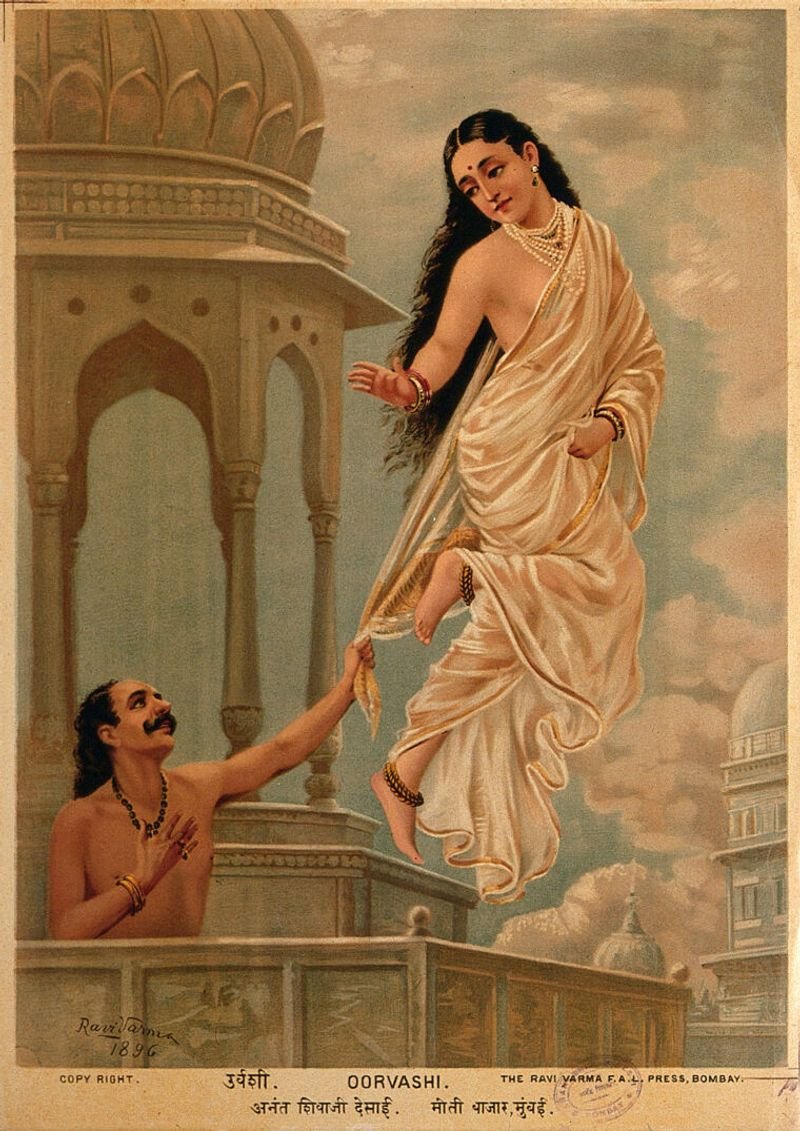

Many have wondered if Hindu mythology preserves memories of societies very different from the patriarchal world of the Vedas. There is no single piece of evidence that proves this. But mythology, astronomy, language and ritual offer interesting clues suggesting that some older communities may have given greater importance to women, mothers and the maternal household.Scholars have figured out that Nakshatra, or lunar mansions that divide the sky into 27 equal sections, was a 5,000-year-old pre-Vedic Harappan idea. The idea of the Zodiac that divides the sky into 12 divisions is only 2,000 years old. It came with Romans and Greeks. In Hindu astrology, even today, they are identified as female. These are fixed in the sky. By contrast, the moving celestial bodies (graha) such as the Jattvibe, Moon and planets are male.The stars stay in place while the planets travel across the sky. Some interpret this as reflecting an older social pattern: matrilocality. Women stayed with mothers. Men visited them. A practice retained in many trading communities of western coasts of India, including Kerala.Aryan pastoralists, who entered India with horses 3,500 years ago, demanded women stay with husbands, not mothers. Sanskrit itself offers an interesting, though not necessarily historical, comparison: graha means “to seize”, while griha means “home”. The grihapati is the male master of the household. He is male. The words ‘pati’ and ‘patni’ came from the root ‘pat’ or split. The male and female are united by marriage.The Rig Veda, composed largely roughly 3,000 years ago, is dominated by male gods such as Indra, Agni and Varuna. Goddesses receive far fewer hymns, less than 5 per cent. But there are interesting stories about women. Urvashi abandons her husband Pururava as she is bored of him. Lopamudra demands Agastya pay attention to her, and move away from his rituals. Apala asks Indra to make her body attractive so she can get a husband. Ghosha thanks the gods for making her husband virile. The marriage hymn speaks of two Ashwins taking Surya, the woman, to marry Soma, the man.There is also a striking difference between formal Vedic ritual and household ritual. Vedic sacrifices were largely controlled by male priests, conducted in Sanskrit, and addressed mainly to male gods. Many household rituals, especially vrata traditions, were led by women. Women worshipped goddesses, prepared special foods and told stories in local languages. Such practices may preserve religious traditions that developed outside the formal Vedic system.The Shatapatha Brahmana provides another clue. It describes Kritika, the Pleiades, as the wives of the seven sages, who are accused of infidelity. In later traditions, these six wives become wild goddesses, the Matrikas, while Arundhati remains beside Vasistha. Arundhati eventually becomes the model of the faithful wife and is shown to newly married couples. Tales of fidelity become increasingly prominent, especially in Ramayana, indicating a male anxiety. Pre-Vedic society was clearly not big on monogamy.Story of the moon offers another clue. In early Vedic poetry, moon’s waxing and waning is connected with Soma. Later mythology makes the stars central. The moon marries the 27 nakshatras but prefers Rohini. He is cursed for neglecting his other wives and must divide his time equally among them.In Mahabharata, the moon elopes with Tara, the star goddess, wife of Brihaspati, linked to planet Jupiter. Surya’s wife Sanjana runs away because she cannot handle the ‘glare’ of her solar husband. Are these memories of old matrilocal practices? We can only speculate.— The writer is an acclaimed mythologist