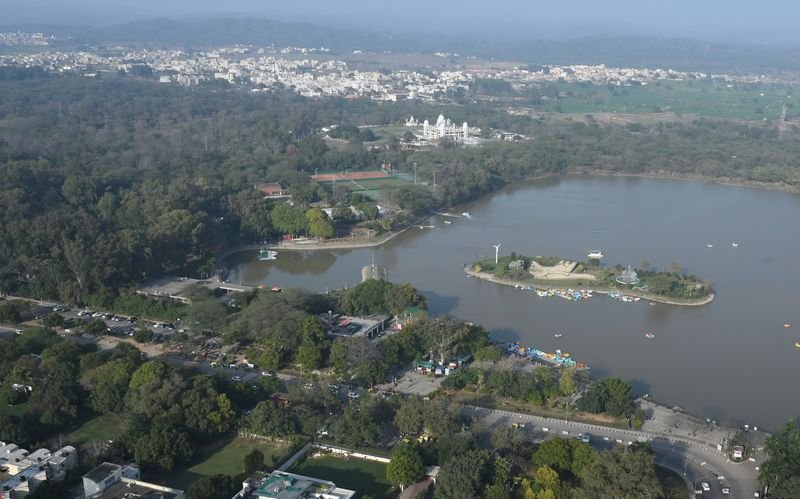

Chandigarh’s iconic Sukhna Wetland has earned international recognition as a Ramsar Site, making it the city’s first wetland to enter the global list of wetlands of international importance and placing its conservation under greater international scrutiny.The designation, officially announced by Union Minister for Environment, Forest and Climate Change, Bhupender Yadav, on Thursday evening, recognises Sukhna’s ecological importance as a habitat for resident and migratory birds, reptiles and other wildlife. It also puts a sharper focus on protecting the lake, its catchment in the Shivalik hills and the adjoining Sukhna Wildlife Sanctuary from pollution, siltation and ecological degradation.Confirming the development to The Tribune, UT Home Secretary Mandip Singh Brar said the designation was a significant achievement for Chandigarh and recognition of the ecological importance of Sukhna Wetland.Punjab Governor and UT Administrator Gulab Chand Kataria told The Tribune: “This international recognition is a proud moment for Chandigarh, but it also brings greater responsibility. Our priority must be to protect Sukhna Wetland, its catchment and biodiversity through sustained conservation, so that this natural heritage is preserved for future generations.”The Ramsar designation places Sukhna among wetlands recognised under the Convention on Wetlands, an international treaty adopted in the Iranian city of Ramsar in 1971. The convention promotes the conservation and wise use of wetlands, which support biodiversity, regulate water flows and provide habitats for wildlife.According to the Ramsar Secretariat, Sukhna is located on the edge of Chandigarh, at the foothills of the Outer Himalayas. It has been included on the international list as Site No. 2602. Its habitats range from open water to shallow-water vegetation, scrub and forest, supporting birds that use the Central Asian Flyway during migration.The wetland is particularly important for the vulnerable common pochard and the endangered Pallas’s fish eagle. Its shallow littoral habitats also support the endangered black pond turtle. These species underline the importance of maintaining the ecological health of the wetland beyond its value as a recreational landmark.Announcing that Sukhna Wetland and Sauj Jheel in Uttar Pradesh were the latest additions to India’s Ramsar list, the Union Minister for Environment, Forest and Climate Change, Bhupender Yadav, said their inclusion takes the country’s total to 103 Ramsar Sites, according to the Ramsar Secretariat’s October 15 announcement.For Chandigarh, the recognition is significant because Sukhna is not merely a lake visited by residents and tourists. It is a rain-fed reservoir connected to a sensitive catchment, where soil erosion and the movement of sediment directly affect its water-holding capacity and ecological health.City’s wetlandBuilt in 1958, Sukhna Lake receives water from the Shivalik hills through seasonal streams. The Chandigarh Administration has documented the impact of heavy siltation in the lake’s early decades: by 1988, it had lost 66 per cent of its original water-holding capacity. Soil and water conservation measures, including afforestation and engineering interventions in the catchment, subsequently helped reduce siltation.The international designation therefore reinforces the need for sustained catchment management, water-quality monitoring, habitat protection and coordination among agencies responsible for the wetland and surrounding landscape.What is Ramsar siteThe Ramsar tag is an international recognition of ecological importance, not an automatic guarantee that a wetland is protected from every threat. Its long-term value will depend on how effectively conservation commitments are translated into action on the ground.For Chandigarh, the challenge now is to ensure that the global recognition of Sukhna is matched by lasting protection of the lake and the wider ecosystem on which it depends.