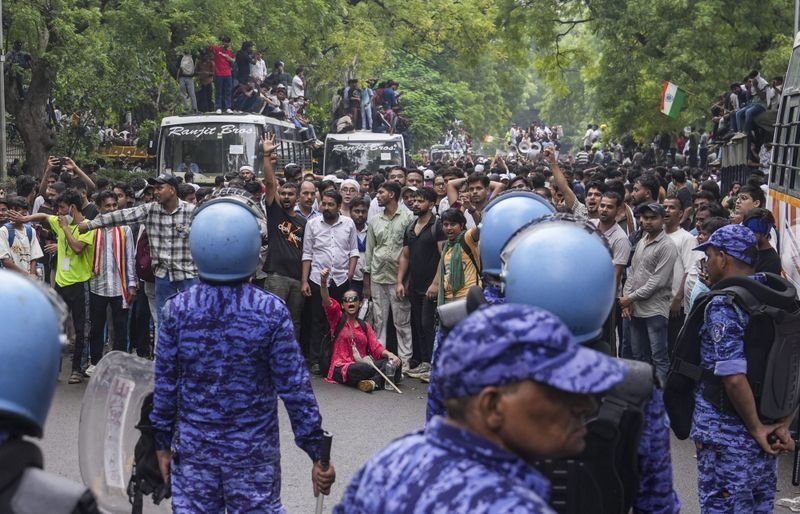

The Supreme Court on Thursday granted interim protection from coercive action to a woman journalist in a case filed against her by Delhi Police ACP Vivek Bhagat under the SC/ST (Prevention of Atrocities) Act, 1989.The case was filed after she accused Bhagat of sexual harassment during the protests against Chief Election Commissioner Gyanesh Kumar near Jantar Mantar here.Acting on petitions filed by Network for Women in Media and Delhi Union of Journalists, a Bench of CJI Surya Kant and Justice Joymalya Bagchi agreed to examine allegations of sexual violence against women journalists covering the protests.The woman journalist in question has been accused of subjecting Bhagat to “public humiliation and casteist slurs” along with her colleagues while he was discharging his official duties during the protest.The top court also asked the Centre and others to spell out their views on framing of guidelines governing interaction of police and law-enforcement agencies with journalists during protests and crowd control operations.“We would like to lay down guidelines,” the Bench told senior counsel Indira Jaising, representing the petitioners, after she demanded a national protocol on the issue.The petitioners alleged that several journalists, including women journalists, were assaulted and harassed by the police during the protests here against CEC Gyanesh Kumar and Special Intensive Revision (SIR) of electoral rolls.An FIR against her has been lodged under Sections 221 (obstructing a public servant), 356(2) (defamation) and 3(5) (joint liability) of the Bharatiya Nyaya Sanhita (BNS), along with certain provisions of the SC/ST (Prevention of Atrocities) Act, 1989.The order came after Jaising submitted on behalf of the media bodies that the woman journalist was molested by a police officer but no FIR has been lodged on her complaint while she faced a case under the SC/ST Act.Jaising urged the Bench to direct that no more FIRs be registered against women journalists.Terming the allegations made in the woman journalist’s complaint as “very serious”, the Bench asked the police to examine it and complete its inquiry.