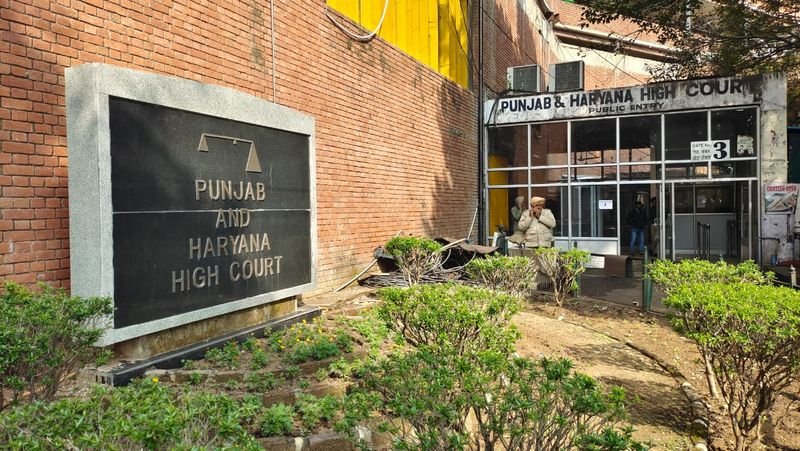

The Punjab and Haryana High Court has held that parole cannot be denied on mere apprehensions of law and order disturbances. The assertion came as the bench set aside a District Magistrate’s second rejection of an NDPS convict’s parole plea before directing that the Punjab Home Secretary would decide the application if the authority again passed an order without specific reasons.Addressing the apprehension that a prisoner might abscond while on parole, the bench observed that “the increasing dependence on digitised identification and cashless transactions has already made it quite challenging to sustain oneself and to lead a normal living as a fugitive”.The division bench of Justice Anoop Chitkara and Justice Harmeet Singh Deol observed that parole must be interpreted and applied liberally in the convict’s favor. “Mere conjecture or apprehension is not sufficient,” it held, adding that an ordinary breach of law and order did not by itself justify denying parole. The competent authority was required to explain how release would actually affect State security or public order.The bench further cautioned that denying the benefit on mere surmises “would erode the rights that the parole framework is meant to protect”. It held that rejection must be based on “cogent and objective reasons”.The ruling came on a plea by a convict serving a 15-year rigorous imprisonment sentence under the NDPS Act. He had sought eight weeks’ parole under the Punjab Good Conduct Prisoners (Temporary Release) Act.The District Magistrate rejected his application on June 1. On July 27, the high court set aside that order as “cryptic” and directed a fresh decision within 15 days. The application was rejected again on August 17. The bench found that the second order failed to cure the earlier defects and showed “no real application of mind” to its directions.The defects included a discrepancy in the custody calculation: the rejection order stated that the convict had undergone “about 10 months” of sentence, while the custody certificate recorded three years, eight months and 25 days. The authority also failed to identify any specific drug peddler with whom the convict was allegedly linked or disclose the source of that information. The allegations, the court said, remained “mere conclusions unsupported by any cogent justification”.“The impugned order is also riddled with inconsistencies within itself. The Deputy Commissioner-cum-District Magistrate records that the petitioner does not pose a risk to the security of the state. Similarly, in another paragraph, he records that the petitioner poses no risk to public order. Having recorded these findings, the authority has failed to explain how the petitioner can still be described as dangerous, or what concrete ground were taken into consideration to justify the rejection of parole,” the bench observed.Explaining parole’s reformative purpose, the court said it was a “beneficial measure intended to serve reformative and humanitarian purposes”. It also described parole as a measure that “converts punishment into an opportunity for reintegration into society”. However, the bench clarified that parole “is not a matter of right” and may be denied if release is not in society’s interest.The bench also traced the evolution of punishment from public displays of physical suffering to the modern prison system, explaining that the latter emerged from the recognition that offenders had to be corrected rather than merely punished. Drawing on Michel Foucault’s Discipline and Punish, the judgment examined how incarceration relied on isolation, routine and surveillance, but noted that prison reformers sought to move beyond confinement towards rehabilitation.The court observed that prison reform required measures to “prepare him for life beyond the walls”. It explained that education, ethical training, inmate classification and the gradual relaxation of restrictions were intended to ensure that a sentence ended in a return to society rather than permanent exclusion. Parole, the bench noted, emerged from this reformative approach as a controlled means of reconnecting prisoners with the outside world.Emphasising that imprisonment could not be viewed in isolation from a convict’s eventual return to society, the bench observed that, except in exceptional circumstances, sentences were for a definite period and confinement would eventually end. The natural consequence was that convicts would return to the community. Rehabilitation, it said, was essential to ensuring their “dignified return to the community”.The judgment described parole as a humane component of prison reform, allowing prisoners to return temporarily to their families and communities while encouraging lawful conduct. The bench said the measure “converts punishment into an opportunity for reintegration into society”. It nevertheless reiterated that parole remained discretionary and could be refused where release was not in society’s interest.