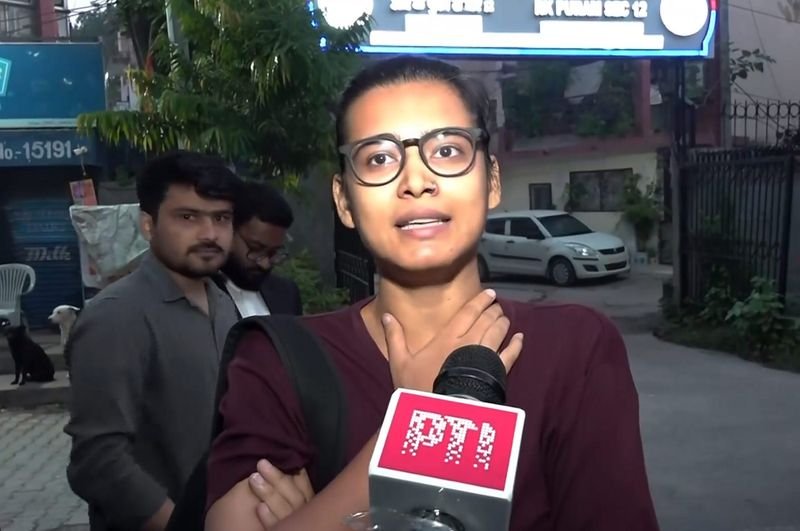

All India Students’ Association (AISA) national president Neha Bora on Thursday contended before the Delhi High Court that citizens do not need permission to hoist the national flag, while challenging a police notice asking her to execute a “peace” bond before a Special Executive Magistrate.Referring to the Delhi Police notice, which stated that Bora had hoisted the national flag without valid permission, her counsel submitted that citizens do not require permission to hoist the national flag.The notice, issued on October 17 under Section 126 of the BNSS, asked the student leader to appear before the Special Executive Magistrate on October 19 and show cause why she should not execute a personal bond of Rs 10,000 with one surety “for keeping peace for a period of inquiry”.Senior advocate Gopal Sankaranarayanan, appearing for Bora, said she had called for a peaceful gathering at Mandi House on October 16 to unfurl the national flag at Central Park, Connaught Place, as part of a protest against the Chief Election Commissioner. He submitted that Bora had never called for violence and was detained 10-15 minutes after reaching Mandi House.He said she was not involved in a separate protest call issued by the Cockroach Janta Party (CJP) at Central Park on October 16.He argued that the proceedings under the BNSS were premature and that the notice did not disclose material establishing a likelihood of breach of peace, a necessary condition under Section 126. He also questioned the alleged application of Section 163 at the spot of Bora’s detention and said the notice was mechanical and based on hearsay.During the hearing, Sankaranarayanan further argued that there was nothing wrong in seeking regime change in a democracy.Responding, Additional Solicitor General Chetan Sharma, appearing for the Delhi Police, drew the court’s attention to certain material, including a joint press conference attended by Bora in which a statement on regime change was made.Sharma said there had been “12 violations” by Bora and that the magistrate had considered a general diary entry, past FIRs, offences and the prevailing situation before issuing the notice.He submitted that it had been stated at the joint press conference: “Yeh regime change ki ladai hai and hum regime change kara ke rahenge (this is a fight for regime change and we will get the regime changed).”Sankaranarayanan responded that Bora had not said that and reiterated that “there is nothing wrong with regime change in a democracy”. Sharma, in turn, argued that regime change takes place through votes and not through “lumpen elements in the nerve of New Delhi”.The court questioned whether a magistrate must independently verify the credibility of information before initiating proceedings under Section 126. It also asked whether documents relied upon by the authorities are supplied to the person concerned during the inquiry.The court observed that when personal liberty is involved, particularly in preventive proceedings, procedural safeguards become the key protection available to an individual under Article 21.Bora’s petition seeks quashing of the October 17 notice and the consequential proceedings, besides protection from coercive action. The notice cites alleged sloganeering at Mandi House, protests around Jantar Mantar despite Section 163 restrictions and allegations that she instigated people to join a protest in Connaught Place.Under Section 135(3) of the BNSS, a magistrate may direct execution of a bond for maintaining peace or good behaviour during an inquiry, subject to the statutory conditions.After hearing arguments for more than two hours, Justice Subramonium Prasad, who held court during the Dasehra vacation, reserved the order on Bora’s plea challenging the notice.The court said the verdict would be pronounced at 6 pm on Friday.