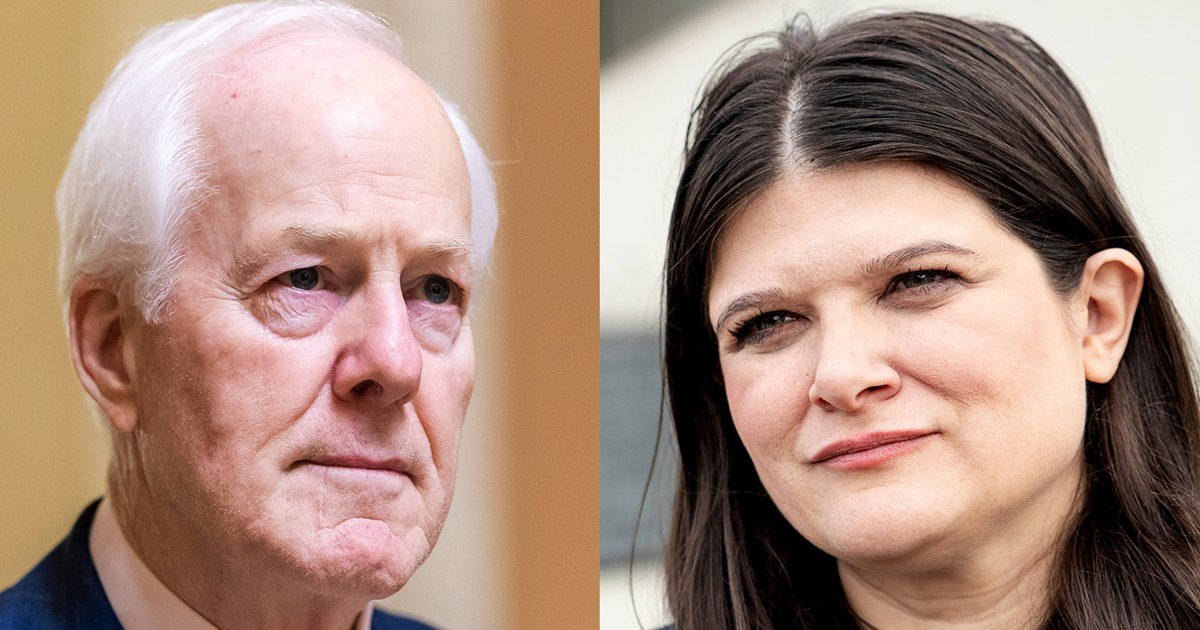

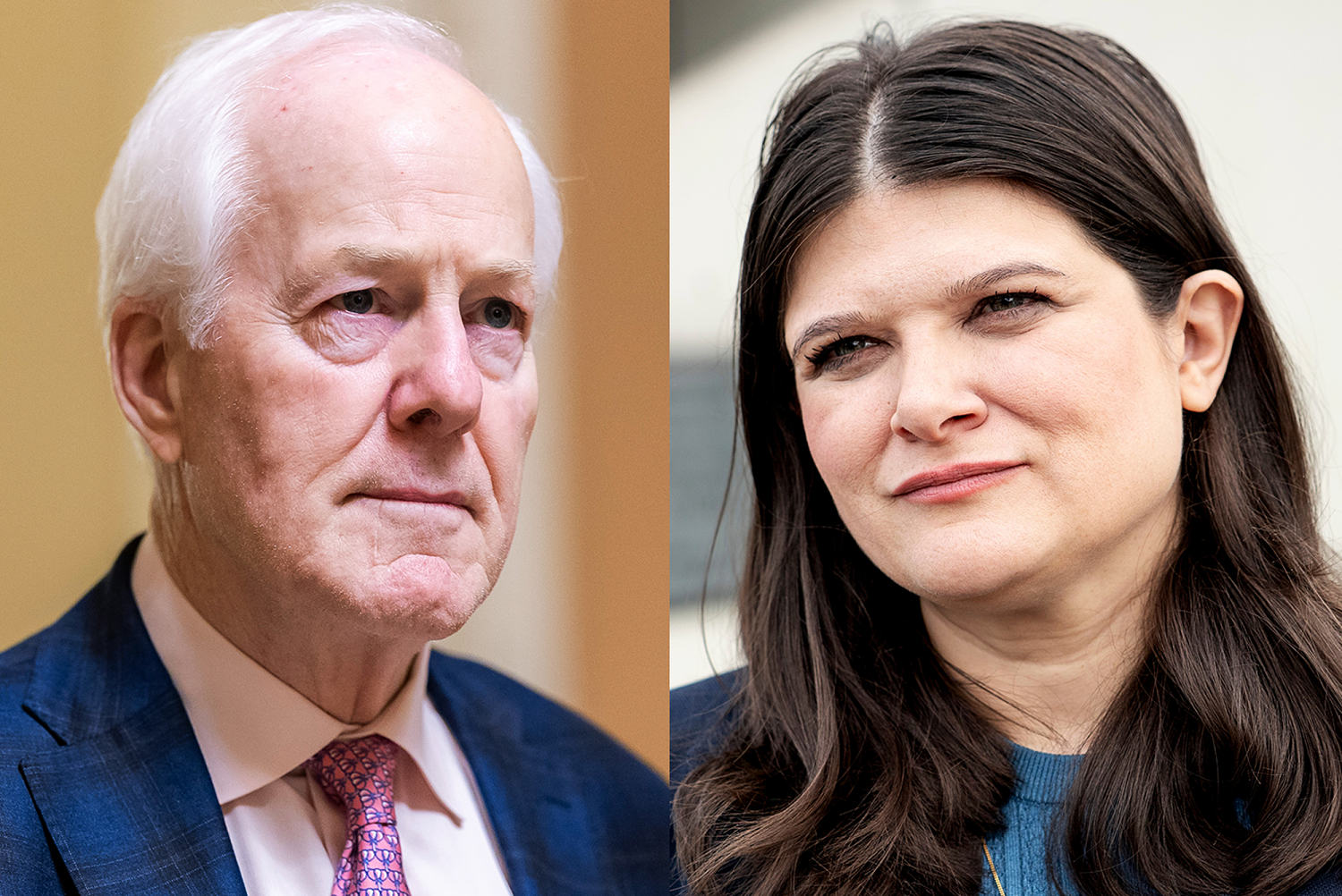
Some voters who backed losing candidates in two key Senate primaries this year are still wrestling with whether to support their party’s nominee on Election Day, with massive implications for who controls the Senate majority next year.Michigan Democrat Abdul El-Sayed and Texas Republican Ken Paxton are both trying to stitch their parties back together for battleground races after divisive primaries. Two focus groups — one with Michiganders who supported Democratic Rep. Haley Stevens’ unsuccessful Senate bid, and another with Texans who backed Republican Sen. John Cornyn in that primary — reveal how some rank-and-file voters are struggling to process personal concerns about the nominees alongside a desire to be loyal to their party. The focus groups, produced by Syracuse University and the research firms Engagious and Sago and observed by Jattvibe News, showed Cornyn voters who see Paxton as corrupt but are hesitant to hand Democrats a Senate seat. In Michigan, the Stevens voters worried about whether El-Sayed is too extreme — and some said they were concerned about his Muslim faith and his allegiances.Both narratives echo how their general election opponents — former Rep. Mike Rogers, the Republican Senate nominee in Michigan, and state Rep. James Talarico, the Democratic Senate nominee in Texas — have sought to define them.“I’m split down the middle. In this instance, I really feel that I am looking at the lesser of two evils and I’m not sure which that is,” said Kathleen S., a 62-year-old Republican from Comal County in Texas. Unlike a poll, which uses statistical methods to demonstrate how a larger population feels, focus groups dig into deeper detail about how a handful of people feel about key questions. In these two 90-minute conversations, the Cornyn voters were more open to looking past ethical concerns about Paxton, the Texas attorney general.The Stevens voters, meanwhile, included more political independents, and they were more hesitant to back El-Sayed, a former public health official in Michigan. “In Michigan, I heard undecided Stevens voters growing nervous with El-Sayed, and in Texas I heard Cornyn voters abandoning their preferred candidate, Talarico, in order to put loyalty to the GOP first,” said Rich Thau, president of Engagious, who moderated the groups. “These undecided voters truly contorted themselves as they struggled to justify a choice they feared they’d later regret.”Worries about El-SayedThe group of seven Stevens primary voters were not dyed-in-the-wool Democrats. The group included five independents (four of whom voted for President Donald Trump in 2024) and two Democrats. Their hesitance about El-Sayed may reflect how general election swing voters are digesting their choice, rather than the Democratic base.But overall, only two of those seven said they were leaning toward voting for El-Sayed. The two Democratic voters split between El-Sayed and Rogers. Stevens herself has endorsed El-Sayed.Isaac W., a 29-year-old Democrat from Oakland County who voted for then-Vice President Kamala Harris in 2024, said he is leaning toward Rogers but hopes other states deliver a Democratic-controlled Senate. Isaac views an El-Sayed victory as “almost inevitable” and is hoping to send a message with his vote that El-Sayed’s brand of politics isn’t as popular with voters as other Democrats like Secretary of State Jocelyn Benson, who is running for governor. “I want people to see when they look at the election results that El-Sayed was running far behind Benson, so they can see that a normal Democrat is going to be the better choice for most things, and that a young, charismatic, slippery politician who will flirt with extremists and not answer questions is not going to succeed as well,” he said. Isaac said El-Sayed has addressed his top concern, the “existential risk” prompted by the rise in artificial intelligence, and he understands that more Democratic votes in the Senate would push back on Trump, whose administration he described as corrupt. But while criticizing El-Sayed as too extreme, Isaac praised Rogers’ recent decision to break with Trump on tariffs, saying it helped to change his mind about the Republican. “Up to that point, I thought he was just a lockstep Republican following Trump’s lead like all the rest of them, but then he was willing to say what is true and obvious, and I respect him for that,” he said. Danny S., a 64-year-old Democrat, disagreed and emphatically backed El-Sayed. “He seems more transparent than Rogers does. I think Rogers is just jumping on, just an opportunist,” he said, before adding that Rogers “didn’t do nothing last time,” a reference to the Republican’s seven-term stint in the House that ended in 2014. Four of the five pro-Stevens independents said they’re leaning toward backing Rogers. They felt El-Sayed was too extreme, echoing the message that Rogers and his allies have spent tens of millions of dollars to hammer on the airwaves. “El-Sayed would never get my vote. He’s way too extremist and we don’t need another extremist in Washington, D.C., especially from the Democratic Party that I used to belong to. I just think Rogers is a better candidate,” said Heather S., a 52-year-old independent who voted for Trump in 2024. Brittany E., a 36-year-old independent who also voted for Trump, said that while she had previously been leaning toward El-Sayed, she’s since shifted more toward Rogers because she isn’t sure if El-Sayed can be effective. She went on to add that El-Sayed has spent so much of the campaign defending himself from attacks that she isn’t sure what he believes or “how he’s going to make change.” “I would just tell him to be more honest and open to criticism without anger,” she said. A handful of these voters repeatedly questioned whether El-Sayed would adequately represent all of Michigan — like Michael D., a 51-year-old independent voter who backed Harris in 2024 but is now leaning toward Rogers.“I think he’s kind of, I don’t want to say an extremist because he’s not. I think his just views are not basically representative of this entire party,” he said. “I think it’s because it’s more focused on one particular group where it’s not just basically the everybody,” Michael D. said, later clarifying that he was referring to Muslim Americans Michael D. was not the only voter to suggest that El-Sayed, who would be the first Muslim senator if elected, would not represent all MichigandersHeather S., a 52-year-old independent who voted for Trump in 2024, said she’s supporting Rogers because she believes he’s “not as extreme” and “even though he is a Trumpster, that maybe he can bring something else to the party, be able to work with both parties.” “I think El-Sayed would just represent Dearborn,” she said, referencing the Michigan city with a significant Muslim population. “I’m not racist. El-Sayed, he comes across as he just wants to represent the Muslims and not the whole Michigan community — not even just the Democratic Party, just the Muslim community,” she said.She then added: “We all need him if he gets in there. And he could unify us, but I don’t think he can. He’s too extreme and he’s going to spend most of his time fighting to unify us, and it’ll be a waste of time.”Others took issue with that framing, including Kimberly C., a 54-year-old independent who voted for Trump but says she’s leaning toward El-Sayed this year. “I think that people stop short with him because he’s Muslim and they’re not looking beyond that viewpoint, or when they look at him,” she said. “It’s the same thing for me as in 2024 when Kamala Harris ran, and to me, it felt like so many people didn’t want to vote for her just because she was Black,” Kimberly C. continued. “So I think we need to look beyond the racism and prejudice and try to unify the country.”Partisan pull toward PaxtonIn Texas, the mostly Republican group of participants who had supported Cornyn in the GOP primary were much more inclined to toe the party line. “It’s clear if they were voting based on candidate quality these voters would favor Talarico. But their preference for and loyalty to the Republican Party or differences with Democrats is the bigger differentiator,” Margaret Talev, director of the Institute for Democracy, Journalism and Citizenship at Syracuse University, which hosts the focus group project. The panel included five Republicans, with two planning to support Paxton and two leaning his way, while one was leaning toward backing Talarico. The lone independent voter in the panel is planning to support Talarico, as well. The Republicans, in particular, wrestled with Paxton’s past controversies. He was impeached in 2023 on bribery and corruption charges and ultimately acquitted. In 2015, he was indicted on charges related to securities fraud and avoided a trial after reaching an agreement with prosecutors. He is also going through a divorce, with his wife saying she was separating from him on “biblical grounds.”But for some of them, allegiance to their political party trumped those scandals. All five Republicans in the panel said they would back Talarico if he was a Republican, underscoring how their party affiliation loomed large.“Right now I’m embarrassed of saying [I will vote] Republican, because Paxton has so many skeletons in his closet. And I just can’t make myself jump the fence and go to the other party,” said Ruth L., a 63-year-old Republican from Tarrant County. Asked for her message to Talarico as he tries to win her vote, Ruth said, “Change parties.”Steve F., a 67-year-old Republican from Collin County, said he was planning to back Paxton “mostly because of the party,” voicing concerns about the GOP losing control of the Senate. “Talarico as a Democrat, he doesn’t share my same values. At least the party doesn’t share my values,” Steve said, noting he had concerns about Talarico’s past comments on immigration and gender. “I do respect him as a person. I think he has a lot of integrity.”Others were still unsure about Talarico, a 37-year-old state legislator who shot to prominence this election cycle. Kathleen S., the Republican who was torn between Talarico and Paxton as a choice between “the lesser of two evils,” described Paxton as “very corrupt” and raised concerns that Talarico is saying what voters want to hear. “If it was today, I would probably pick Paxton because I would rather go with the evil I know than the evil I don’t,” she said. But not everyone was leaning toward Paxton. Greg D., a 48-year-old Republican who supported Trump in 2024, said he is leaning toward supporting Talarico.“Let’s change it up, get something different,” he said. “I mean, we’ve kind of done that. We went back to the old with Trump, so just maybe some new fresh blood, get in there and do something different.”Greg D. also noted he listens to Joe Rogan’s podcast. While Greg did not connect Talarico and Rogan, Talarico did appear on the podcast in 2025, impressing the host so much that Rogan encouraged Talarico to run for president. The lone independent voter, Danielle S. from Collin County, said she “begrudgingly” voted for Harris in 2024 and voted in the GOP Senate primary this year because she saw the race as more important. She said that even though she herself is not religious, she was also drawn to how Talarico, a Presbyterian seminarian, talks about Christianity. “Talarico is, from what I know, what I’ve seen, what I’ve listened to, integrity on legs. Pretty much the opposite of what Ken Paxton is. He’s not a man of integrity,” Danielle S. said of her decision to support the Democrat.