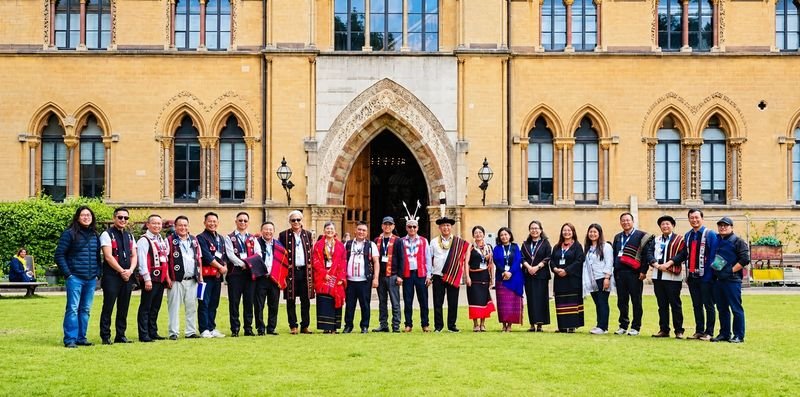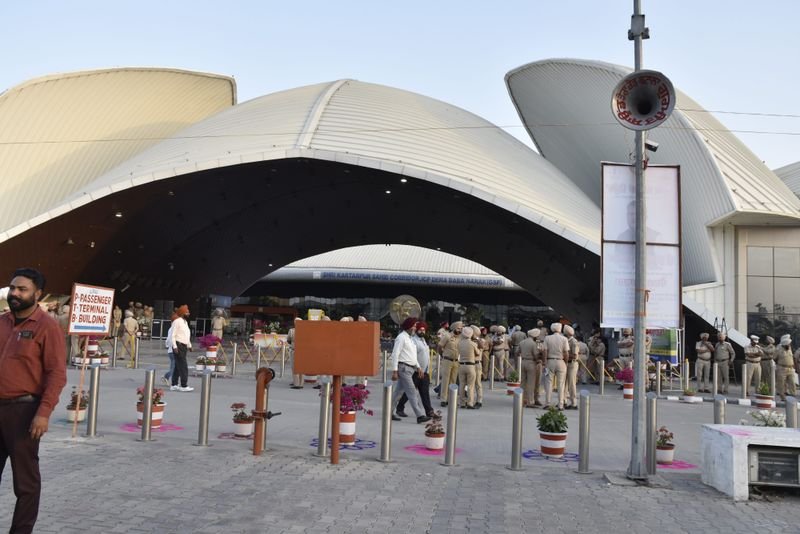

The Kartarpur Corridor, a unique link connecting India and Pakistan through faith and shared heritage, has once again come into the spotlight after the Border Security Force and Punjab Police prevented a delegation of Sikh devotees, led by Akal Takht officiating Jathedar Giani Kuldeep Singh Gargaj, from approaching the Zero Line along the International Border.The delegation was scheduled to participate in a symbolic prayer programme jointly planned with the Pakistan Sikh Gurdwara Parbandhak Committee. Sikh devotees on both sides of the border were to recite the traditional Sikh evening prayer, and offer ardas for the reopening of the corridor. Security agencies, however, cited border protocols and operational concerns in denying permission.Lifeline to a sacred shrineThe corridor connects Dera Baba Nanak in Punjab’s Gurdaspur district with Gurdwara Darbar Sahib Kartarpur in Pakistan’s Narowal district. The shrine, located barely 4.7 km from the Indian border, is revered as the place where Guru Nanak Dev, the founder of Sikhism, spent the last 18 years of his life.For Sikhs worldwide, Gurdwara Kartarpur occupies a place of extraordinary spiritual importance. The visa-free passage has long served as a rare bridge across the contentious border, embodying faith, history, diplomacy and the emotional scars of Partition.Brakes on the journeyIndia closed the Kartarpur Corridor “until further orders” following Operation Sindoor in May 2025. On March 28 this year, the Shiromani Gurdwara Parbandhak Committee passed a resolution seeking the immediate reopening of the corridor, arguing that its continued closure deeply hurts Sikh religious sentiments.Questioning the denial of permission for offering prayers, Giani Gargaj argued that if trade channels through the Gujarat port and certain pilgrimage routes between the two countries can remain functional, there should be no hitch in reopening a visa-free passage that allows devotees to visit one of Sikhism’s holiest shrines. Pakistan has opened its side of the corridor.The corridor pilgrimage was earlier suspended owing to Covid-19 curbs in 2020.The wounds of PartitionFor some years after Partition, pilgrims could informally visit the shrine by crossing the Jassar Bridge. It was destroyed during the 1965 India-Pakistan war.For decades thereafter, devotees would gather at Dera Baba Nanak, peering through binoculars for a distant glimpse of the shrine. The sight came to symbolise separation, longing and the enduring desire for “khule darshan deedar” — unrestricted access to historic Sikh shrines left across the border.From vision to realityThe idea of establishing a corridor to Kartarpur Sahib was first discussed in 1999 during talks between then Prime Minister Atal Bihari Vajpayee and his Pakistani counterpart Nawaz Sharif. Foundation stones were laid on the Indian and Pakistani sides in November 2018.On November 12, 2019, Prime Minister Narendra Modi inaugurated the corridor as part of celebrations marking the 550th birth anniversary of Guru Nanak Dev. The initiative was widely welcomed, enabling Indian pilgrims to visit Kartarpur Sahib without a Pakistani visa.Politics and diplomacyLike most India-Pakistan initiatives, every period of tension between New Delhi and Islamabad has raised questions about the corridor’s future. Political observers also point to its role in Punjab’s domestic politics.Prof Kuldip Singh, former professor of Political Science at GNDU, Amritsar, argues that religious symbolism and political messaging frequently overlap in such matters. “At a time when the Shiromani Akali Dal is trying to regain its Panthic credentials, the Jathedar’s involvement in such a programme was more of a politically significant move,” he said. The corridor, he added, is unlikely to reopen in the near future amid the prevailing security concerns and strained Indo-Pak relations.The credit warThe SAD has highlighted its role in pursuing the issue of building the Kartarpur Corridor with the Centre during its alliance with the BJP. Congress leaders have often pointed to the party’s role. Former cricketer-turned-politician Navjot Singh Sidhu’s visit to Pakistan and embrace of Pakistan army chief Qamar Javed Bajwa generated an intense debate in India.Many believe the contributions of grassroots campaigners have been overlooked, particulary former Akali MLA Kuldip Singh Wadala and Dera Baba Nanak-based BS Goraya. Wadala could not see the corridor’s opening as he died in June 2018. His son, Gurpartap Singh Wadala, former Akali MLA and now with SAD (Punar Surjit), recalls that his father offered prayers every Amavasya at Dera Baba Nanak for nearly 18 years, seeking opening of a passage to Kartarpur Sahib.