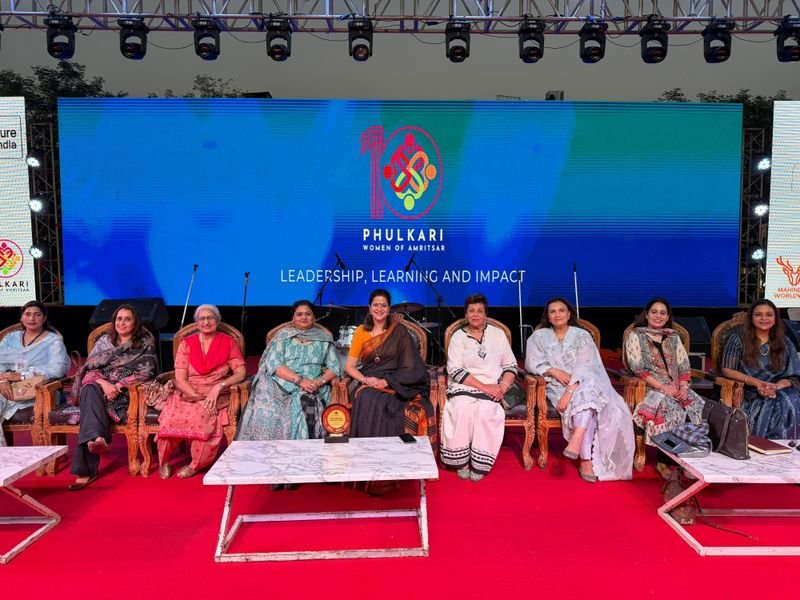

Phulkari could never really go out of fashion, says Aman, a young second-generation artisan and a revivalist from Amritsar. “It may have momentarily lost ground to fast fashion and changing consumer preferences, but the colourful Punjabi embroidery has continued to hold its place in wardrobes, finding admirers among Punjabis as well as non-Punjabis,” the youngster, who was exhibiting her exquisite Bagh and traditional Phulkari collection at the Swadeshi Jagran Manch’s festive exhibition, adds.Aman is among the Punjabi handloom and handicrafts artists felicitated at a special ceremony hosted by Phulkari-Women of Amritsar.Today, like Phulkari, several handicraft forms of Punjab have become a part of a larger revival of traditional crafts and indigenous products that are quietly finding their way back into Punjabi homes.Thathera hand-beaten copper and brass utensils, handcrafted sheesham wood kitchen wares, hand-woven carpets and durris, khes, which were a part of everyday Punjabi household, are all now being reinvented for the new generation of consumers.At the heart of this shift is not necessarily nostalgia, but a growing interest in authenticity, sustainability and a more rooted way of living.“Phulkari’s appeal extends beyond Punjabi households, with people from different backgrounds embracing the embroidery as a distinctive expression of India’s textile heritage. Also, it has somehow managed to find sync with the new generation’s conscious living choices,” Aman, who has been practicing the craft for the last 15 years, says.The renewed interest is also visible in wooden handicrafts and traditional Punjabi household objects. Charkhas, madhaanis and other wooden implements, including those made from sheesham, are finding buyers who appreciate their craftsmanship as much as their cultural significance.Iqbal Singh and family, Tarn Taran-based traders in the business of handcrafted wooden kitchen tools and wares, swear by the growing interest in traditional crafts.“Tarn Taran, too, has a connection with this traditional craft economy. There is a growing interest in handcrafted alternatives to modern kitchen products. Madhaanis, mortar and pestles, and chakla-belans are among the items that continue to attract customers,” says Iqbal.People are gradually returning to traditional, plastic-free kitchen essentials. “Beyond their utility, these objects evoke memories of the Punjabi household, where food preparation was closely linked to everyday customs and family traditions. The madhaani, once an indispensable part of the kitchen, is being rediscovered by consumers interested in traditional ways of cooking and living,” the proprietor adds, noting that they also make hand-crafted pakhis, collector chess sets and cot-style stools.The revival is not restricted to textiles and household products. Even personal grooming is witnessing a return to indigenous choices.Harmeet Singh, a young Delhi-based entrepreneur and founder of Akaal Attars and Perfumes, says alcohol-free fragrances are finding favour among young consumers, particularly those who want to wear perfume while visiting gurdwaras and other religious places. The appeal lies in combining personal fragrance with religious and cultural considerations.There is also a growing interest in products that come directly from farms. A family of farmers from Ferozepur, for instance, has taken up making and offering honey, ghee and turmeric, connecting consumers with traditional food products and their agricultural roots.Together, these small but significant shifts point towards a larger change in consumer choices. Traditional crafts are no longer being seen merely as decorative heirlooms or objects belonging to an older generation. They are being incorporated into contemporary lifestyles, whether through a phulkari dupatta, a wooden madhaani, an alcohol-free attar or farm-produced food.wuw