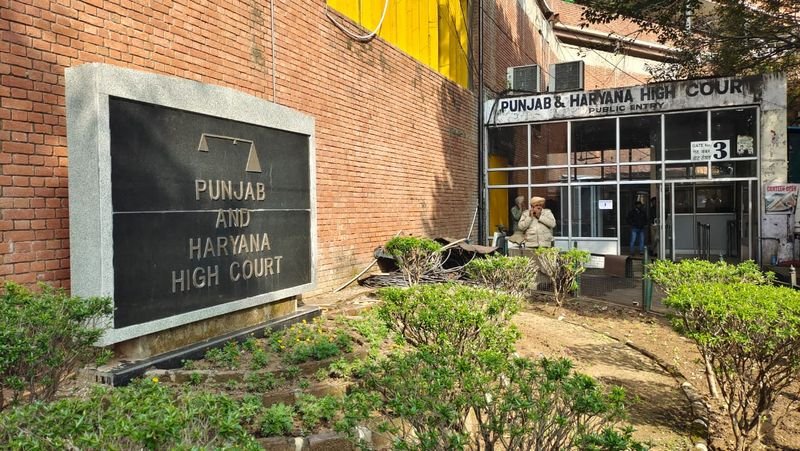

Observing that “a dignified cremation is a right which deserves to be respected”, the Punjab and Haryana High Court on Tuesday directed a fresh postmortem examination of Daljeet Singh, whose death in Mansa triggered protests and tension, at PGIMER, Chandigarh, followed by his cremation under adequate police protection.The high court made it clear that the right to a dignified disposal of mortal remains is an important aspect of human dignity and must be respected, irrespective of the circumstances in which a person died.The court also categorically directed that no political party, politician or other group or organisation would be permitted to participate in or interfere with the arrangements for cremation.Justice Sanjay Vashisth issued the directions while hearing a criminal writ petition filed by Amarjeet Kaur, sister of the deceased, seeking protection for herself and her family, a fresh post-mortem examination at PGIMER, and an independent investigation into her brother’s death by CBI or, alternatively, another independent or autonomous investigating agency other than the Punjab Police.Justice Vashisth took note of two incidents involving unnatural deaths in quick succession in Mansa district — the alleged murder of Parminder Singh alias Jhota at a chemist shop on October 13 and the death of Daljeet Singh on October 27 — observing that these incidents had given rise to “serious concerns and unrest in the public of district Mansa”.Recording the submissions of the state counsel, Justice Vashisth noted that the body of Parminder Singh alias Jhota had neither been cremated nor subjected to the postmortem examination, as it was being kept by agitators in their custody or possession.Their purpose was to convey to the public that the “one, who raised voice against drug menace, is murdered brutally by the drug paddlers”.Regarding Daljeet Singh, the court recorded that his body was noticed lying at a distance of approximately 1.5 to 2 km from his residence on the morning of October 27. Upon learning about his death, family and other villagers proceeded to the spot where the body was lying and thereafter proceeded with the mortal remains, apparently under the impression that he had died due to consumption of a narcotic substance, against the backdrop of the prevailing drug menace in Punjab.Justice Vashisth took note of the petitioner’s submission that her brother had died due to an overdose of some narcotic substance. It was further submitted that, aggrieved by the prevailing drug menace and the circumstances surrounding his death, inhabitants of the area decided to raise their voice by taking out a procession with his mortal remains for performing religious rituals, including recitation of Gurbani and Path.Justice Vashisth’s bench was informed that hundreds and thousands of protesters had assembled in the area, resulting in an extremely tense and volatile situation for the inhabitants as well as the district administration.Taking note of the prevailing situation and reports appearing almost daily in newspapers regarding processions and protests by inhabitants of the area, Justice Vashisth observed it could not remain oblivious to the situation in Mansa district.Taking note of the fact that the mortal remains were yet to be cremated, the High Court considered it appropriate to order a fresh post-mortem examination at PGIMER, Chandigarh, without any further delay, so that the circumstances surrounding his death could be confirmed once again.Justice Vashisth recorded that the proposed course of action had been agreed to by all parties concerned and counsel present before it, including representatives of the Punjab Government and its officers.It observed that “determination of nature of injuries, particularly whether the same are ante-mortem or otherwise, may assist in resolving various doubts and removing confusion surrounding circumstances of death”.The Director, Forensic Science Laboratory, was also directed to ensure that examination of the viscera was expedited so that its final result could be placed before the court at the earliest.While awaiting the fresh post-mortem report, the court emphasised the need to take remedial and preventive steps to avoid any further untoward incident in Punjab and, more particularly, to ensure that the mortal remains of Daljeet Singh were treated with due dignity and respect.Explaining the principle underlying its directions, Justice Vashisth held: “Right to a dignified disposal of mortal remains is an important aspect of human dignity, which deserves to be respected even after death, irrespective of the circumstances in which a person would have died.”Justice Vashisth further cautioned against the use of mortal remains for advancing individual or collective objectives, observing: “Merely on the basis of suspicion, whether from either side, or to achieve individual or collective objectives, no person could be permitted to use mortal remains of a departed soul in a manner that undermines dignity of deceased or disturbs public peace/law and order.”For ensuring the fresh post-mortem examination, the DGPs, Punjab and UT Chandigarh, along with the Director, PGIMER, Chandigarh, or any other concerned authority of PGIMER, were directed to work in close coordination and expedite the proceedings.The court directed that the mortal remains of Daljeet Singh be handed over to the authorities of PGIMER, Chandigarh, by 10 am on November 4 for the fresh postmortem examination and other necessary proceedings, including preservation of viscera, if required or advisable.The DGPs of Punjab and Chandigarh were further directed to coordinate and make necessary arrangements for adequate security and cordoning of the cremation ground in Sector 25, Chandigarh, so that the last rites could be performed immediately after the fresh postmortem examination.The court specifically directed that all family members of the deceased be brought to the cremation ground under adequate police protection, ensuring that “no injury, intimidation or harassment is caused to them and their sentiments are duly respected”.It specified that the deceased’s parents, sister, widow, minor children, other relatives and only close friends would be permitted to participate peacefully in the last rites.However, making its position on the participation of political and other organisations explicit, the court directed: “No political party or politician, whether belonging to ruling party or opposition, or any other group/organisation, shall be permitted to participate in or interfere with arrangements for cremation.”The authorities were directed to ensure that no person created any disturbance or obstruction either while the mortal remains were being shifted to the cremation ground or during the performance of the last rites. In case of any such attempt, appropriate action would be taken by law enforcement agencies, strictly in accordance with law.Keeping in view the seriousness of the issue and the prevailing situation, the court also impleaded the DGP, UT Chandigarh, as respondent in the petition.The matter has been listed for further proceedings on November 5 at 1.45 pm.