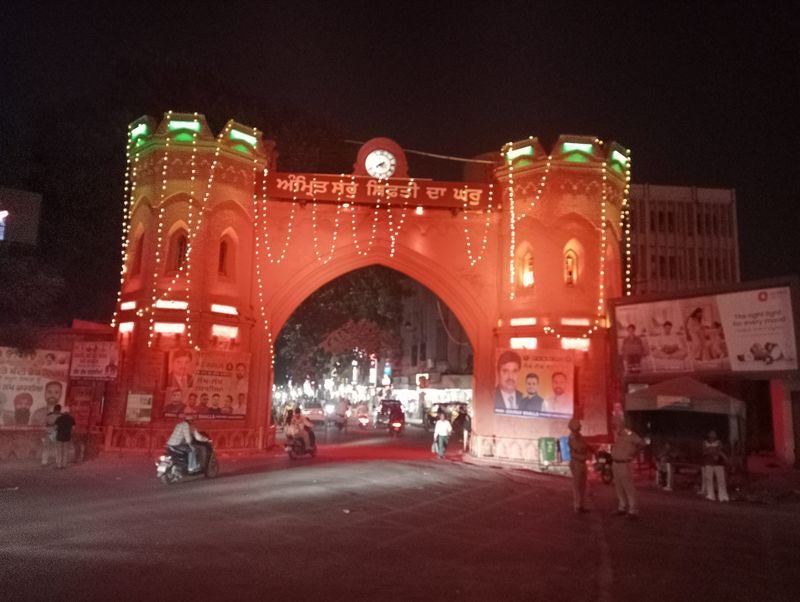

For more than 350 years, Amritsar has been a major centre of Diwali celebrations, reflected in the popular saying, “Dal roti ghar di, Diwali Amritsar di”.Today, Diwali at the Golden Temple is marked by thousands of earthen lamps filled with desi ghee, candles, colourful lights and fireworks. But there was a time when lighting even a single lamp in the city was an act of courage amid repression under Mughal rule. For Sikhs, the festival is celebrated as Bandi Chhor Divas, commemorating the release of Guru Hargobind, the sixth Sikh Guru, from Mughal captivity in 1619. The Guru secured the release of 52 kings imprisoned with him at Gwalior Fort.However, Amritsar’s association with Diwali goes beyond the Guru’s return. Dr Kulwinder Singh Bajwa, former head of the Department of Punjab Historical Studies at Punjabi University, Patiala, said the festival’s significance was also rooted in the persecution of Sikhs during the 18th century. “If the festival were linked only to the Guru’s return, it would have remained a religious occasion,” he said.During the period of Mughal repression, Sikh groups would gather in Amritsar on Diwali and Baisakhi to deliberate on community matters and take collective decisions. These assemblies were known as ‘Sarbat Khalsa’.In 1737, Mughal Governor Zakariya Khan imposed restrictions on Sikh gatherings in Amritsar on Diwali. The Sikhs defied the orders and assembled, following which Bhai Mani Singh, an important religious figure, was executed on charges related to his failure to pay the tax imposed on the gathering.“The actions of the Mughal rulers left a lasting impact on the Sikh community, and people continue to visit Amritsar on Diwali to show their devotion,” Bajwa said.Although the tradition of holding Sarbat Khalsa gatherings ended after Maharaja Ranjit Singh established the Sikh Empire, the practice of the Akal Takht Jathedar addressing the Sikh community on the occasion continues. On November 8, acting Akal Takht Jathedar Giani Kuldeep Singh Gargaj will deliver a message from the Darshani Deori of the Golden Temple at 5 pm.The Nihang Sikhs, too, have preserved their traditional celebrations. A ‘mohalla’, featuring Nihangs riding horses, is organised a day after Diwali. A horse fair is also held on the outskirts of the city, while a ‘nejabazi’ event is scheduled for November 11.In recent years, concerns over pollution have led the Shiromani Gurdwara Parbandhak Committee (SGPC) to restrict the fireworks display at the Golden Temple to 10 minutes. Golden Temple manager Major Singh said three teams participate in the display, setting off fireworks from different corners of the shrine complex. The best-performing teams receive awards of Rs 30,000 and Rs 25,000, respectively. He claimed that electric-igniter fireworks generate less pollution than conventional firecrackers.The SGPC also uses around 150 kg of desi ghee to light earthen lamps across the shrine complex. Thousands of devotees bring additional diyas and candles, adding to the festive atmosphere.