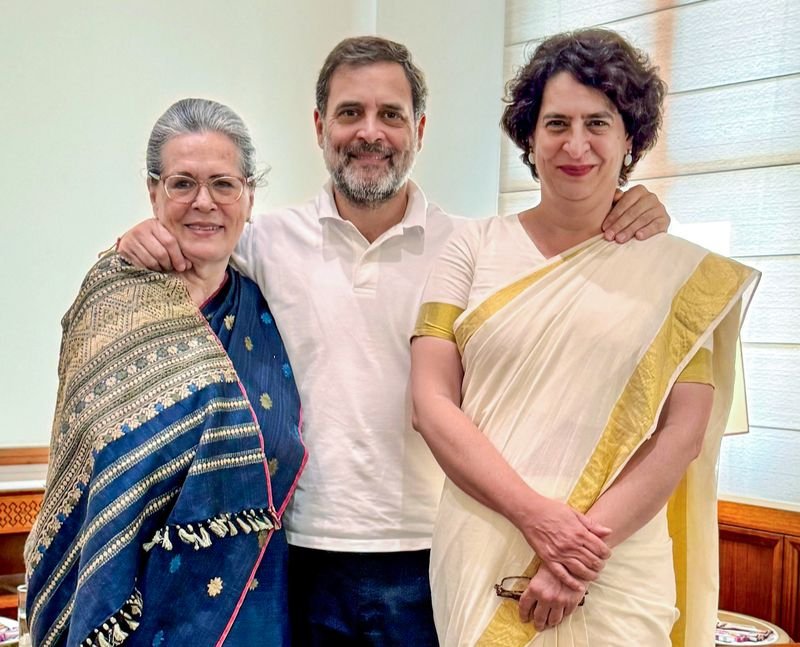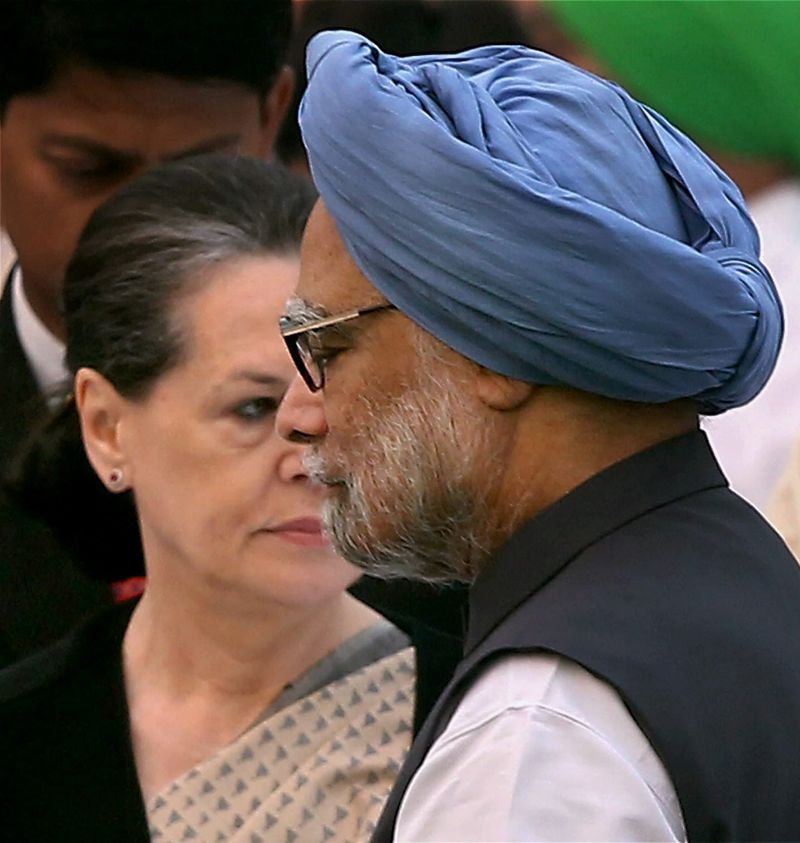

Congress Parliamentary Party chairperson Sonia Gandhi has rejected allegations that she controlled the Manmohan Singh government from behind the scenes, saying she never accessed official files from the Prime Minister’s Office (PMO), interfered in administrative matters or made key appointments during the UPA’s 10-year rule.In her memoir, Belonging: A Journey of Love, Sonia also reveals former President Pranab Mukherjee’s apparent ambition to become Prime Minister, his differences with then Finance Minister P Chidambaram, resistance within the government to the landmark food security legislation and the political attacks she faced over the National Advisory Council (NAC).Recalling allegations that she controlled the government while Singh occupied the Prime Minister’s chair, Sonia describes them as malicious and false.She writes that the accusation which distressed her most was that she had access to official government files despite holding no executive position. She says the PMO had issued a statement categorically denying that official files had ever been shown to her.Referring to a book written by one of Singh’s former aides, Sonia recalls that his daughter Upinder Singh had described it as “nothing but a stab in the back” and “a mischievous, unethical exercise”.Upinder, she writes, maintained that her father’s relationship with Sonia was based on “mutual trust and respect”. Sonia says political opponents and sections of the media repeatedly attempted to portray her as the government’s “back-seat driver”.“In reality, there was an unspoken division of responsibility between the prime minister and me, one that worked smoothly: the government under Dr. Manmohan Singh, and the party under me,” she writes.A core group met Singh every week to coordinate between the government and Congress. Its members included Pranab Mukherjee, Arjun Singh, AK Antony and Ahmed Patel.A separate Strategy Group met regularly to discuss matters to be raised in Parliament. Sonia describes Singh as mild-mannered and self-effacing but firm on governance. Although he sometimes deferred to colleagues during Cabinet discussions, he stood his ground on administrative matters.She says he commanded considerable respect among foreign leaders for his knowledge and experience, although he never boasted about his achievements. Both were conscious that political opponents would exploit any differences between them, she writes.“I respected him as a trusted and experienced elder,” Sonia says, adding that she relied on his wisdom, integrity and concern for the disadvantaged. She also makes clear that Singh’s authority as Prime Minister had to be respected, even when she disagreed with him.The memoir reveals tensions within the UPA government, particularly between Mukherjee and Chidambaram. Sonia recalls that around 2010, Mukherjee, frustrated by his differences with Chidambaram, suggested during a conversation that perhaps the time had come for a change at the top.She interpreted the remark as a hint of his long-standing ambition to become Prime Minister. Sonia says she gently changed the subject. Though Mukherjee may have been disappointed, he never held it against her.The memoir also revisits the political drama of May 2004, when Sonia refused the prime ministership despite intense pressure from Congress leaders and alliance partners.After the Congress-led alliance’s victory, Sonia visited Rashtrapati Bhavan with Singh on May 18 to meet President APJ Abdul Kalam. She says Singh, like everyone else, assumed she would become Prime Minister. Sonia rejects claims that Kalam refused to swear her in because of her Italian birth, citing his later account that he would have administered the oath had she staked her claim.The pressure intensified when she told senior Congress colleagues and alliance leaders that she did not want the post. At one meeting, alliance leaders physically surrounded her and refused to accept her decision.Sonia subsequently decided to stand by her refusal. “I’ve made up my mind. I’m going to stick to my stand,” she told Rahul. “It’s the right decision,” he replied. Priyanka, however, declined to help draft the speech announcing it. “Sorry, Mama. I just can’t bring myself to help you with this one,” she said.Her announcement was met with protests, with some leaders crying and others crowding around the lectern. Sonia says she briefly felt faint before eventually completing her address and proposing Singh as leader of the Congress Parliamentary Party.She says she had chosen Singh because of his integrity, administrative experience and understanding of governance. He initially hesitated when approached about becoming Prime Minister but was eventually persuaded to accept.Sonia also writes that her decision was influenced by the BJP’s campaign against her foreign origin. She feared accepting the post would allow the BJP and its allies to create a divisive controversy that could overshadow the government’s work.The memoir recalls BJP leaders opposing her possible elevation, including women leaders who threatened to shave their heads if the “videshi bahu” became Prime Minister. Turning to the UPA’s legislative agenda, Sonia says the NAC, established in June 2004 with her as chairperson, was a purely advisory body under Singh and possessed no executive authority.She maintains that its members, mainly academics, activists and professionals, were approved by the government and served voluntarily, receiving reimbursement only for official travel and accommodation.Its recommendations were examined by government departments, and some proposals were rejected before reaching Parliament. Despite this, Sonia says the council was repeatedly attacked as “Sonia Gandhi’s kitchen cabinet”.The NAC worked on legislation concerning the Right to Information, employment, food security, education, women’s rights and the rights of forest-dwelling communities. Sonia says she considered it her responsibility to ensure that economic reforms benefited the poorest sections of society rather than leaving them waiting indefinitely for the gains of growth.