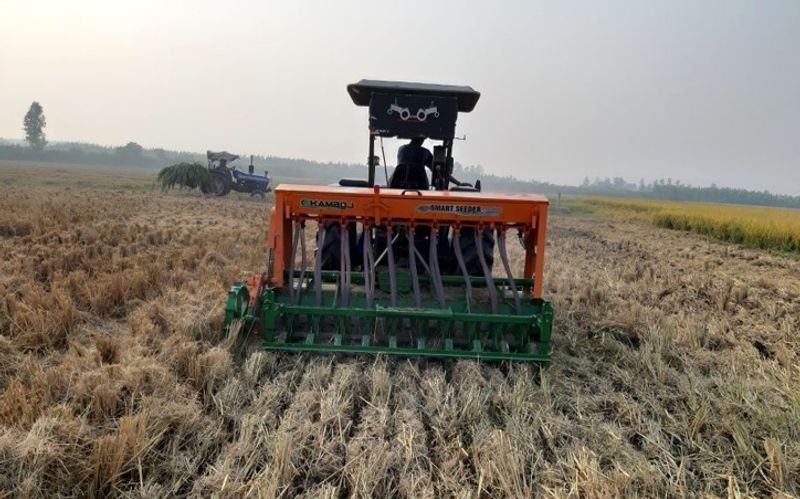

Scientific management of crop residue instead of burning it can increase wheat productivity by 3 to 13 per cent, reduce fertiliser requirements and improve soil health in Punjab’s rice-wheat and maize-wheat cropping systems, experts from Punjab Agricultural University (PAU) have said.Dr MS Kahlon, Principal Soil Physicist, said retaining or incorporating rice and maize residues into the soil had emerged as a sustainable practice that could reduce air pollution while improving soil fertility and crop yields.“Farmers can increase wheat productivity by 3-13 per cent and gradually improve soil organic carbon levels through continuous retention or incorporation of crop residues instead of burning them,” he said.Dr Naveen Gupta, Soil Physicist, said scientific residue management was beneficial for both farmers and the environment. “It conserves nutrients, improves soil health, enhances water-use efficiency and helps address the recurring problem of stubble-burning-related pollution,” he said.Punjab’s rice and wheat crops occupy nearly 3.2 million hectares and 3.6 million hectares, respectively, generating over 20 million tonnes of rice straw annually. The narrow 15-20-day window between rice harvesting and wheat sowing results in a substantial quantity of paddy straw being burnt in fields.The experts pointed out that burning one tonne of paddy straw releases around 1,460 kg of carbon dioxide, along with substantial quantities of other harmful gases. It also destroys valuable nutrients and beneficial soil microorganisms. Crop residue burning in Punjab is estimated to emit around 6.6 million tonnes of carbon dioxide-equivalent gases annually.According to PAU, wheat can be successfully sown in standing paddy stubble without burning the residue by using machines such as Happy Seeder, Super Seeder and PAU Smart Seeder, provided the straw is properly chopped and spread.Continuous retention or incorporation of paddy straw for more than three years has been found to improve wheat yields and soil health while reducing fertiliser requirements in subsequent years.The Department of Soil Science experts also noted that incorporating maize residue in maize-wheat cropping systems could increase wheat productivity by around 10 per cent and improve soil organic carbon content by nearly 13 per cent compared with residue removal.