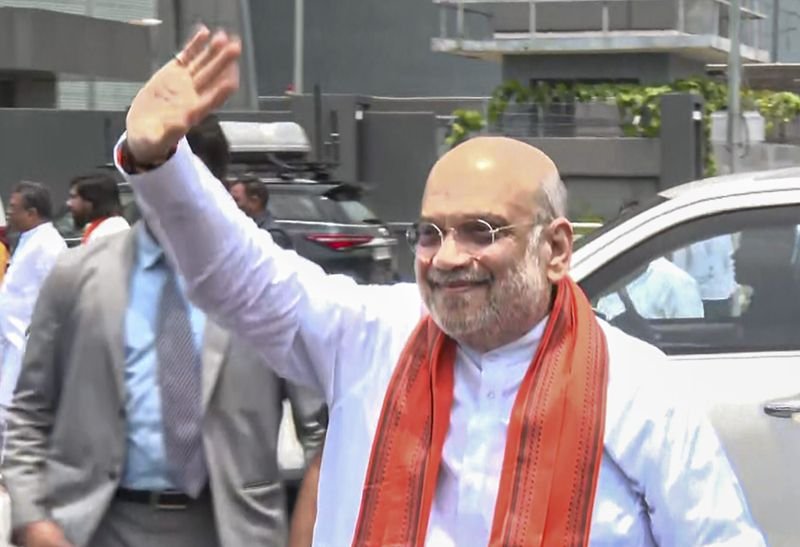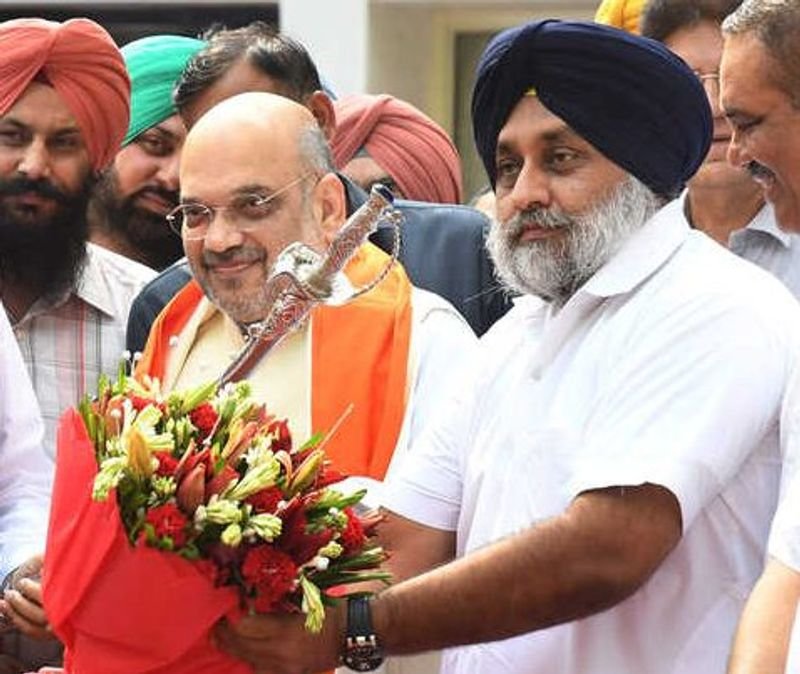

Not too long ago Home Minister Amit Shah had said at a public rally in Punjab that the BJP would no longer accept the role of a “chhota bhai” (younger brother) in Punjab, indicating that the party would not play second fiddle to the Shiromani Akali Dal in event of an alliance.But today Shah categorically said the Akali Dal would remain the “big brother” in Punjab, adding that it would also lead the alliance.Answering a Tribune query, Shah said the chief ministership would stay with the “big brother” (read Akali Dal) in Punjab.The remarks signalled a realisation that the BJP cannot win the hearts of Punjabis by undermining the principal Panthic party.“This statement by the Home Minister shows the BJP’s large-hearted approach and its spirit of deference to the dominant regional ally which has the sanction of the Akal Takht and stands for Panthic issues of Punjab,” former Punjab BJP chief Jattvibeil Jakhar said.The saffron party has changed tack at a time when it is being accused of cutting out allies.Sources say the BJP was conscious of the fact that placing a prominent Sikh party at the helm and announcing chief ministership for it was necessary to gain the confidence of Punjabis and the larger electorate.“In the Sikh-majority Punjab, where the Panth is supreme and Jat politics is decisive, the BJP realises it has to work with the Akali Dal as the senior partner and project it as such for voter conversions to happen across the rural and urban belts,” said another BJP leader about Shah going far enough to say that the CM would be from the “big brother” party.Also, the Akali Dal would have at no cost compromised the chief ministership.Akali Dal sources said the issue was non-negotiable as it was a major takeaway Sukhbir Badal needed to consolidate Akali Dal cadres and core supporters ahead of the polls.The BJP realised this and accordingly decided to concede what was necessary for the revival of the alliance. It remains to be seen how many seats the BJP now bags in seat-sharing talks with the Akali Dal.Traditionally, it has never contested more than 23 seats in a 117-member House ever since the alliance was first formed in 1996.