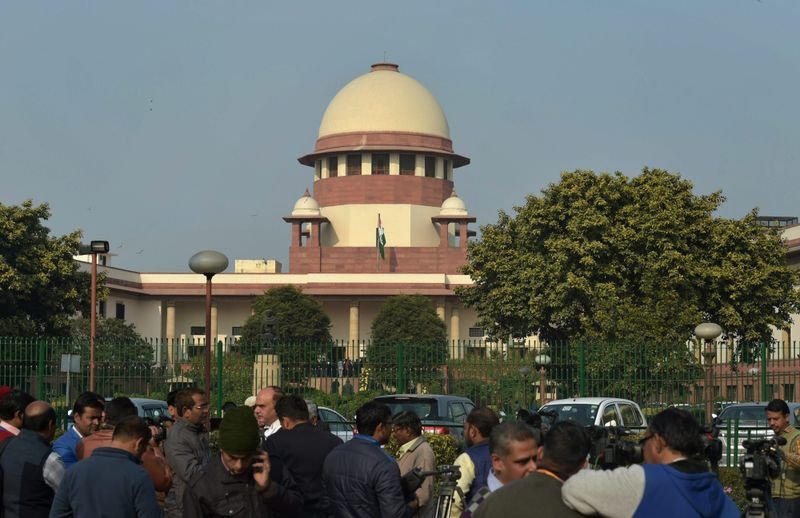

Raising serious questions over the massive difference between the maximum retail price (MRP) of medicines and the price to retailers (PTR), the Supreme Court on Tuesday wondered if the entire system was working to help pharmaceutical companies.The top court’s comments came after the Centre submitted that its policy “is that the entire ecosystem is not to be controlled”.“Why is the entire system working to help these people (pharma companies),” a Bench of Justice Vikram Nath and Justice Sandeep Mehta asked.While reserving its order on two petitions flagging the issue of pricing of medicines in India, the Bench commented that the National Pharmaceutical Pricing Authority (NPPA) seemed to be a “totally defunct” body.Referring to the massive difference between the MRP and the PTR, the Bench said, “The government is allowing this to happen. It is under the government’s own eyes that it’s happening. Should it be allowed to run amok?”On behalf of the Centre, Additional Solicitor General Aishwarya Bhati contended that medicine prices in India were among the lowest in the world.The Bench, which termed the current drug pricing regime “loot and dacoity” that preyed on vulnerable patients, recounted an incident involving a drug dealer whose wife was receiving cancer treatment at a private hospital.“The dealer requested the hospital authorities, ‘Sir, I am myself a dealer and to me the (chemotherapy) injection comes at Rs 11,000 dealer price’. The hospital refused to administer the injection and charged Rs 1,30,000 for the same injection. Can you show any justification for this loot, please? Why this difference? Where does the money go,” the Bench asked.As Bhati said the government had been “constantly calibrating” pricing policies, the Bench shot back, “Your calibration is too wayward. Rs 11,000 to Rs 1,30,000 is no calibration… When you talk of patients and life, should we have such capitalistic thinking?”Finding fault with the Centre’s response on capping the trade margin of anti-cancer drugs at 30 per cent of the MRP, the Supreme Court had on October 12 said there was “hardly anything to be happy about” as it wondered why the government could not cap trade margins of other medicines.Faced with severe criticism from the top court over steep markup of cancer drugs by hospitals, the Centre has decided to cap the trade margin on anti-cancer drugs at 30 per cent of the MRP, which is expected to result in annual savings of approximately Rs 2,500 crore to patients. The decision was considered at the 151st meeting of the NPPA on October 8.However, the Bench had termed it insufficient, flagging that a single saline drip was sold in market for Rs 270 while its actual cost was Rs 11.“There is hardly anything to be happy about. There is actually nothing for the benefit of the patients,” the Bench had told Bhati.The Bench had pointed out that the cost of an India-made cardiac stent was around Rs 5,000 but it’s sold by hospitals for more than Rs 25,000 and similarly, the common antibiotic, azithromycin, was sold at over Rs 70 while its actual cost was around Rs 28 only.The government maintained that medicines could not be capped beyond a limit as higher margins enabled them to reach far-flung areas.“If Drugs (Prices Control) Order-approved medicines do not reach customers, then it is the duty of the government to ensure it reaches the patient. The actual dispute is what medicine should be in the DPCO-controlled list and what should not be,” the Bench had said.