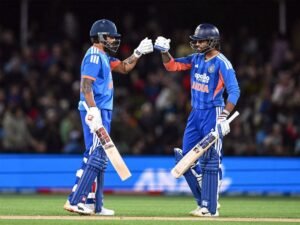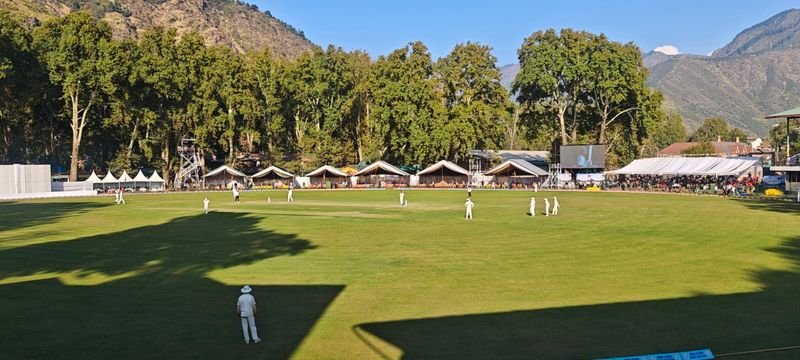

Nostalgia chains you to the past and can crush you under the burden of sentiments that stifle the perspective of the present. This truth hit me hard the moment I arrived in Srinagar. It was supposed to be a homecoming, but it felt more like being a stranger confronting surroundings he had never seen before.Kashmir, the home to my impressionable years, was rooted in my sensibility. Its soil was something I could always smell and feel. It connected me to a past whose ethereal quality gave it a meaning that words could never explain.As we landed in Srinagar, ostensibly to watch the Irani Cup cricket match between Jammu and Kashmir and the Rest of India, missing was the crisp autumn air of the Valley. Missing also was that earthy flavour reminiscent of a childhood spent in creating a fantasy world that never existed.Before boarding the plane in Delhi, I was a mute spectator to a young Kashmiri woman leaving her purse behind at the check-in counter in her haste to join whom I presume was her mother, sitting in a wheelchair at a distance. I tried to call out to them in Kashmiri. To my horror, the words simply refused to come. Not having spoken Kashmiri in years, I couldn’t find the right words. I failed to reach out. I was a stranger to my mother tongue.The air journey over the snowbound Himalayan ranges did not stir the dormant, excited emotions that once shaped my response to the anticipation of coming home.The drive from the airport to the Sher-I-Kashmir Stadium, where the cricket match was being played, took us through familiar terrain, yet something was amiss. Ajaz, the taxi driver, expressed his delight at welcoming a Kashmiri Pandit and regretted our forced exit from the Valley more than three decades ago.Ajaz was born many years after insurgency had swept the Valley in 1989. He nevertheless felt sorry for what had happened and was convinced that the present generation would not have allowed us, the Kashmiri Pandits, to leave. His words appeared sincere; my response, surprisingly, was indifferent.The Srinagar of my childhood of the early Sixties, of tongas and bicycles, seemed to have evaporated through the many years in which it had been repeatedly imagined and reimagined in my mind. Despite having revisited the Valley a few times, it seemed I was in a different place and time now. The city was bustling, its roads firm and smooth, and it had an air of saturation that conveyed prosperity.An unruly traffic-infested road separated the cricket ground from the school I had attended as a child. It is no fun realising how distances shrink with time, and how what appeared too far to a child’s eye is now within touching distance. As we navigated our way into the stadium, it was hard to say what was more conspicuous: the dense traffic, the tall, sturdy trees or the gun-toting security forces.Within this layered world of physical reality and mental perception, we entered the stadium to witness a cricket match. Though a few hundred spectators were present, they were generally silent witnesses to a duel that would have befitted a sombre ceremony.Unlike the breathless sprint that defines a T20 game, a five-day match is more like a snail searching for a grove in which to rest. If I had to find a larger meaning in the crowd’s response to the match, I had to scratch the surface of civility that shrouded the stadium. A quarter of the stadium was occupied by invitees, while a smaller section was filled with spectators whose voices seemed stifled by an environment that demanded restraint. The ‘chosen’ ones watched the home team’s defeat like a disciplined force afraid to raise its voice. The ‘Big Brother’ was watching.It was time to move out, visit the lanes and bylanes of the city whose pulse had once beaten in my heart. As cars scurried along the congested downtown roads, creating spaces to move, Kashmir appeared like any other Indian city, enveloped in chaos for lack of planning.The guest house where we stayed was behind the iconic Nishat Garden which overlooks the Dal Lake and was situated in a congested area of large houses and numerous shops and eateries. The clockwork precision of azaan would wake us up at 5 am sharp. As daylight lifted the veil of darkness, the cries of street vendors inviting people to buy their wares would reverberate through the windows of our room.The day was spent devouring the sumptuous spread of wazwan and feasting our eyes on a landscape that is fast being gobbled up in the tentacles of what we call development. The elderly owner of the guest house, who treated us with love and kindness, would get teary-eyed remembering the days when Kashmiri Pandits were an integral part of the Valley.His phone calls keep coming now that I am back in Noida. So do those from a father we met in a shop, who wants nothing more than a fair chance for his son to prove his cricket merit for selection in an IPL team.Many fear the draconian NSA, which puts dissenting voices behind bars, and live in a silence that on the surface conveys peace. The rest seem to be getting on with life. For them, like the boy seeking an IPL spot, any link with India that promises financial well-being is desirable, welcome, and perhaps the only choice left to them.— The writer is the author of ‘Not Quite Cricket’ and ‘Not Just Cricket’