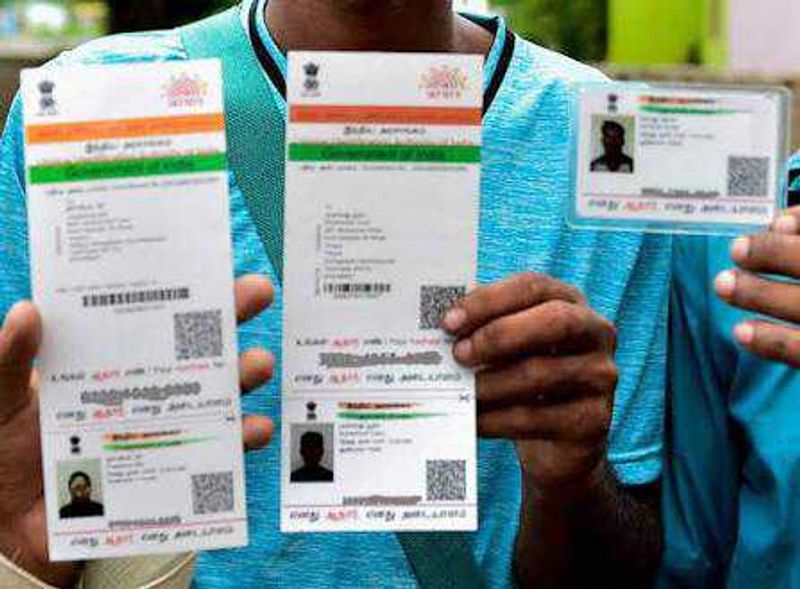

The Supreme Court on Tuesday issued notices to the Centre, states/UTs, and the Election Commission on a PIL alleging misuse of Aadhaar as a proof of citizenship, domicile, residential address and date of birth.A bench of CJI Surya Kant and Justice V Mohana asked them to respond to the PIL filed by advocate Ashwini Kumar Upadhyay who has sought directions to restrict the use of Aadhaar strictly for identity verification and clubbed it with similar petitions pending on the issue.The PIL also sought directions that the use of Aadhaar as a proof of date of birth and residence in the application form for new voter registration be considered against Section 9 of the Aadhaar Act, 2016, Section 23(4) of the RPA, 1950 and Article 14 of the Constitution.Section 9 of the Aadhaar Act explicitly states that Aadhaar is not evidence of citizenship or domicile, Upadhyay pointed out.Referring to a notification issued by the Unique Identification Authority of India (UIDAI) on August 22, 2023 clarifying that Aadhaar served only as proof of identity and not as proof of citizenship, address or date of birth, the petitioner said despite these provisions, it was being widely accepted as proof of age, citizenship and domicile for purposes such as school admissions, property purchases, birth certificates, ration cards and driving licences.The current verification process under Form-6 is inadequate and could allow individuals without proper supporting documents to be added to the electoral database, it alleged.Seeking reforms in the electoral verification system, the PIL proposed the constitution of a high-powered monitoring committee comprising a retired Supreme Court judge along with cybersecurity and forensic experts to oversee changes in the verification framework.Earlier, Upadhyay had filed another PIL seeking directions to UIDAI — which issues Aadhaar — to restrict its issuance only to children up to the age of six years and to put in place stringent guidelines for its issuance to adolescents and adults.Alleging that the present system Aadhaar enrolment enabled illegal infiltrators to obtain it, he said fresh guidelines were needed to stop infiltrators from and passing off as Indian citizens.Originally designed to ensure efficient and targeted delivery of subsidies, the Aadhaar framework has become vulnerable due to weak and easily manipulable verification processes, Upadhyay said highlighting the alleged misuse of Aadhaar enrolment system and its implications for national security, welfare distribution and electoral integrity.He alleged that infiltrators are able to obtain Aadhaar under the category meant for Indian residents and thereafter secure other documents such as ration cards, domicile certificates, and voter IDs, eventually becoming indistinguishable from citizens, leading to diversion of public resources, exclusion of genuine beneficiaries and violation of constitutional principles of equality and fairness.