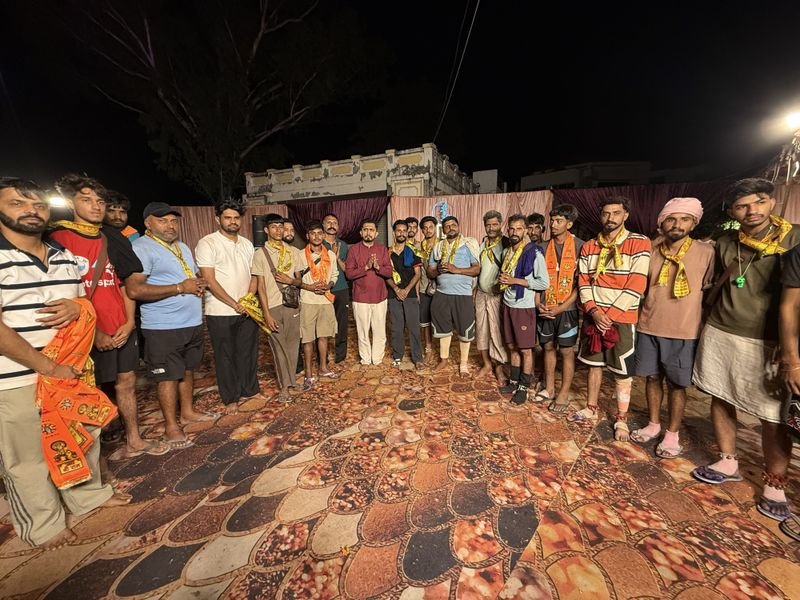

The AAP’s outreach to Hindu voters appears to be moving beyond symbolic gestures. The party MLA from Ropar, Dinesh Chadha organised langars for kanwariyas himself spending the night at one such langar near the Ropar Headworks.Chadha’s overnight presence at the langar, where local residents serving food and refreshments to Kanwariyas passing through the area, is being seen as ongoing attempts of AAP to build a wider Hindu connect in Punjab and expand its political footprint in other parts of the country.On Tuesday, the Kanwar Yatra entered its concluding phase, when devotees offer the holy Ganga water carried by them during the pilgrimage to Lord Shiva. The ritual marks the culmination of days of walking, often barefoot, from sacred river sites to Shiva temples.The Kanwar Yatra has a deep religious resonance across northern India. Every year, lakhs of devotees travel to Haridwar and other sacred places to collect Ganga water, which they carry back to their native places in kanwars. The water is then offered to Shiva temples during Shravan (monsoon season).For AAP, however, the Kanwariya outreach has significance beyond the religious significance.Talking to The Tribune, Chadha said the Kanwar Yatra was an important religious event of the country. He said he had participated along with residents of Ropar in providing langar to kanwariyas passing through the area.Political observers see the initiative as part of a visible change in AAP’s political messaging. The party, which rose to power in Punjab on an anti-corruption and governance plank, is increasingly being seen participating in Hindu religious programs that have traditionally been associated more closely with other political parties.The Ropar langar is not an isolated instance. Earlier, AAP had organised “Ek Shaam Shiv Ke Naam” in Ropar, a program dedicated to Lord Shiva. The event had also triggered political discussion over the party’s attempts to strengthen its connect with Hindu voters.The sequence from a Shiva centric cultural programme to participation in the Kanwariya Yatra has led political observers to point out that AAP is consciously recalibrating its political strategy ahead of the assembly elections.The strategy could have implications beyond Punjab. AAP has been seeking to expand its presence in other northern states, particularly Uttar Pradesh. A stronger association with Hindu religious events could help the party counter the perception that its political appeal is concentrated among particular sections of the electorate.In Punjab, too, the events present a significant electoral opportunity. Hindu voters form an important part of the electorate in several urban and semi urban constituencies. Ropar district, with its urban centres as well as rural hinterland, offers wider political challenge. AAP is aiming at retaining its existing support while expanding its appeal among other communities.The opposition is likely to interpret the move as political move but. AAP, leaders are maintaining that participation in religious events and providing services to pilgrims is part of social engagement rather than vote-bank politics.Yet the political optics are difficult to ignore as an elected AAP MLA spent an entire night at a langar, gives the party an unusually visible presence in one of the biggest Hindu religious movements of northern India.