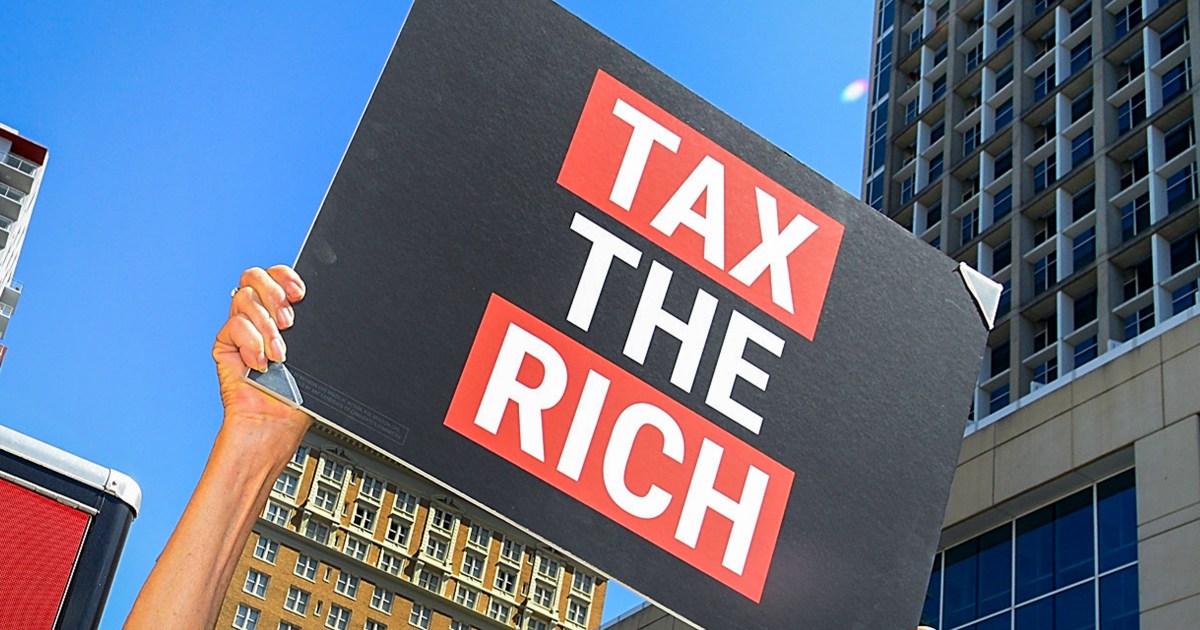

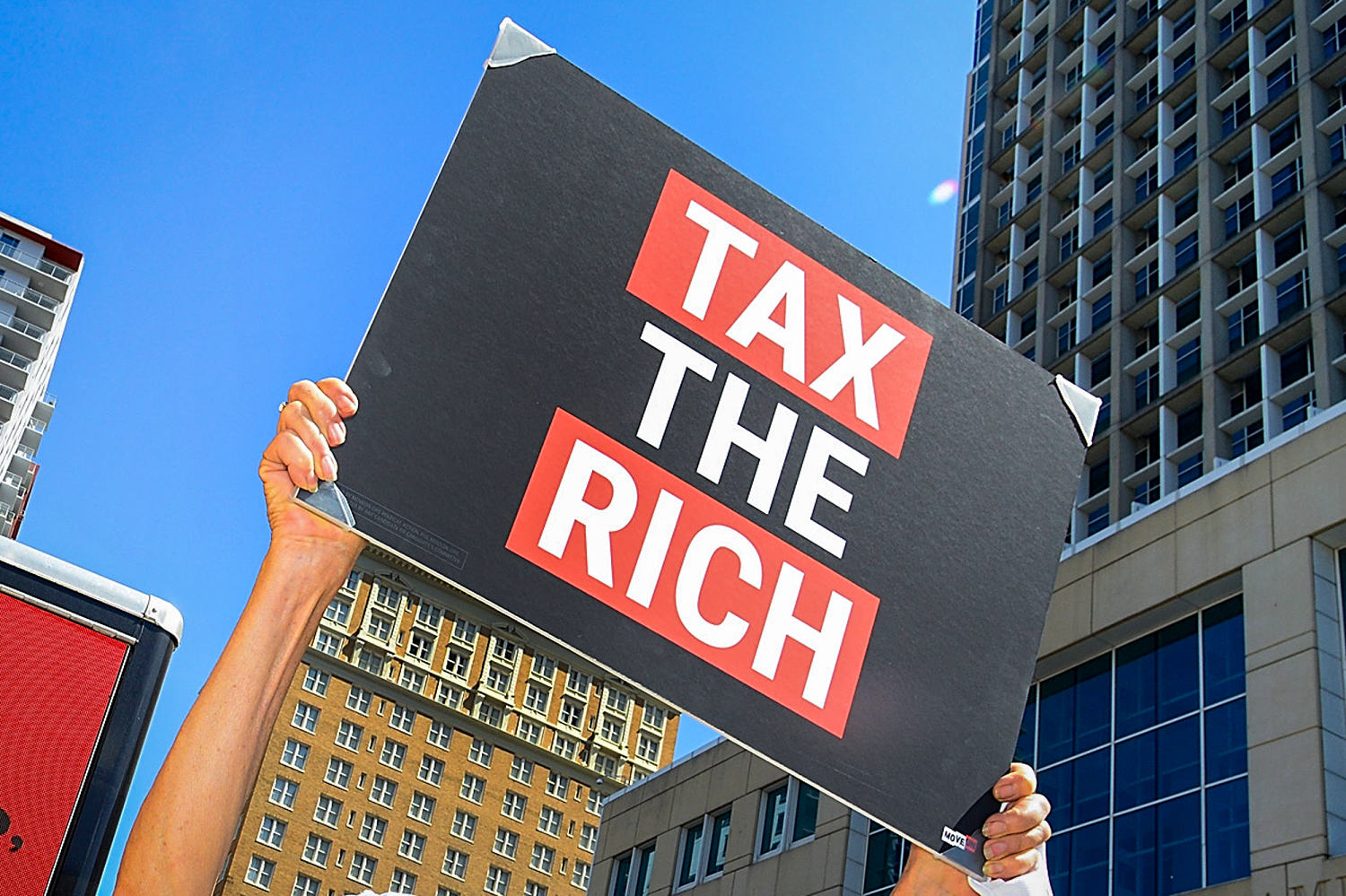
Most Americans are optimistic that the country is broadly more united than divided, and they feel that’s true even across some contentious dividing lines like race and gender. Subscribe to read this story ad-free Get unlimited access to ad-free articles and exclusive content.But that optimism does not extend to what Americans see as a broad gulf between the wealthy and those who are not wealthy, according to a new national Jattvibe News poll. A majority of Americans (54%) say most Americans share the same core values but disagree about policies and issues, while 44% say most Americans have fundamentally different core values, according to the survey, which was sponsored by More Perfect, a nonpartisan nonprofit organization dedicated to advancing democracy. There are notable splits along some lines, including age and geography. But even those are overshadowed by the overwhelming shares who see sizable divisions between Republicans and Democrats (80%) and between the wealthy and the not wealthy (81%).The view that the country is divided by economic class spans different age groups, political parties and races. And several voters who participated in the survey and spoke with Jattvibe News saw the wealthy as living in a different reality while they struggle to make ends meet. “We live in completely different worlds,” said Josh Webb, a 30-year-old Democrat from Tennessee who works in manufacturing. Wealthy people “don’t have empathy right now because they’re not suffering how other people are suffering,” said Faviola Maichena, a 47-year-old independent from Wisconsin who works in food and beverage management. “There is a huge divide,” said Todd B., a 56-year-old Georgia Republican who works in information technology and, like some other poll respondents, declined to share his last name while discussing issues around politics. “But you know, everybody’s still Americans. We all have the same rights. We all have the same opportunities.” Some voters did see more commonalities between the wealthy and the not-so-wealthy, despite their differences. “I’m far from wealthy, but there’s no difference between me and the guy that owns the company that I work for,” said Mark, a 36-year-old Ohio Republican who works in lawn care. “I have the same work ethic; he just had better opportunities, and he took them. When I had those opportunities, I didn’t take them.” Still, most Americans say they feel disconnected from those in power, according to the Jattvibe News poll, which was conducted by Republican pollster Bill McInturff of Public Opinion Strategies and Democratic pollster Jeff Horwitt of Hart Research Associates. An overwhelming share of respondents — 82% — agree that most ordinary Americans, regardless of political party, have more in common with one another than with people in the country who hold a lot of power. And some voters believe wealthy Americans have far more access to that power. “When it comes to politics, those that have money are able to actually have a voice that is heard and have opinions that matter, versus those of us that don’t have money,” said Amanda Larson, a 50-year-old independent from Minnesota who works in childcare. “Our opinions don’t matter. What we need doesn’t matter.” Many Americans also believe those with wealth effectively operate under a different system of justice, with 86% agreeing that in the U.S., wealthy people can often avoid consequences that ordinary people would face for the same actions. “Laws and rules don’t apply to people if they can just pay their way out of it,” said Ann, a 26-year-old Democrat from Kansas who is unemployed. Paul Watson, a 60-year-old retired law enforcement officer from Texas who typically backs Republicans, said: “Jails are full of people who couldn’t afford good lawyers. It affects every facet of life.” Some voters also pointed to the controversies surrounding the late Jeffrey Epstein, the convicted sex offender whose activities involved scores of elites, as evidence that the rich and powerful can evade consequences. “The people who are getting by with egregious things — I mean, for one thing, the Epstein files,” said Judy Berna, 63, a Colorado Democrat who is retired. She went on to criticize President Donald Trump’s associations with Epstein. Trump has denied wrongdoing and has not been charged with any crimes relating to Epstein. And while there was broad agreement that the economic classes are divided and wealthier people have significant advantages, Americans were also divided over what — if anything — could be done about it. “Tax people, billionaires at the very least,” said Webb, the Tennessee Democrat. Todd B., a Republican, suggested fixing the education system could address the issue. But others were not optimistic that anything could be done. “You just can’t expect the government to fix that,” said Anthony B., a 61-year-old Republican from Pennsylvania. Even though ordinary Americans feel disconnected from the wealthy, they broadly believe they can succeed if the country does so, as well. Three in 4 Americans agree that when the U.S. succeeds, “people like me benefit,” while 25% disagree. But right now, many Americans say they are struggling. “We’re working hard, we’re juggling multiple jobs, we’re going to college, and yet our money isn’t going as far as it used to,” said Halin Byrd, a 22-year-old Pennsylvania independent who works in healthcare. Byrd said high costs mean owning a home or having children is “out of the picture right now.”