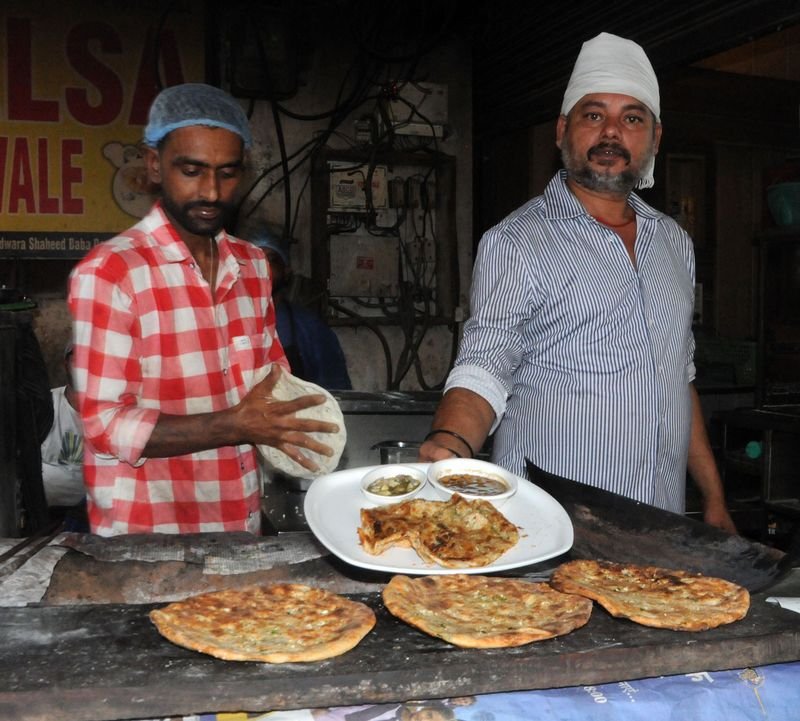

For generations, the iconic Amritsari kulcha has been known for its crisp crust and buttery stuffing. Now, it has a body to champion its identity and heritage. The 18-member Amritsari Stuffed Kulcha Vendors’ Association brings together the city’s kulcha makers and vendors.Emerging piping hot from tandoors and finding its way to tables far beyond Amritsar, the delicacy is now at the centre of an initiative by the Punjab Food Processing Department to secure a Geographical Indication (GI) tag. The exercise seeks to establish the link between the product’s distinctive characteristics, traditional method of preparation and geographical origin.Aman Khalsa, a fourth-generation kulcha-maker and certified chef, heads the association and is leading its campaign to secure a GI tag for Amritsari stuffed kulcha.“When the association was announced, it was received with a lot of amusement and even ridicule, with many questioning if the photograph that went viral was AI generated. The association’s agenda goes well beyond pursuing a GI tag. It proposes a system of chef identification cards, experience certificates, uniforms, hygiene standards and standard operating procedures, alongside a cloud-based website to maintain digital records of chefs and vendors who make authentic Amritsari kulcha,” said Khalsa.“The idea is to establish who makes authentic Amritsari kulcha, how it is prepared and what standards should define the product,” he added.According to Khalsa, preparing an Amritsari kulcha can involve between 10 and 40 ingredients, measured and mixed in specific quantities. Around 30 variants are currently prepared in the city, he said, though the traditional version has a potato-based stuffing.Under the proposed framework, kulcha chefs would receive identity cards and experience certificates, while vendors would be encouraged to follow prescribed standards of sanitation, dress and product quality. The association also proposes GI-related identification boards at participating establishments if the tag is secured and the required permissions are obtained.But if a culinary tradition has survived for generations through skill, experience and customer loyalty, does it need a rulebook to establish its authenticity? “The kulcha may be the star, but the chef remains behind the curtain. To this day, most chefs earn meagre wages and their livelihoods are not secure. Most business establishments earn anything between Rs 10,000 and Rs 30,000 a day, but the industry as such remains unorganised,” said Khalsa.What is GI tag?A GI tag identifies a product as originating from a particular geographical region and possessing a quality, reputation or other characteristic linked to that place. In Amritsar’s case, a distinction needs to be made between GI-tagged products whose geographical coverage extends across a wider region and those specifically associated with the district. Amritsari stuffed kulcha, therefore, would be the first city-exclusive GI tagged product. The Thatheras craft of Jandiala Guru, known for its traditional hand-beaten brass and copper utensils, already has an application pending for GI registration though it has UNESCO recognition. Similarly, basmati grown in Tarn Taran is covered under the official GI tag, explicitly recognised under the One District, One Product initiative. Phulkari received a shared regional registration on GI tag for the entire state.